






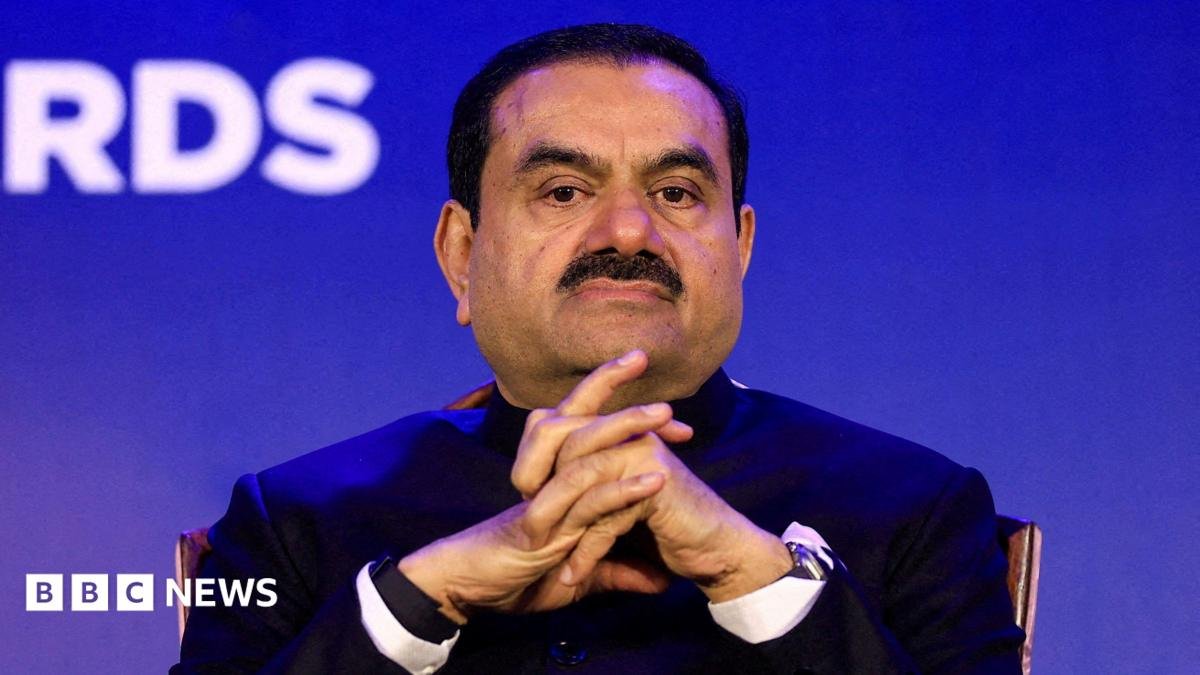
A US judge has dismissed criminal charges against Indian billionaire Gautam Adani, effectively concluding a high-profile bribery and fraud case that alleged Adani paid bribes to Indian officials for renewable energy projects and misled US investors. Adani and his companies have consistently denied any wrongdoing throughout the proceedings.
In 2024, Adani was accused of these illicit activities. Following the dismissal, Adani expressed his welcome for the court order, stating he accepted the decision with “humility” and “deep respect” for the judicial process.
US District Judge Nicholas Garaufis formally approved the Justice Department’s request to drop the charges against Adani in a 47-page order issued on Monday. However, the judge delivered a strong critique regarding the process that led to this decision.
Judge Garaufis highlighted that R Trent McCotter, the principal associate deputy attorney general, had collaborated with Adani’s legal team on the dismissal without consulting the prosecutors and investigators who had been directly handling the case. He characterized this approach as “highly unusual,” noting that McCotter appeared to have supplanted his own judgment for that of officials intimately involved in the investigation.
The BBC has reviewed a copy of the court order published by CourtListener, a US non-profit court archive, although it has not seen the official court-filed document. Other news organizations have also reviewed the ruling.
The Justice Department initially requested the charges be dismissed in May, arguing that a significant portion of the alleged conduct occurred outside the United States, making prosecution challenging. They also stated that pursuing the case no longer aligned with the department’s priorities. This request followed Adani’s hiring of a new legal team led by Robert J Giuffra Jr, co-chair of the US law firm Sullivan & Cromwell and a personal lawyer to then-President Donald Trump. Giuffra had reportedly met with Justice Department officials earlier this year to voice concerns about the case.
Initially, Judge Garaufis resisted the government’s request, deeming their explanation for abandoning the prosecution insufficient in June and demanding more information from officials. He also questioned whether Adani’s pledge to invest $10 billion (£7.5 billion) in the US and create 15,000 jobs had influenced the decision. Adani had announced this investment in November 2024, in a post congratulating Donald Trump on his election victory. Reports subsequently emerged that Adani’s lawyers had raised this investment during discussions with the Justice Department regarding the case. Adani’s lawyers maintained that the investment was never offered in exchange for dropping the charges.
Ultimately, Judge Garaufis concluded that the investment had not influenced the Justice Department’s decision. Nevertheless, he remarked that the public could draw its own conclusions about how such discussions might impact perceptions of equal justice and the rule of law.
The judge further found that McCotter’s decision appeared to have been made without meaningful input from the prosecutors who initiated the case or investigators from the FBI and Securities and Exchange Commission. “The irregularities in the decision to dismiss the indictment are concerning,” Garaufis wrote.
The charges against Adani were dismissed with prejudice, meaning they cannot be refiled. Adani, who never appeared in a US court during the proceedings, welcomed the ruling, stating on X, “Throughout this challenging period, our faith in truth, fairness and the rule of law remained unwavering.”
This criminal case is distinct from other US proceedings involving Adani and his companies. In May, Adani agreed to pay $6 million, and his nephew, Sagar Adani, agreed to pay $12 million, to settle Securities and Exchange Commission allegations concerning investor disclosures, without admitting or denying wrongdoing. Separately, Adani Enterprises, the conglomerate’s flagship company, agreed to pay $275 million to settle potential civil liability over apparent violations of US sanctions on Iran.
Gautam Adani, 64, is the chairman of the Adani Group, a vast conglomerate with interests spanning energy, ports, airports, and other infrastructure businesses. He is recognized as one of India’s wealthiest individuals and is widely perceived as having close ties to Prime Minister Narendra Modi. Both men hail from the western state of Gujarat.