









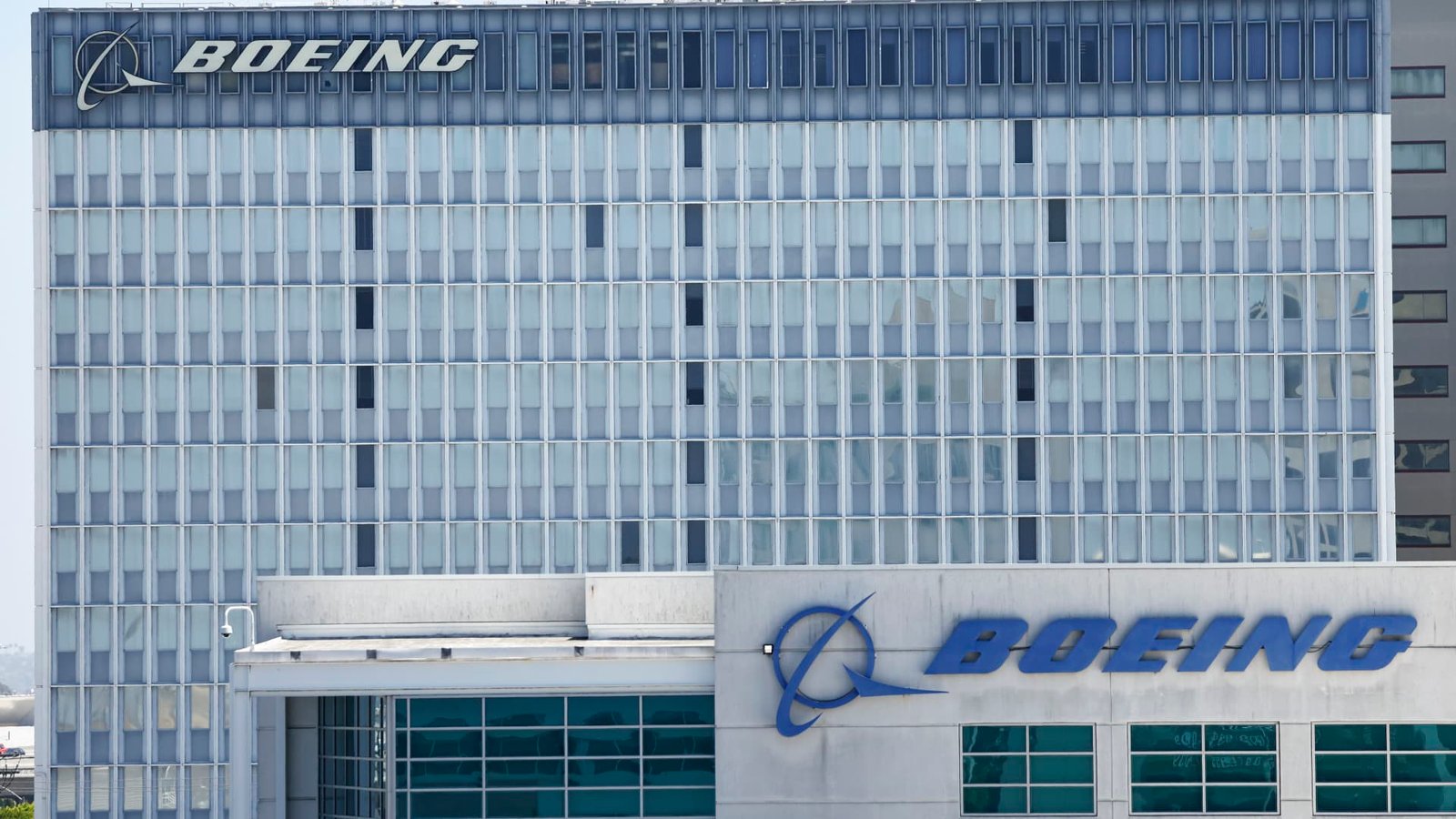
The Boeing logo is displayed on Boeing buildings on August 3, 2026 in El Segundo, California.
Mario Tama | Getty Images
Boeing’s July Deliveries Dip, Trailing Airbus Amid Modest Order Influx
Boeing reported a decline in jet deliveries for July, handing over 53 aircraft. While this figure represents a slight increase of five jets compared to July of the previous year, it marks a significant drop from the 64 deliveries recorded in June. The U.S. aerospace giant also found itself trailing its European competitor, Airbus, which delivered 67 planes during the same month.
Delivery Breakdown and Year-to-Date Performance
A closer look at Boeing’s July deliveries reveals that its best-selling 737 MAX jet accounted for the majority, with 39 units delivered. This was complemented by 10 787 Dreamliners, one 777 freighter, and three 767s. Year-to-date, Boeing has delivered a total of 367 jets, comprising 279 737 MAX aircraft and 50 787s, indicating a steady, albeit cautious, recovery in its production and delivery pipeline.
New Orders and Farnborough Airshow Impact
In terms of new business, Boeing secured 30 net new orders in July after accounting for cancellations. This figure includes several orders that were publicly announced during the Farnborough Airshow, an event that typically serves as a significant platform for new aerospace deals but was notably subdued this year. Boeing booked 38 new orders while facing eight cancellations, leading to the reported 30 net new orders. Specifically, July’s orders included 18 737 MAX jets and 19 787 orders.
A notable transaction for Boeing during the Farnborough Airshow was an order for 100 737 MAX jets from SMBC Aviation, the prominent Irish leasing company and the world’s second-largest aircraft lessor. However, this substantial order had already been recorded in June, initially listed as an order from an unidentified customer, rather than being a fresh booking in July.
Focus on the 737-10 Variant
Despite the fluctuating monthly figures, Boeing continues to see strong interest in its 737 MAX family, particularly the largest variant, the 737-10. The company reports that through July, it has accumulated more than 130 orders for the 737-10, underscoring the market’s demand for higher-capacity single-aisle aircraft.
Market Outlook and Competitive Landscape
Boeing’s July performance, while showing an increase year-over-year in deliveries, highlights the ongoing competitive pressure from Airbus and the complex dynamics of the global aerospace market. Supply chain challenges, geopolitical factors, and the pace of air travel recovery continue to influence production schedules and order books. The industry will be watching closely to see how Boeing navigates these headwinds and strives to accelerate its delivery rates in the coming months, particularly as it works through its substantial backlog of orders and aims to regain its dominant market position.