SAN FRANCISCO — Breakfast cereal is getting a bad rap, said Sarah Ludmer, chief well-being and sustainable business officer with the WK Kellogg Co, Battle Creek, Mich., a part of The Ferrero Group. She said perception is not reality and when you look at breakfast cereals through the lenses of today’s leading trends, including health, clean label, functional and affordable, the retail cereal aisle should be a destination for all consumers.
“It checks all of the boxes,” she said during an interview with Food Business News during the Future FoodTech conference that took place this month.
Ludmer cited the breadth of the WK Kellogg cereal portfolio as well as the entire category as evidence that there are cereal varieties for most consumer needs.
“Is it health you’re looking for?” she asked. “We have cereals with whole grains, fiber, protein, less sugar. Is it simple ingredients? Many of our cereals only have four ingredients. And what about affordability? A serving of cereal combined with milk is a very affordable meal solution.”
But despite all the positive attributes, cereal volumes have been declining for decades even though the category has household penetration of 95% in the United States. Part of the issue, Ludmer said, is how grain gets turned into food.
“There’s this disconnect that cereal is made up of all sorts of these ‘Franken’ things and that’s not true,” she said. “But if you think about grains in general, they have to be processed; you can’t eat them like you can an apple.”
Additionally, Ludmer said some of the damage may have been self-inflicted. Before WK Kellogg was acquired by The Ferrero Group in 2025, the business had been a part of The Kellogg Co., which split into Kellanova and WK Kellogg in late 2023. While a part of The Kellogg Co., Ludmer said much of the company’s focus was on another part of the business.

Cereal innovation needs to move beyond new flavors, said Sarah Ludmer, chief well-being and sustainable business officer with the WK Kellogg Co.
| Photo: ©MDV EDWARDS – STOCK.ADOBE.COM“The snacking business was really the priority and the focus for the business,” she said. “So, to me, it’s around investing to raise awareness (of cereal) back up and get people to reappraise the category.”
Part of that investment was in a Raisin Bran ad that ran during the Super Bowl and featured actor William Shatner promoting that the cereal is a good source of fiber.
“For us, (the advertisement) was a launching pad,” Ludmer said. “And we’re going to continue to become louder and more proud. We’re going to keep promoting this category and innovating against it.”
She added that innovation needs to move beyond line extensions featuring new flavors.
“I don’t think consumers are going to be OK with new flavors, and we need to be the leaders to help make those innovations.”
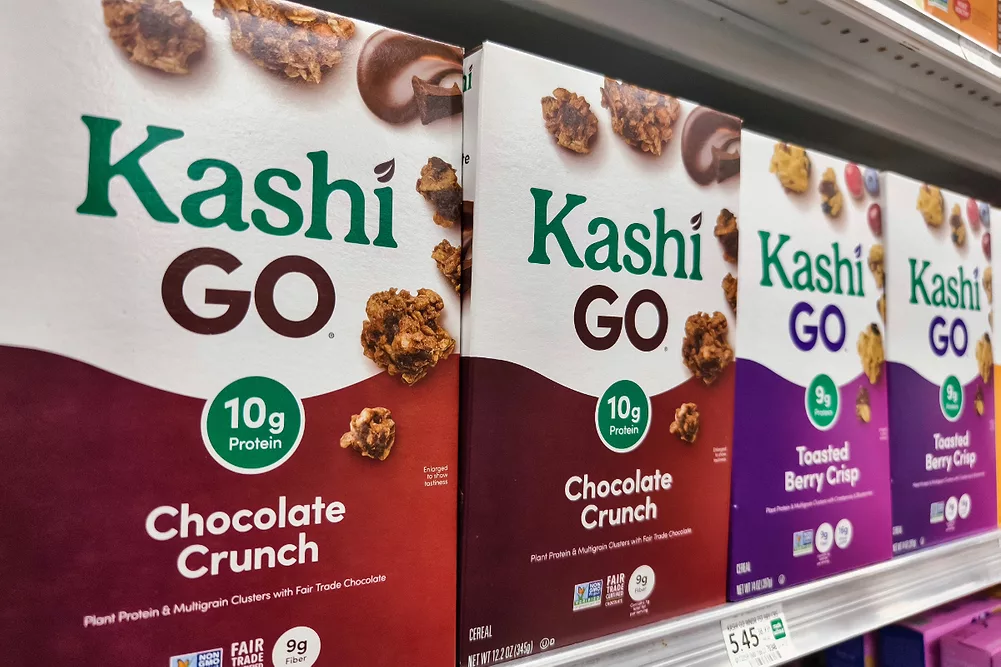
An example of such innovation cited by Ludmer was the launch of Kashi Gut Health Granola that contains prebiotics from chicory root and 9 grams of fiber per serving. Additional innovation that may be on the horizon includes expanded granola varieties with different types of nuts and fruits, oats and beans and legumes.
“All of those are things we can definitely start to think about incorporating,” Ludmer said.