









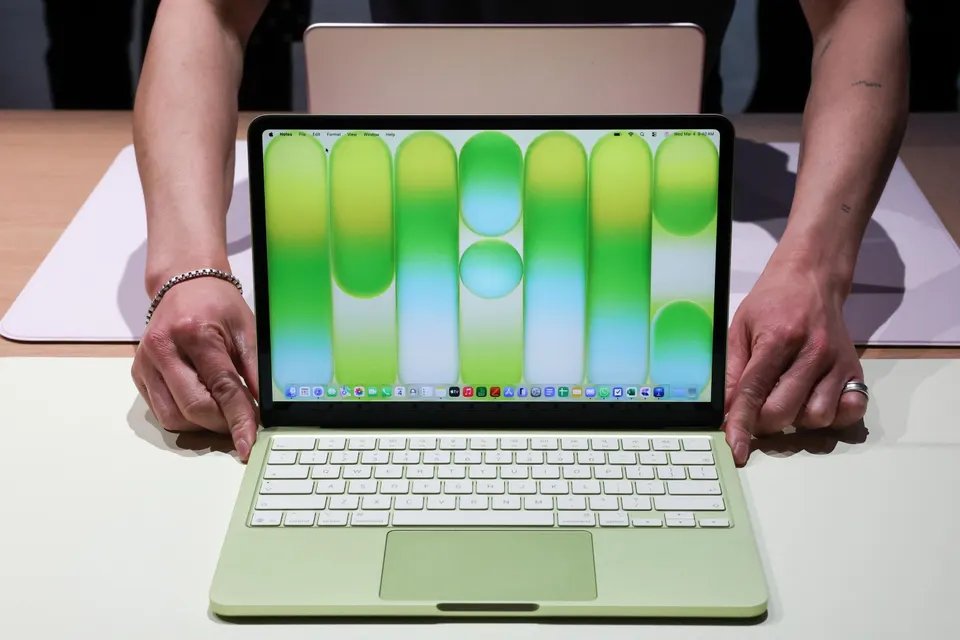
The MacBook Neo is displayed at the Apple Store in the Manhattan borough of New York City, on March 4, 2026. (Photo by TIMOTHY A. CLARY / AFP via Getty Images)
AFP via Getty Images
Apple is preparing for the highly anticipated launch of the MacBook Neo 2 in Spring 2027, following the unexpected commercial triumph of its predecessor. The original MacBook Neo carved out a significant niche, redefining the lightweight mid-range laptop market with its innovative approach. Unlike the consistent September unveiling of the iPhone, Apple’s MacBook portfolio has historically lacked a predictable release cycle. However, with the Neo series, Apple appears to be establishing a new cadence, targeting an annual launch in late March to align with evolving hardware release strategies and consumer expectations.
The timeline for the MacBook Neo 2’s launch is intrinsically linked to the availability of the A19 Pro chip, a direct descendant of the iPhone Pro’s production line. The debut MacBook Neo, for instance, utilized the Apple Silicon A18 Pro chipset. Interestingly, while the iPhone’s A18 Pro featured 8 CPU and 8 GPU cores, the MacBook Neo’s version incorporated 8 CPU and 7 GPU cores. This strategic reduction in GPU cores was a pivotal factor in the Neo’s financial success, enabling Apple to repurpose A18 Pro chips that, despite failing to meet the stringent quality control for the iPhone 16 Pro, were perfectly adequate for the MacBook Neo, effectively salvaging components that would otherwise have been discarded. This ‘silicon binning’ process highlights Apple’s ingenious approach to maximizing resource utilization and optimizing cost efficiency.
The upcoming MacBook Neo 2 is slated to integrate the A19 Pro chipset, which first debuted in the iPhone 17 Pro. A crucial prerequisite for its launch is the accumulation of a substantial backlog of A19 Pro silicon. Apple’s strategy is to avoid altering the existing production schedule or ordering additional A19 Pro chipsets. Instead, the available supply is directly dictated by TSMC’s fabrication process and the yield rates. Just as it took approximately 18 months for sufficient A18 Pro stock to become available for the first MacBook Neo, a similar timeframe is anticipated for the A19 Pro to be ready for the MacBook Neo 2. This symbiotic relationship between iPhone and MacBook production underscores Apple’s vertically integrated ecosystem.
Apple is also strategically aligning its consumer hardware roadmap with its professional offerings, intending to synchronize standard iPhone releases with entry-level MacBook updates each spring. This marks a significant shift in retail strategy. The traditional September event will no longer be the sole stage for all iPhone reveals; instead, it will focus on the professionally oriented models. Consumer-focused iPhones, such as the iPhone 18, iPhone 18e, and iPhone Air 2, are expected to arrive approximately six months later, likely in March 2027, with sales commencing in early April. This schedule perfectly complements spring retail seasons and “back to school” marketing campaigns.
The MacBook Neo, with its consumer-centric design and functionality, was always positioned as a “getting things done” laptop, ideal for social media, office productivity, and light creative tasks, rather than high-end development or media editing. Its specifications, including the A18 Pro chip and a consistent 8GB of memory across the lineup, reflected this focus. By mirroring the iPhone’s market approach, the consumer-focused MacBook Neo 2 is poised to launch alongside the consumer-oriented iPhone 18 and iPhone 18e, further solidifying this synchronized release strategy. This integrated approach not only streamlines marketing efforts but also provides a clearer distinction between professional and consumer-grade Apple products.
Looking ahead, analysts anticipate two key upgrades for the MacBook Neo 2. Beyond the aforementioned transition to the A19 Pro chipset, which establishes an annual cadence for Neo’s chip advancements, the second significant upgrade pertains to memory. The MacBook Neo 2 is expected to feature a bumped-up 12GB of RAM. This increase is a direct response to the escalating demands of Apple Intelligence and Siri AI capabilities within macOS 27, particularly the need for robust on-device processing of large language models. However, ongoing market challenges, including higher prices and limited memory and storage inventory, mean that the iPhone 18 Pro family will likely receive priority for these crucial components. The tech giant often prioritizes its most lucrative product lines, and the iPhone remains its biggest earner.
The iPhone undeniably commands the largest share of Apple’s market, and the iPhone 18 Pro is expected to continue this trend. Concerns regarding the availability of the new model due to silicon supply constraints are already surfacing. Even without such issues, Apple will undoubtedly want to maintain focus on its most significant product launch. Consequently, the MacBook Neo 2 will likely await sufficient silicon supply to be shipped without impacting Apple’s hard-fought profit margins. Ultimately, Apple’s spring consumer window appears to be the defining factor for the MacBook Neo 2’s release, providing a predictable schedule for a product line that has long sought a consistent launch rhythm.