








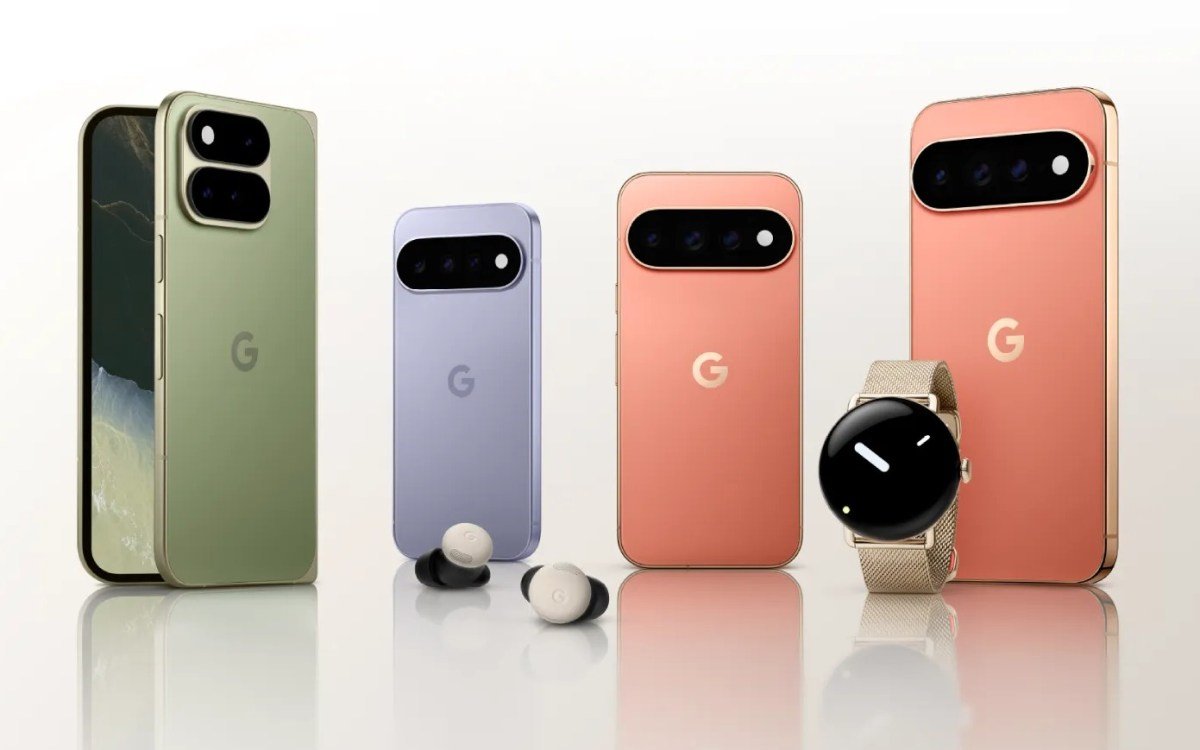
Google has just unveiled its latest line of devices, the Pixel 11 series, which includes a standard model, two Pro versions, and a groundbreaking new foldable phone. Conspicuously absent from this initial launch is an affordable ‘a-phone,’ which is typically a staple of Google’s annual releases.
A notable trend impacting the new Pixel line is the substantial increase in RAM prices across the industry. In response, Google has standardized 256GB of internal storage across all Pixel 11 models, a welcome upgrade for users. However, for those seeking higher RAM configurations, particularly 16GB which was standard in the previous Pixel 10 Pro and 10 Pro XL, it now necessitates opting for 512GB or 1TB storage variants on the Pixel 11 Pro and 11 Pro XL. The vanilla Pixel 11 is exclusively available with 12GB of RAM, while the innovative foldable model consistently offers 16GB.
The entire Pixel 11 series is currently available for preorder and is scheduled for general release on August 20. As an incentive, Amazon is offering attractive trade-in bonuses, providing additional value beyond the intrinsic worth of older devices.
The standard Google Pixel 11 shares the advanced Tensor G6 chipset with its more premium counterparts, ensuring consistent processing power across the family. However, it does forgo the HiLight RGB LED feature. Despite this, it boasts an upgraded main camera sensor compared to its predecessor, moving from a 1/2.0” sensor to a larger 48MP 1/1.56” sensor, while retaining the familiar 5x/112mm 10.8MP telephoto and 13MP ultra-wide lenses. Wireless charging has seen an improvement, now supporting 25W Pixelsnap magnetic charging, an increase from 15W. Conversely, wired charging remains at a somewhat modest 30W, identical to previous generations. The battery capacity also remains unchanged, with Google banking on the improved efficiency of the Tensor G6 chip to deliver enhanced battery life.

The Google Pixel 11 Pro introduces the HiLight RGB LED, strategically placed near the rear cameras, which functions as both a notification indicator and an integral part of the Gemini AI system. This Pro model features a 6.3-inch OLED display, matching the size of the vanilla Pixel 11 but offering superior sharpness with a 1280p+ resolution and LTPO technology for adaptive refresh rates. Battery capacity and the 30W wired charging speed are consistent with previous iterations. However, wireless charging on the Pro model has been upgraded to 25W, mirroring the vanilla version.
The camera system on the Pro model is more sophisticated, largely carrying over features from last year. It includes a 50MP main sensor with a substantial 1/1.3” size and a 48MP ultra-wide lens equipped with autofocus. The telephoto camera has been refined, now featuring a 48MP 1/1.95” sensor and a 5x/106mm lens, a subtle but potentially impactful change from the 48MP 1/2.55” sensor and 113mm lens found on the Pixel 10 Pro. The practical implications of this alteration remain to be thoroughly evaluated.

For those desiring a larger experience, the Google Pixel 11 Pro XL offers a sprawling 6.8-inch LTPO display with a 1334p+ resolution. Curiously, its 5,115mAh battery is marginally smaller than the 10 Pro XL’s by 85mAh. Charging capabilities include 45W wired and 25W wireless charging, consistent with its predecessor. While wired charging speed appears to be slightly improved, reaching 75% in thirty minutes compared to 70% previously, thorough testing will confirm this.
Currently, Amazon is running a special promotion for the Pixel 11 Pro XL and the Pixel 11 Pro Fold, offering an additional €100 bonus on trade-ins, provided the old device is a Pixel. Even if trading in a non-Pixel smartphone, customers can still receive a generous €400 bonus. Further details on this offer can be found by following the provided link.

The new Google Pixel 11 Pro Fold represents a significant step forward in foldable design, boasting a slimmer and lighter profile than its predecessor. When folded, it measures 10.1mm (5.0mm unfolded) and weighs 239g. While still comparatively thicker and heavier than some competing book-style foldables, this marks a substantial improvement over the somewhat bulky Pixel 10 Pro Fold, which was 10.8mm folded (5.2mm unfolded) and weighed 258g.
This reduction in size, however, has led to a slightly smaller battery, now at 4,806mAh. This capacity falls short of the Z Fold8 Ultra (5,000mAh) and the Pixel 10 Pro Fold (5,015mAh). On the positive side, wireless charging has been boosted to 25W, though wired charging remains at 30W.
Google has also equipped the new foldable with the same 48MP 1/1.56” main camera found in the vanilla Pixel 11, replacing the 48MP 1/2.0” module from the previous generation. While the older sensor was acceptable for the standard Pixel 10, it was arguably not optimal for the premium price point of the Pixel 10 Pro Fold.

The Google Pixel Watch 5, while new to the market, shares many core components with its predecessor, including the chassis, display, and the Snapdragon Wear W5 Gen 2 chipset. The most significant internal upgrade is a doubling of onboard storage to 64GB, with RAM remaining at 2GB. Battery capacity is largely unchanged. The primary advancements this generation lie in the integration of Gemini Intelligence and enhanced health tracking features.

The Google Pixel Buds Pro 2 now come in a new Olive color option and have received crucial software updates. These updates introduce Dynamic Active Noise Cancellation (ANC) and an improved Live Translate mode. Crucially, these new software features will be rolled out as an update to all existing Pixel Buds Pro 2, ensuring that current owners can also benefit from these advancements.

While a Pixel 11a is anticipated, its release is still several months away. For now, the more budget-friendly option remains the Pixel 10a, which is currently available with a substantial €200 discount for the 256GB variant. This model is powered by a two-generation-old Tensor G4 chip and features 8GB of RAM. Its camera system includes a smaller 48MP 1/2.0” sensor and lacks a dedicated telephoto lens. Those interested in keeping up with the latest tech news should watch for further announcements regarding the Pixel 11a.

Google’s new foldable enters a competitive landscape dominated by three distinct Samsung Galaxy foldable models. Samsung’s introduction of the wide Galaxy Z Fold8 this generation harkens back to a form factor Google nearly adopted with its original Pixel Fold but ultimately moved away from.
It’s worth noting that both the Galaxy Z Fold8 and Z Fold8 Ultra are currently being offered with modest discounts, despite having been released less than a month ago.

The Samsung Galaxy Z Fold8 Ultra, serving as the successor to the larger Z Fold7, presents a formidable challenge to Google’s foldable. It boasts impressive dimensions of 8.9mm when folded (4.1mm unfolded) and a weight of 215g, making the Pixel 11 Pro Fold feel comparatively bulky. This is achieved while accommodating a larger 5,000mAh battery that supports 45W wired and 20W wireless (non-magnetic) charging. While the standard wide Z Fold8 offers a capable 50MP wide and 50MP ultra-wide camera setup, the Ultra variant elevates the experience with a powerful 200MP main camera (1/1.3”), a 3x/67mm 10MP telephoto lens, and a 50MP ultra-wide camera.
Google currently does not offer a flip-style foldable device, leaving the Samsung Galaxy Z Flip8 to compete primarily with Motorola’s Razr lineup. It’s important to note that the trade-in bonuses for the Z Fold8 Ultra and Z Flip8 are currently less generous than they were in the previous week.

Finally, Samsung’s Galaxy S26 series, which has been on the market for several months, has seen considerable price reductions since its initial launch. The top-tier Galaxy S26 Ultra directly competes with the Pixel 11 Pro XL and is now available with a massive €500 discount, bringing the price of the base model below €1,000. Even the 1TB S26 Ultra, the only model in its family to offer 16GB of RAM, can be purchased for around €1,450. This price point is remarkably close to the base 12/256GB Pixel 11 Pro XL, which is priced at €1,400.
Similarly, the 6.3-inch Galaxy S26 is now available for under €800 for the base 12/256GB model, while the Pixel 11 Pro costs €1,200. Even the vanilla Pixel 11 is priced at €1,000. Interestingly, and perhaps indicative of market demand, the Galaxy S26+ is currently priced even lower than the standard S26, making it the most affordable model within the S26 series.


We may get a commission from qualifying sales.