









The relentless march of time, coupled with the inevitable forces of depreciation, transforms the automotive landscape in fascinating ways. While many vehicles from the past, particularly from the 1970s, have seen their values skyrocket into classic car territory, a curious counter-trend exists. There are certain automobiles that, despite commanding astronomical prices when new, remain surprisingly affordable today. This phenomenon presents a unique opportunity for enthusiasts seeking a slice of opulent history without the exorbitant price tag, albeit often with the understanding that such indulgence comes with its own set of challenges, particularly concerning maintenance and repair costs.
The average new car, according to experts like Kelley Blue Book, experiences a significant drop in value, losing approximately 30% within its first two years alone. This downward trajectory often continues until a car reaches a point where its financial viability for repairs wanes, leading to it being salvaged or scrapped. However, a select few manage to defy this fate, eventually transitioning into coveted classics whose values appreciate. Interestingly, some 1970s models, once considered highly desirable and expensive, have bucked this trend, remaining heavily depreciated. These are the vehicles that offer a tantalizing glimpse into a bygone era of automotive luxury and excess, now accessible to a broader audience.
Consider the ninth-generation Chrysler New Yorker Brougham. In the late 1970s, Chrysler’s lineup was a testament to American automotive grandeur. Following the discontinuation of the Imperial, the New Yorker Brougham, a colossal 231-inch vehicle, reigned as the brand’s ultimate offering. In its most luxurious year, 1978, a New Yorker Brougham cost $7,831, which, when adjusted for inflation, translates to approximately $40,100 today. This wasn’t an insignificant sum, especially for a vehicle equipped with a standard 400ci big-block engine and amenities like power seats, locks, and a radio antenna – truly one of the greatest land yachts ever made. Yet, the fickle nature of automotive tastes has not been kind to these gargantuan luxury cars. Today, their residual values reflect a change in perception, with auction data from Classic.com indicating an average price of merely $9,230 for a ninth-generation New Yorker.
Moving up the ladder of opulence, we encounter the Mercedes-Benz 450 SEL 6.9. This 6.9-liter V8-powered behemoth epitomized 1970s decadence and serves as a prime example of dramatic depreciation. In 1977, a 450 SEL 6.9 would have set a UK buyer back £21,995, roughly equivalent to $38,491 at the time. To put this in perspective, that price could have purchased approximately five New Yorker Broughams. Adjusted for inflation, that $38,491 equates to roughly $212,100 today – a sum comparable to a top-spec S-Class in the current market. However, for those with a taste for champagne on a lemonade budget, there’s good news: Hagerty estimates the value of good-condition 6.9 models today to be in the range of $30,200 to $33,900. Despite its imposing running and repair costs, the 450 SEL offers an incredible value proposition, allowing enthusiasts to acquire a quintessential 1970s Mercedes-Benz for the price of a modern Hyundai.
Even esteemed marques like Bentley have models from the 1970s that are surprisingly accessible today. The Bentley T2 Sedan, the epitome of Bentley luxury in its era, featured a lavish leather cabin, exquisite wood veneer, numerous comfort features, and a potent 6.75-liter V8 engine. While a delightful package, it hasn’t maintained its original market value. Hagerty reports that a late-1970s T2 in good condition barely commands more than a decade-old Toyota Camry, with current values hovering around $13,500. This is despite its original 1977 domestic sticker price of £22,809, which translates to almost $40,000 at the time, or roughly $220,000 in today’s currency. The T2’s low valuation can be attributed to several factors, including the comparatively modest pricing of even later, more advanced Bentley Mulsanne models, and the notoriously high repair and maintenance costs, which many owners consider to lead to “financial ruin.”
The depreciation curve isn’t exclusive to large, stately sedans; even sleek sports cars have fallen victim. The Maserati Merak SS, a model celebrated by enthusiasts, stands as a testament to this. Boasting a 220-horsepower 3.0-liter V6, a five-speed manual transmission, rear-wheel drive, and a 2+2 layout, it embodies the classic Italian sports car aesthetic that typically fetches hundreds of thousands today. Yet, while its contemporaries have seen significant appreciation, the Merak has largely been overlooked. A new 1977 Merak SS sold for £12,390 in the UK, equivalent to $21,683 that year, or roughly $253,500 in today’s money. Surprisingly, a good-condition Merak SS can be acquired today for an estimated $46,000, according to Hagerty. Despite its mid-engine layout, striking looks, and prestigious badge, the Merak SS somehow missed the appreciation boom experienced by many of its rivals.
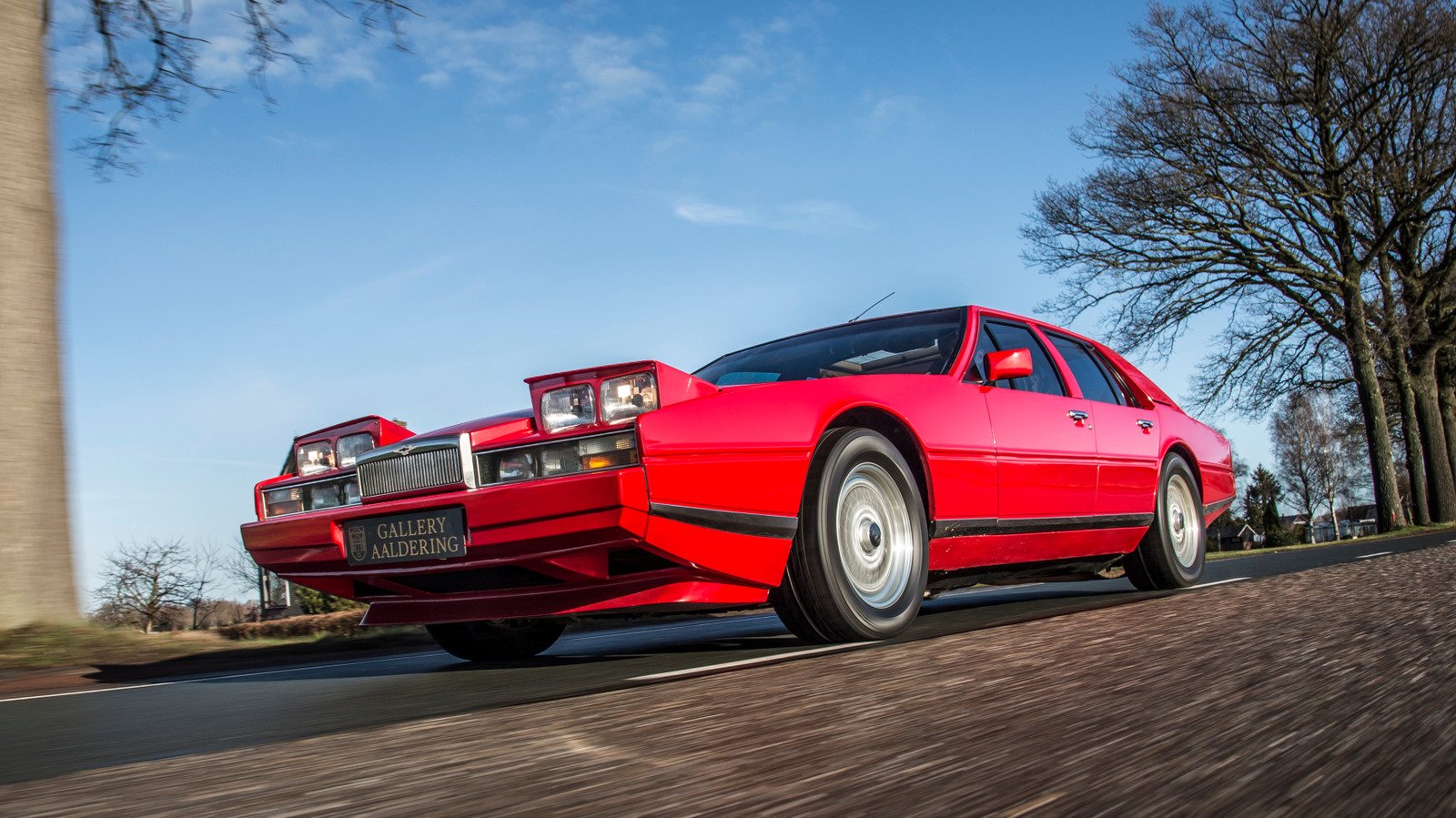
Perhaps the poster child for catastrophic depreciation among 1970s classics is the Aston Martin Lagonda S2. For a considerable period, these angular sedans were almost worthless. Its unconventional “folded-paper” design, a stark departure from the graceful curves of classic Aston Martins, was certainly a factor. Nevertheless, the Lagonda housed a powerful 5.3-liter V8 engine, a sumptuously appointed leather interior, and a plethora of advanced gadgets, making it a technological marvel of its time. Despite its inherent appeal and groundbreaking features, late-1970s Lagonda S2s in good condition today command around $50,000, according to Hagerty. This is a far cry from its original $79,500 sticker price, which, adjusted for inflation, would be a staggering $365,700 today. The combination of its polarizing aesthetics, notoriously unreliable technology, and exorbitant restoration costs has driven this unparalleled depreciation.
Then there’s the extraordinary Stutz Blackhawk, a vehicle driven by legends like Elvis Presley, Frank Sinatra, and the Shah of Iran. This ultra-luxury 1970s coupe resurrected a historic American brand, captivating the world’s elite with its flamboyant design. The Exner-penned coachwork, crafted in Italy, sat atop a familiar Pontiac Grand Prix chassis, propelled by a 425-hp 455-cubic-inch V8. The Blackhawk’s price was as extraordinary as its appearance. In its inaugural year, 1971, it cost $26,500, nearly twice the price of a Ferrari Daytona. By 1978, the privilege of owning one could set buyers back $74,000, equivalent to roughly $379,000 today. Despite its legendary status, a good-condition Stutz Blackhawk today fetches around $28,200, a monumental drop in value over five decades, making it a curious bargain for those seeking a unique piece of automotive history.
Finally, the Rolls-Royce Camargue, a car that, despite its prestigious badge, demonstrates that even excellence doesn’t always guarantee rock-solid residuals. Upon its debut in 1975, the Camargue cost £29,250, or $68,445, which translates to a remarkable $424,850 in today’s currency. Yet, Hagerty now estimates a good-condition Camargue to be worth only $33,500. While it retained signature Rolls-Royce elements like the Pantheon grille and quad headlamps, its overall profile was perceived as bulky and divisive, even by Rolls-Royce’s own admission. This aesthetic controversy likely contributed to its plummeting values. As the most expensive new car in the world at its launch, it had a long way to fall. Its lukewarm reception effectively cemented its fate, but for enthusiasts, it now offers the opportunity to own what was once the pinnacle of automotive luxury for the price of a modern Toyota RAV4. These examples underscore the unpredictable nature of automotive values, offering a compelling narrative of once-unobtainable dreams becoming surprisingly attainable realities.