








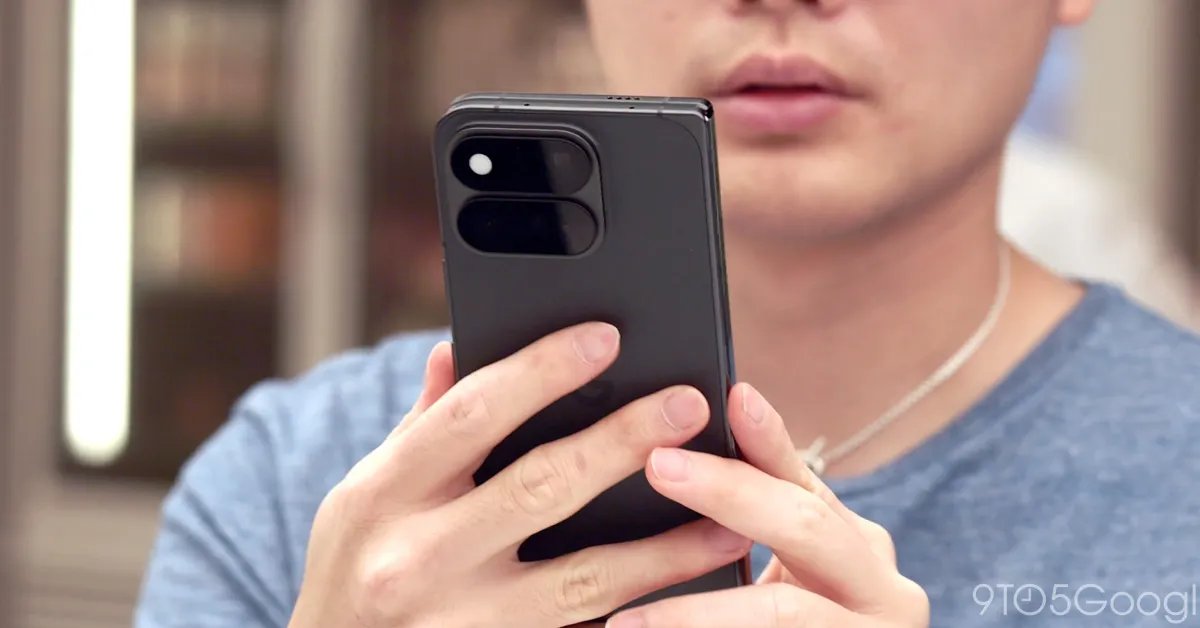
Google has announced a significant enhancement to its Face Unlock feature, specifically for the new Pixel 11 series. Building upon the secure biometric standards first introduced with the Pixel 8, the latest iteration of Face Unlock promises improved performance in challenging lighting conditions. Users of the Pixel 11, Pixel 11 Pro, and Pixel 11 Pro Fold will now benefit from a system that “recognizes you more easily in low light,” ensuring a more seamless and reliable authentication experience.
This advancement is subtly highlighted across the product listings for the new Pixel 11 devices, stating, “Face Unlock is now faster, more secure, and more accurate in low light.” Google explicitly notes that this represents an improvement “compared to Pixel 10 phone series.” This particular detail is often found alongside other core security and convenience features, such as the Titan M3 security chip, the integrated VPN, Call Screen functionalities, Scam Detection, and Satellite SOS capabilities. The “Pixel Safe” page offers a bit more context, emphasizing that users can “Get into your phone safely and quickly, even in darker surroundings,” with Face Unlock now better equipped to safeguard private information by recognizing the authorized user more effectively in dimly lit environments.
Google’s journey with Face Unlock has seen several iterations. After its initial appearance on the Pixel 4, the feature was reintroduced with the Pixel 7. A year later, it received a substantial upgrade, enabling support for critical functions like tap-to-pay transactions and secure logins for various applications, including banking clients. At that time, Google attributed these advancements to the Tensor G3 processor and sophisticated machine learning algorithms, though specific technical details remained somewhat scarce. The current update for the Pixel 11 series appears to follow a similar pattern, with Google focusing on the user benefit rather than an in-depth technical explanation of the underlying improvements.
While this enhancement is a welcome step towards addressing the limitations of Google’s camera-only approach to facial recognition, it’s worth noting that dedicated hardware, such as the infrared (IR) sensor technology found in Apple’s Face ID, generally provides superior performance across all lighting conditions. There were indeed rumors suggesting that an IR-powered Face Unlock system, code-named “Project Toscana,” might debut with the Pixel 11. However, subsequent reports indicated that this advanced hardware solution would not be ready in time for the launch of the latest Pixel flagship devices. This suggests that Google is continuing to refine its existing camera-based system through software and algorithmic optimizations, pushing the boundaries of what’s possible without specialized infrared sensors. For users interested in exploring other innovative solutions in the mobile tech sphere, there are always new developments to discover.