









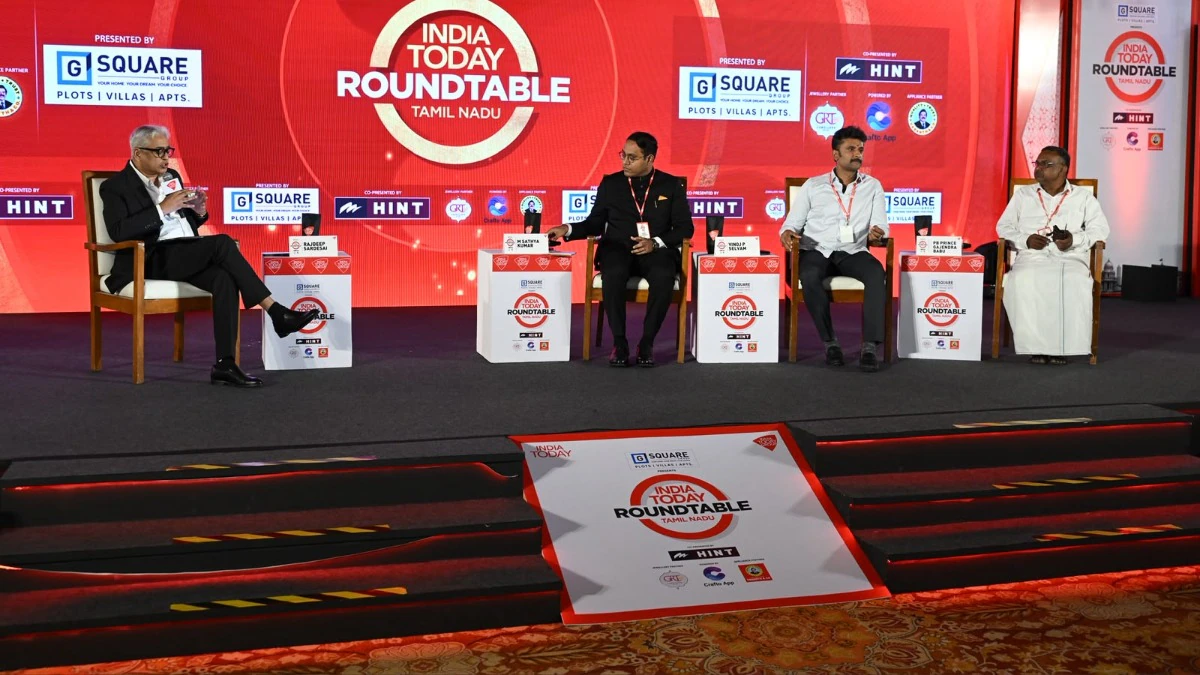
NEP 2020 Ignites Fiery Debate at India Today Tamil Nadu Roundtable: A Clash Over Language, Centralisation, and Social Justice
Chennai, India – The National Education Policy (NEP) 2020 has become a major flashpoint in India’s educational landscape, and nowhere was this more evident than at the recent India Today Tamil Nadu Roundtable. The gathering witnessed a sharp political and policy debate, with prominent figures clashing over the controversial three-language formula, the increasing centralisation of education, and the future trajectory of Tamil Nadu’s distinctive education model.
At the heart of the contention was the three-language formula. M. Satyakumar, National Spokesperson and Senior Leader of TVK, vehemently argued that the NEP threatens Tamil Nadu’s long-standing two-language policy. He asserted that the policy grants the Central government undue control over education, a domain traditionally managed by the states. Satyakumar underscored that the opposition to the three-language formula stems from deep-seated concerns within Tamil Nadu regarding state autonomy and the potential imposition of Hindi into its educational system, which has historically resisted such moves.
In stark contrast, Vinod Sharvam, State Secretary of BJP Tamil Nadu, staunchly defended the NEP. Sharvam posited that the policy is a crucial step towards modernising education and equipping students with the essential skills required for a rapidly evolving global landscape. He also challenged the pervasive opposition to Hindi, pointing out a perceived hypocrisy: "TVK-run schools themselves teach three languages, including Hindi," he noted, implying a double standard in the criticism.
Centralisation vs. State Autonomy: A Tug-of-War Over Educational Governance
Beyond the language debate, the discussion delved into the contentious issue of centralisation and its implications for educational standards nationwide. Sharvam contended that the NEP would be instrumental in standardising education across India, while simultaneously integrating vocational training and modern subjects like STEM and Artificial Intelligence from an early stage.
However, Satyakumar presented a counter-argument, expressing concerns that increased central control could significantly diminish the role and influence of individual states in shaping their educational policies. He passionately defended Tamil Nadu’s existing education model, highlighting the state’s remarkable progress achieved through its unwavering emphasis on social justice and a scientific temper.
Educationist PB Prince Gajendra Babu further critiqued the NEP from a social justice perspective. He argued that the policy fails to adequately address the intricate constitutional framework of education and warned that its implementation could disproportionately affect first-generation learners and communities that are socially and educationally backward.
Bridging the Divide: The Crisis in Government Schools
A significant portion of the roundtable was dedicated to the widening disparity between private and government schools. Gajendra Babu emphasised that the immediate priority should be to fortify government schools through critical investments in better infrastructure, the recruitment of permanent teachers, adequate laboratory staff, and improved learning facilities. He strongly advocated that a robust public education system would reduce reliance on private institutions, thereby ensuring more equitable access to quality education for all.
Sharvam, while acknowledging the challenge, suggested that the NEP itself could be a catalyst for improving government schools. He envisioned the policy bringing modern educational approaches, including STEM and AI-based learning, directly to students in government schools across the state, thereby elevating their standards.
NEET: A Persistent Flashpoint
The debate inevitably shifted to Tamil Nadu’s long-standing and fervent opposition to the National Eligibility cum Entrance Test (NEET). Sharvam acknowledged the state’s constitutional concerns regarding NEET. He proposed a pathway for resolution, suggesting that NEET should first be moved from the Union List to the Concurrent List, and ultimately to the State List, granting Tamil Nadu greater autonomy in medical admissions. He also highlighted Tamil Nadu’s proactive efforts to introduce STEM and AI education in government schools while meticulously maintaining its 69% reservation policy.
Gajendra Babu, however, voiced strong opposition to the growing emphasis on entrance examinations for medical admissions. He proposed an alternative: basing admissions on normalised Class 12 marks, arguing that this would strengthen higher secondary education rather than making entrance examinations increasingly difficult and exclusive.
Funding, Autonomy, and the Road Ahead
The panel also touched upon the financial constraints faced by Tamil Nadu, including its reported debt burden, and the inherent challenges in funding quality education across all schools. Gajendra Babu reiterated the critical need for permanent teachers, improved infrastructure, and adequate staffing. Conversely, critics of the state’s current education approach warned that political promises and outdated systems could impede much-needed reforms.
The discussion also delved into the complex legal and constitutional history surrounding NEET, including concerns about the role and efficacy of regulatory bodies such as the National Testing Agency.
The India Today Tamil Nadu Roundtable ultimately underscored a larger, overarching question that resonates across India: How can the nation effectively balance the imperative for national education standards with the equally crucial principles of state autonomy, social justice, and ensuring equitable access to quality education for every child? The impassioned exchanges at the roundtable serve as a stark reminder of the deep divisions and complex challenges that lie ahead in shaping India’s educational future.