






Supreme Court Deliberates: Should Sports Be a Fundamental Right for Children in the Digital Age?
New Delhi, India – In a landmark hearing that could redefine childhood education and development, the Supreme Court of India is currently examining whether the right to sports and physical literacy should be recognized as a fundamental right for children. This critical deliberation, stemming from the Public Interest Litigation (PIL) Kanishka Pandey vs Union of India & Ors., not only seeks constitutional recognition under Article 21A but also advocates for compulsory sports education and physical activity within school curricula.
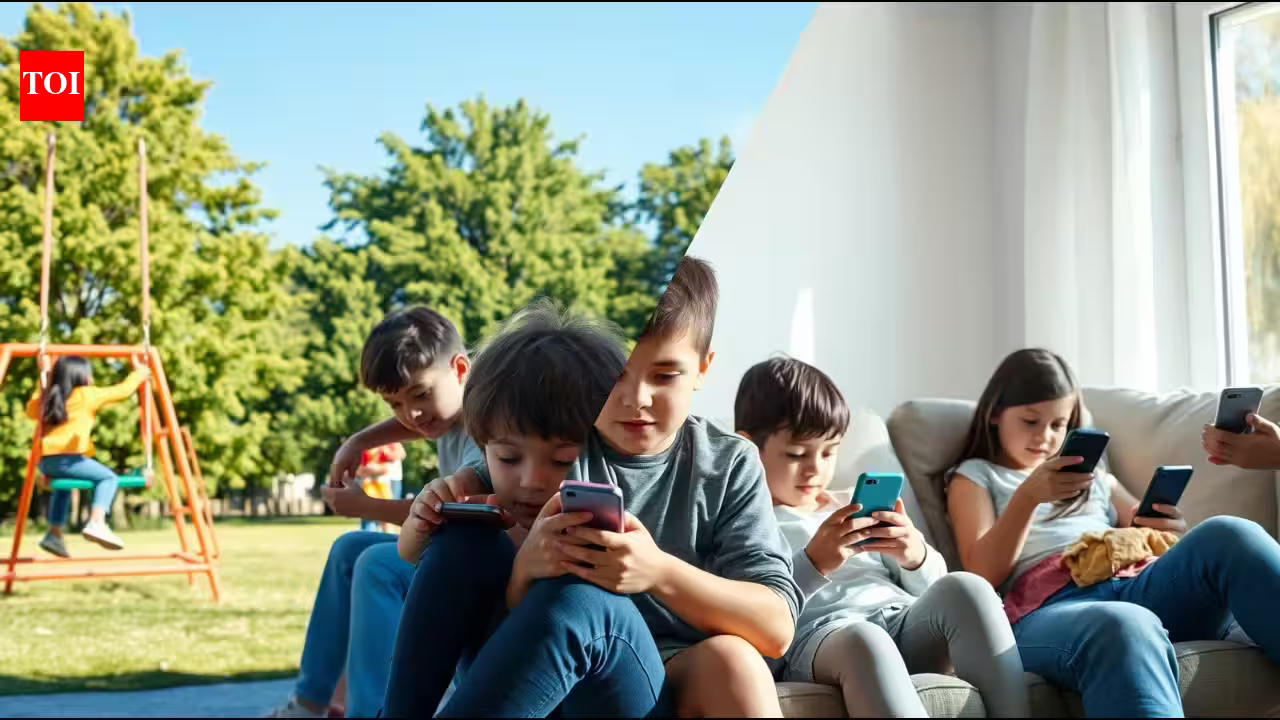
A bench comprising Justice Vikram Nath and Justice Sandeep Mehta heard the matter on Thursday, highlighting the profound implications of the case, especially in an era dominated by screens. As reported by Bar and Bench, the Supreme Court deemed the issue "absolutely essential" given the pervasive shift of children away from playgrounds and towards digital devices. This observation underscores a growing concern among parents, educators, and health professionals about the diminishing role of physical activity in children’s lives.
The debate extends far beyond a mere legal technicality; it directly addresses the escalating challenge of screen time. For a generation immersed in smartphones, tablets, online learning, gaming, and endless streams of short videos, traditional playgrounds and outdoor activities face an unprecedented competitor: the digital screen. The core question is whether physical activity should be considered an indispensable part of a child’s holistic development, rather than a mere extracurricular pursuit squeezed in after academic commitments.
While acknowledging that digital technology is an undeniable and integral part of modern education and childhood – facilitating learning, communication, creativity, and access to information – the Supreme Court’s inquiry focuses on the potential imbalance. The challenge arises when screen-based activities begin to overshadow essential physical activity, outdoor play, and face-to-face social interaction.
This is where the significance of sports becomes paramount. Beyond academic instruction, sports offer invaluable lessons in cooperation, discipline, perseverance, resilience in the face of failure, and respect for rules – lessons that textbooks alone cannot fully impart. Furthermore, physical activity is intrinsically linked to a child’s overall well-being and quality of life, impacting their physical health, mental agility, and emotional stability. Therefore, the constitutional question carries a significant educational dimension: if education is to truly prepare a child for life, should physical literacy be considered as fundamental as academic literacy?
The PIL, originally filed in 2017, has seen Senior Advocate Gopal Sankaranarayanan serving as amicus curiae, providing crucial insights and recommendations. Among his notable proposals are amendments to promote sports education and physical literacy, alongside a greater obligation on the State to foster sporting activities. A particularly striking suggestion calls for school boards like CBSE and ICSE to mandate 90 minutes of dedicated school time for physical activity.
This 90-minute proposal warrants serious consideration irrespective of the constitutional outcome. In many educational institutions, physical education is often relegated to a secondary status, frequently sacrificed as academic pressures mount or examinations approach. Playground spaces, too, often contend with the demand for more classrooms, laboratories, and other infrastructure. Formal recognition of physical activity as an essential educational component could fundamentally alter this prevailing hierarchy.
A fundamental right to physical literacy would not necessitate molding every child into a competitive athlete. This distinction is vital. While not every child desires to become a professional cricketer, footballer, swimmer, or badminton player, every child stands to benefit immensely from opportunities to move, play, and cultivate physical confidence. Such a right could mandate that schools provide meaningful avenues for physical activity, irrespective of a student’s athletic prowess. It could also spur policymakers to prioritize the development of playgrounds, the employment of trained physical education teachers, the establishment of accessible facilities, and the creation of opportunities for children with disabilities.
At this stage, the Supreme Court has not yet declared sports a fundamental right. The current proceedings involve hearing the PIL, acknowledging the importance of the issue, and directing that the amicus report be shared with States and other concerned parties. The next hearing is scheduled for September 22nd. This indicates that the Court is engaging in a thorough examination of the broader constitutional and educational implications, rather than rushing to announce a new fundamental right.
Even if the Court ultimately refrains from declaring sports a fundamental right, the ongoing discussion itself compels schools and parents to confront an unavoidable question: how much of a child’s precious formative years should be spent online? While not every hour spent on a phone is problematic, the issue arises when digital entertainment becomes the default mode of recreation, and outdoor play becomes the exception. This paradigm shift demands attention from education policymakers.
The Supreme Court’s observations serve as a poignant reminder that the purpose of education extends beyond merely producing high-scoring students. It is equally about nurturing healthy, capable, and socially engaged individuals. The legal journey to determine whether sports will attain fundamental right status may be protracted, but the immediate question it poses to educational institutions is clear: are we adequately preparing children for a digital future while simultaneously neglecting their physical development and readiness for life beyond the screen?