








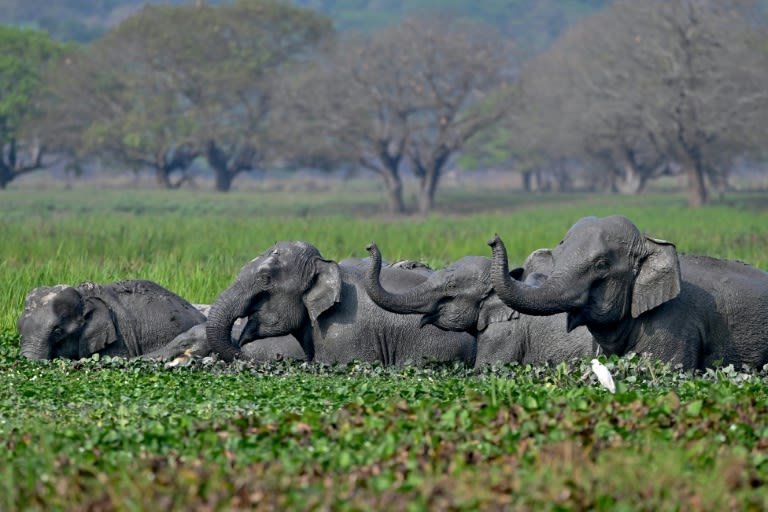
India’s Supreme Court Mandates Urgent Protections for Endangered Wild Elephant Herds
NEW DELHI – In a landmark ruling aimed at curbing a deepening ecological crisis, India’s Supreme Court has issued a series of stringent directives to protect the nation’s wild elephant populations. The move, which addresses the dire consequences of habitat loss and escalating human-elephant conflict, has been hailed by conservationists as a long-overdue victory for one of the country’s most iconic species.
India, now the world’s most populous nation, is home to the majority of the world’s remaining Asian elephants—a species currently listed as endangered by the International Union for Conservation of Nature (IUCN). As infrastructure projects, including sprawling highways, railway lines, and industrial mining operations, slice through the landscape, the historical migratory routes of these giants have been fragmented, forcing herds into closer and more dangerous proximity to human settlements.
Protecting Ancient Corridors
The Supreme Court has ordered state governments to take immediate action to clear obstructions along vital elephant corridors—the narrow strips of land used by herds to migrate between habitats. Under the new directive, states must conduct a comprehensive survey to identify all blockages and move to dismantle them.
Furthermore, the court has explicitly banned the use of “hulla parties,” groups often deployed to drive elephants away from human habitations using extreme methods such as fireballs, flaming torches, and burning stakes.
"It becomes a mob situation with thousands of people chasing the elephants using burning spears," said Prerna Singh Bindra, a noted wildlife conservationist who led the pro bono public interest litigation. "That does nothing to resolve conflict; science shows it only exacerbates the conflict."
Bindra, a former member of the National Board for Wildlife, emphasized that the lack of political will to protect these areas has led to an "unprecedented pace" of destruction. She expressed hope that the court’s mandate will finally force state authorities to translate mapping data into tangible ground-level action.
A Shrinking Range
The plight of the Asian elephant—which serves as India’s "national heritage animal"—is underscored by stark statistics. According to a government survey released in October 2025, India’s wild elephant population stands at approximately 22,446. However, the data reveals a troubling reality: these herds are now confined to a mere 3.5 percent of their historical range. With fewer than 50,000 Asian elephants left in the wild globally, the preservation of these corridors is considered essential to preventing the species’ total decline.
Addressing Captive Welfare
Beyond the wild, the Supreme Court has also turned its focus to the welfare of the country’s estimated 2,600 captive elephants. In a separate order issued Tuesday, the court mandated strict health protocols, requiring individual medical records and regular veterinary check-ups for every captive animal.
Historically used for logging, captive elephants are now primarily exploited for tourism, religious ceremonies, and public entertainment. While animal welfare organizations have welcomed the court’s focus on medical oversight, many maintain that the practice of captivity itself remains fundamentally flawed.
"Whether captured from the wild or bred for a lifetime of confinement, these intelligent, social animals are denied their forest homes," said Poorva Joshipura, director of PETA India. She noted that these animals are frequently "stripped of autonomy" and controlled through intimidation.
As the nation grapples with the demands of its massive human population, this high-quality news article reflects the growing legal and social imperative to balance modern development with the survival of India’s most cherished and endangered wildlife.