









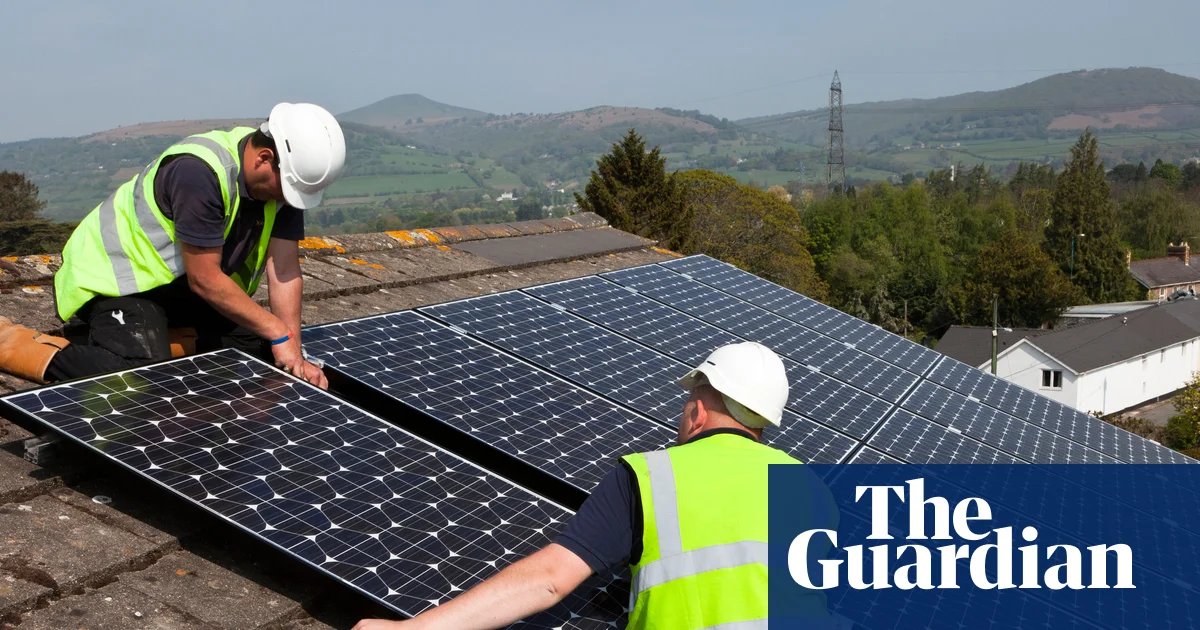
Government Urged to Tackle "Solar Divide" with Universal Green Bonds
As UK households face the dual pressures of a looming energy price hike and the urgent need for a transition to renewable power, a new report from the thinktank Common Wealth has proposed a radical solution to the "solar divide." The report argues that the government must intervene to lower the cost of loans for home solar installations, making clean energy accessible to lower-income families who are currently priced out of the market.
While solar power is booming across the UK—with approximately 150,000 new installations recorded in the first half of 2026 alone—the upfront cost remains a significant barrier. A typical residential system costs between £5,000 and £10,000. While commercial lenders offer finance options, high interest rates of 9% to 10% often negate the long-term savings for the first decade of ownership.
The "Solar Bond" Proposal
To bridge this gap, Common Wealth is calling for a universal entitlement to solar panels, financed through government-backed "solar bonds." Under this model, the government would issue retail investment products similar to Premium Bonds. Savers would provide the capital in exchange for interest payments of roughly 4% to 5%, effectively allowing the public to invest in their neighbors’ energy transition.
"This is good retail politics," said Donal Brown, lead author of the report and a senior researcher at Oxford University’s Environmental Change Institute. "Both households installing panels and those with spare cash to invest could benefit."
Under the proposed scheme, the government would facilitate loans at roughly half the current market interest rates. These 25-year loans would be attached to the property rather than the individual, ensuring that if a homeowner moves, the loan transfers to the new occupier. Repayments would be collected via a modest addition to the household’s regular energy bill standing charge.
Brown argues this method is highly secure, noting that "default rates on the standing charge are incredibly low." By removing the need for complex means testing, the scheme would be universally available, potentially cutting household energy bills by approximately £250 annually.
A Winter of High Energy Costs
The proposal comes as UK families prepare for a difficult winter. Forecasts published this week suggest the energy price cap is expected to rise by 4% in October, pushing the average annual cost to £1,729.
The industry has responded positively to the potential for innovation. Gemma Grimes, Director of Policy and Delivery at Solar Energy UK, noted: "We welcome Common Wealth’s proposal for green bonds as a further means of accelerating the rooftop revolution. Alongside initiatives in the government’s warm homes plan, the creation of solar bonds could help many more households to benefit from solar and battery storage."
Government Response
The Department for Energy Security and Net Zero pointed to current measures already in place to support families, including VAT cuts on electricity and the removal of certain green levies.
Energy Secretary Miatta Fahnbulleh emphasized the government’s commitment to energy independence, stating: "The British people are showing record demand for solar power, with almost 150,000 installations in the first six months of 2026—equivalent to one every 74 seconds. We are also bringing in zero and low-interest loans for solar panels, batteries, and heat pumps which could save families around £550 a year."
As the UK seeks to meet its net-zero targets while protecting the most vulnerable from volatile gas prices, the debate over whether the state should act as the primary lender for domestic green energy is likely to intensify in the coming months.