





Tensions Escalate: Trump Threatens ‘Economic D-Day’ on Iran as Regional Conflict Deepens
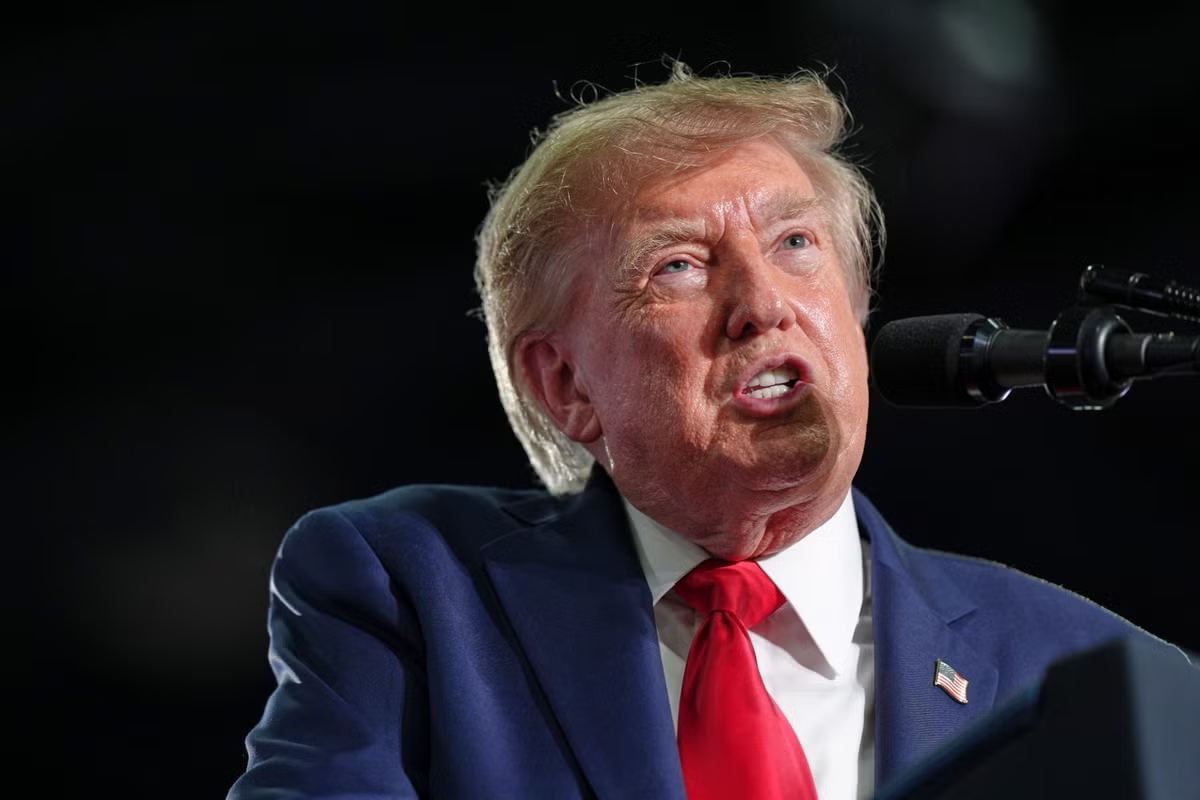
August 23, 2026 — Global tensions have reached a boiling point as US President Donald Trump threatens to unleash what he describes as an "Economic D-Day" against Iran, even as the administration faces increasing scrutiny regarding the sustainability of its military and economic strategy in the region.
As the conflict nears its six-month anniversary, President Trump has ramped up his rhetoric, declaring on social media that he will impose "tremendous economic consequences" on any nation that continues to engage in trade with Tehran. In a combative post on Truth Social, the President urged allies to stand with the United States to "isolate and defeat" the Iranian threat.
The "New US Territory" Controversy
Amidst the threats of financial warfare, the President once again controversially labeled the Strait of Hormuz as "new US territory." The claim, which has been met with international bewilderment, was bolstered by the President’s amplification of a claim by commentator Marc Thiessen that over 1,000 ships have been successfully escorted through the vital chokepoint under US supervision.
Tehran has responded with defiance. Iranian foreign minister Abbas Araghchi dismissed the threats, suggesting that the President’s hardline stance is a desperate attempt to find an exit strategy from an increasingly unpopular war. Senior Iranian security official Mohsen Rezaei went further, warning that any further escalation by the US would trigger a retaliation likened to an "earthquake."
Domestic Unrest and Diplomatic Shifts
The internal situation in Iran remains volatile. State media reported on Sunday that a protester, Majid Adineh, was executed following his arrest in January. Adineh was convicted of working against state security and allegedly conducting "operational actions" on behalf of Israel and the US.
In the diplomatic sphere, the regional instability has prompted Chile to shutter its embassy in Tehran. While the Chilean foreign ministry emphasized that it is not severing diplomatic ties, it noted that the move was necessary to streamline resources and prioritize the safety of its diplomats.
A Complex Humanitarian and Legal Landscape
The broader conflict continues to have a ripple effect beyond the immediate combatants. In London, three individuals—two men and a teenager—have admitted to their roles in an April arson attack on the offices of Volant Media, the parent company of the Persian news outlet Iran International.
Meanwhile, humanitarian concerns persist regarding the fate of detained Iranian pilots in Qatar. Iranian officials have urged Doha to transfer the detained personnel to a land-based hospital, citing "poor physical condition." Qatar has maintained that the pilots were detained after violating its airspace and has invited Iranian investigators to review the situation—an invitation that has been a point of contention for months.
Finally, the Israeli government has faced renewed international criticism after dropping criminal proceedings regarding a 2024 airstrike in Gaza that killed seven World Central Kitchen volunteers, including Polish citizen Damian Sobol. The Polish foreign ministry expressed deep disappointment, summoning the Israeli ambassador to register a formal protest over the decision.
As the US prepares for what it calls its most "crushing economic operation" to date, analysts remain divided on whether these measures will force a change in Tehran’s policy or further entrench the standoff, with many pointing to the influence of regional powers like China as a significant obstacle to total American economic dominance.