








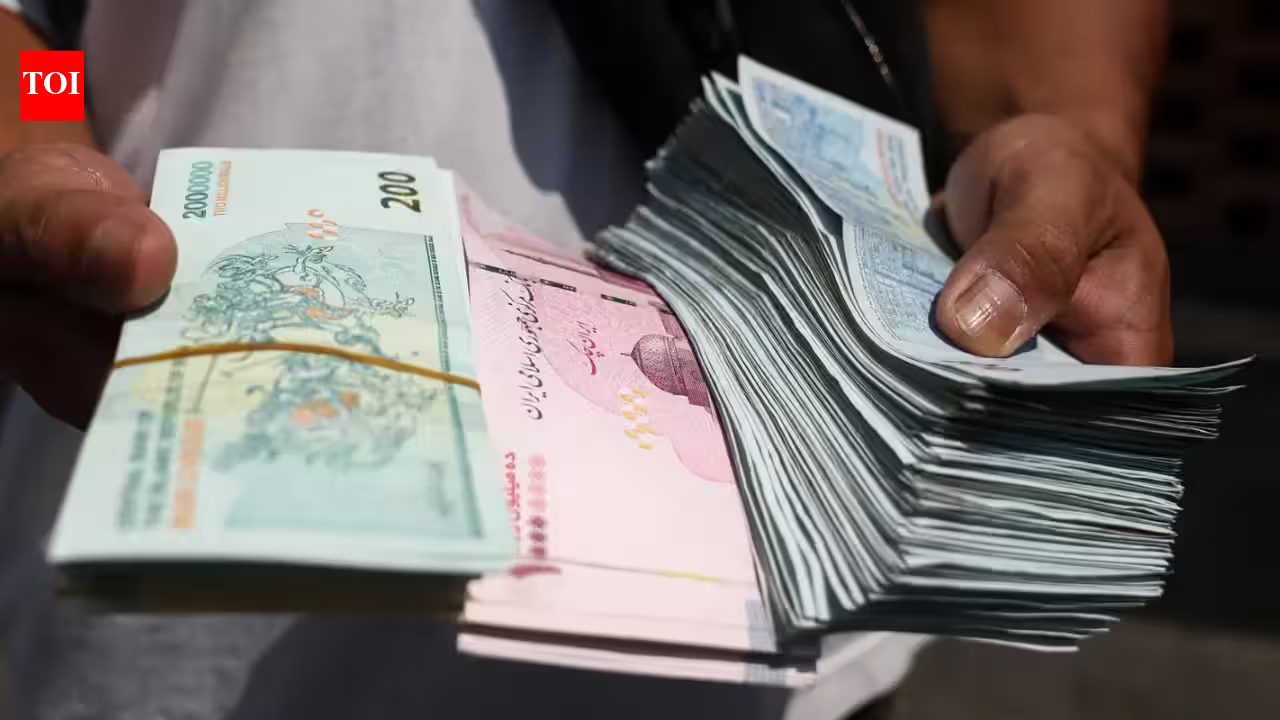
Iranian Rial Plummets to Historic Lows as Washington Prepares “Economic D-Day”
TEHRAN — The Iranian rial collapsed to an unprecedented low on Monday, signaling deep distress within the nation’s economy as the United States prepares a new, aggressive package of sanctions. As informal markets opened, the currency plunged to 2.02 million rials against the U.S. dollar, vastly outpacing the official Central Bank rate of 1.5 million.
The historic depreciation follows months of severe economic instability, exacerbated by ongoing regional conflict and a stifling U.S. naval blockade. With double-digit inflation and negative economic growth, the Iranian leadership is facing its most significant fiscal challenge in years.
A Geopolitical Standoff
Despite the severe economic pressure—which U.S. officials have described as an “economic D-Day”—Tehran has shown few signs of diplomatic concession. Iran maintains a strategic stranglehold over the Strait of Hormuz, the world’s most vital oil transit chokepoint. Throughout the current conflict, repeated threats and attacks on shipping in the strait have effectively paralyzed the flow of oil, which historically accounted for one-fifth of global energy trade.
In a bid to navigate the deadlock, Iran and Oman are reportedly nearing an agreement to jointly manage the waterway. Regional officials suggest the plan would implement a bifurcated transit system: ships entering the Persian Gulf would utilize an Iranian-controlled route, while vessels exiting would pass through a route managed by Oman.
The move has drawn the ire of the White House. President Donald Trump has issued stern warnings to Oman, a traditional U.S. ally, threatening military intervention if it facilitates Iran’s control over the region. Oman’s Foreign Minister is expected to travel to Tehran this Tuesday for high-level talks to finalize the potential arrangement.
U.S. Escalates Economic Warfare
Washington is showing no signs of easing its “maximum pressure” campaign. U.S. Treasury Secretary Scott Bessent confirmed on Monday that the administration is preparing a new tier of sanctions, which will reportedly include secondary sanctions targeting nations that continue to facilitate trade with Tehran.
“President Trump decimated Iran’s economy to a point where the Iranian currency has never been weaker and inflation has rarely been higher,” Bessent wrote in a weekend editorial for the Financial Times. He framed the new measures as a necessary step to deter nations that continue to provide an economic lifeline to the Iranian regime.
The impact of this policy shift is already being felt in the Gulf. Last week, the United Arab Emirates—historically Iran’s largest trading partner and a crucial re-export hub—suspended all trade with Tehran following discussions between President Trump and Sheikh Mohammed bin Zayed Al Nahyan.
Tehran Issues Warning
Tehran has reacted with characteristic defiance. Mohsen Rezaei, the hard-line leader of Iran’s Supreme National Security Council, took to social media to issue a stark warning to the international community. Rezaei declared that any country choosing to cooperate with the new U.S.-led economic restrictions would be viewed by Iran as committing an “act of war,” underscoring the high stakes as both sides approach a potential point of no return.