









Flash Floods Near Tibet Border Leave Hundreds of Kailash Mansarovar Pilgrims Stranded
RASUWA, NEPAL — A major search and rescue operation is underway in Nepal’s mountainous Rasuwa district following devastating flash floods that have left nearly 400 pilgrims stranded or missing. Among those affected are at least 108 Indian nationals who were en route to the sacred Mount Kailash and Lake Mansarovar.
According to reports from the news agency AFP, the floodwaters originated from the Tibetan side of the border, surging into Nepal with enough force to destroy critical infrastructure, including roads, bridges, and communication networks. The destruction has effectively severed one of the most popular transit corridors for pilgrims attempting the high-altitude journey. India has formally extended its assistance to the Nepalese government as local authorities scramble to locate the missing and assess the scale of the disaster.
A Sacred, Arduous Journey
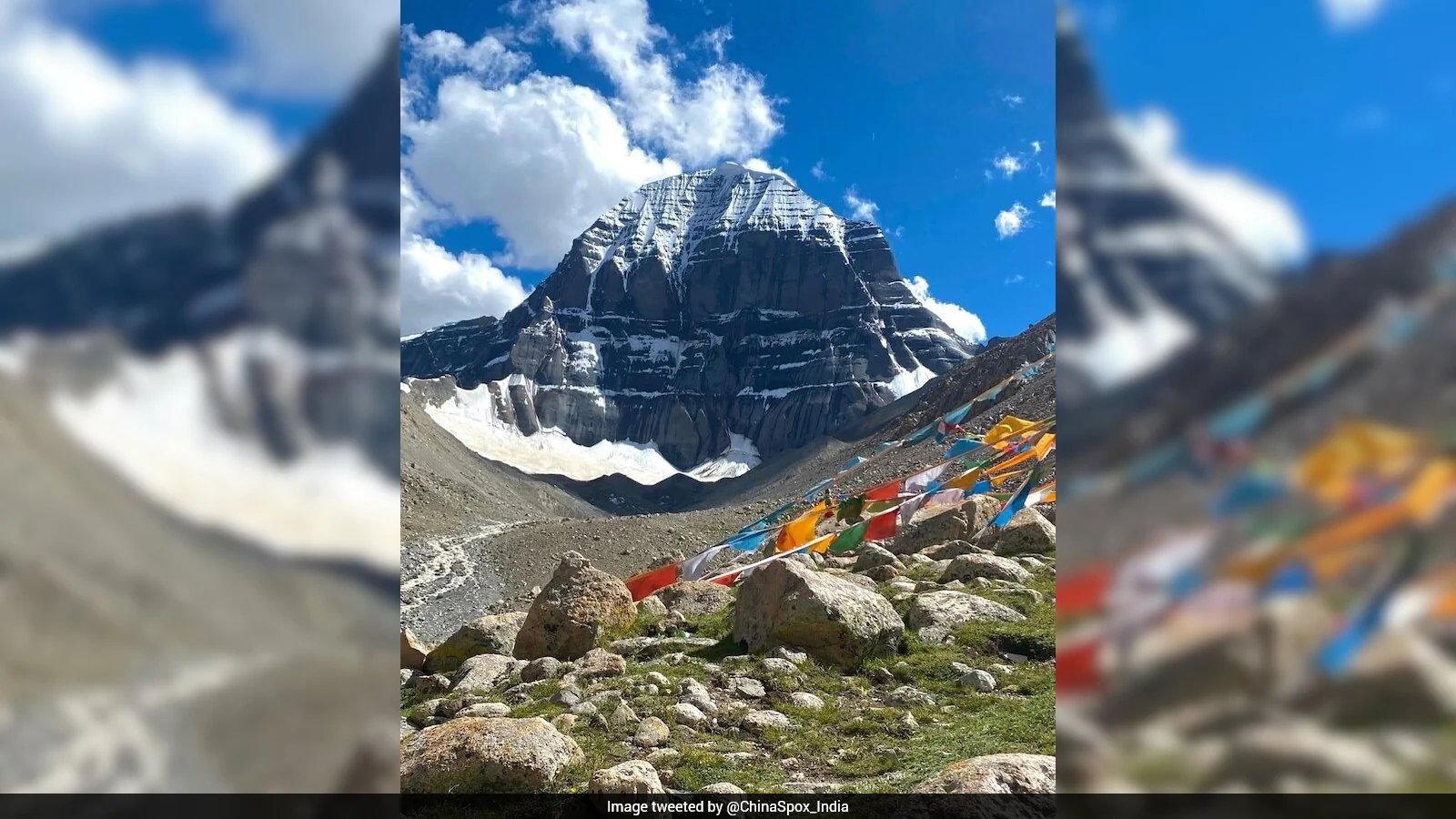
The Kailash Mansarovar Yatra is one of the most revered pilgrimages for millions of Hindus, Buddhists, Jains, and practitioners of the Bon faith. Centered on the 6,638-metre-high Mount Kailash—believed to be the abode of Lord Shiva and Goddess Parvati—and the nearby sacred Lake Mansarovar, the pilgrimage is steeped in millennia of tradition.
The Yatra holds deep spiritual significance, as devotees believe a visit to the lake cleanses one of sins and facilitates the path to moksha (liberation). Despite its significance, the pilgrimage has faced a tumultuous history. It was suspended for two decades following the 1962 India-China war and only resumed in 1981. After a six-year hiatus caused by the COVID-19 pandemic, the Yatra finally reopened in 2025, drawing thousands of devotees before the current tragedy struck.
Diverse Routes, Varied Risks
Pilgrims typically choose between three primary routes to reach the sacred destination:
- Lipulekh Pass (Uttarakhand): Managed by the Indian Ministry of External Affairs in cooperation with the Kumaon Mandal Vikas Nigam, this route involves high-altitude trekking, though recent road developments have eased some of the burden.
- Nathu La Pass (Sikkim): A route favored by senior citizens, it involves less trekking and more vehicle-supported travel, winding through Gangtok and into Tibet.
- Kathmandu (Nepal): The most flexible option, managed by private operators. Pilgrims often take flights to remote areas like Simikot before continuing by helicopter or road. This route has been the most severely impacted by the recent flash floods.
The Perils of the Pilgrimage
The journey is notoriously difficult, taking place at altitudes exceeding 4,500 metres, where oxygen levels are dangerously low. Pilgrims are subjected to extreme weather, including freezing temperatures and sudden, unpredictable landslides. The most rigorous segment is the 52-km parikrama (circumambulation) around the mountain, which requires crossing the treacherous Dolma La Pass at nearly 5,630 metres.
Strict Regulatory Requirements
The Indian government maintains stringent guidelines for the Yatra. Because independent travel is prohibited, pilgrims must secure Chinese and Tibet Group visas through authorized channels.
The Ministry of External Affairs has issued a stern advisory to prospective pilgrims, urging them not to commence their journey—or even move into transit hubs in Nepal—until all permits are physically confirmed. Many pilgrims have historically found themselves stranded due to incomplete documentation or relying on unreliable private operators.
Authorities are advising families of those in the affected region to maintain contact with the Indian Embassy in Kathmandu, which is currently coordinating with Nepalese rescue teams to ensure the safety and swift evacuation of those caught in the aftermath of the floods.