









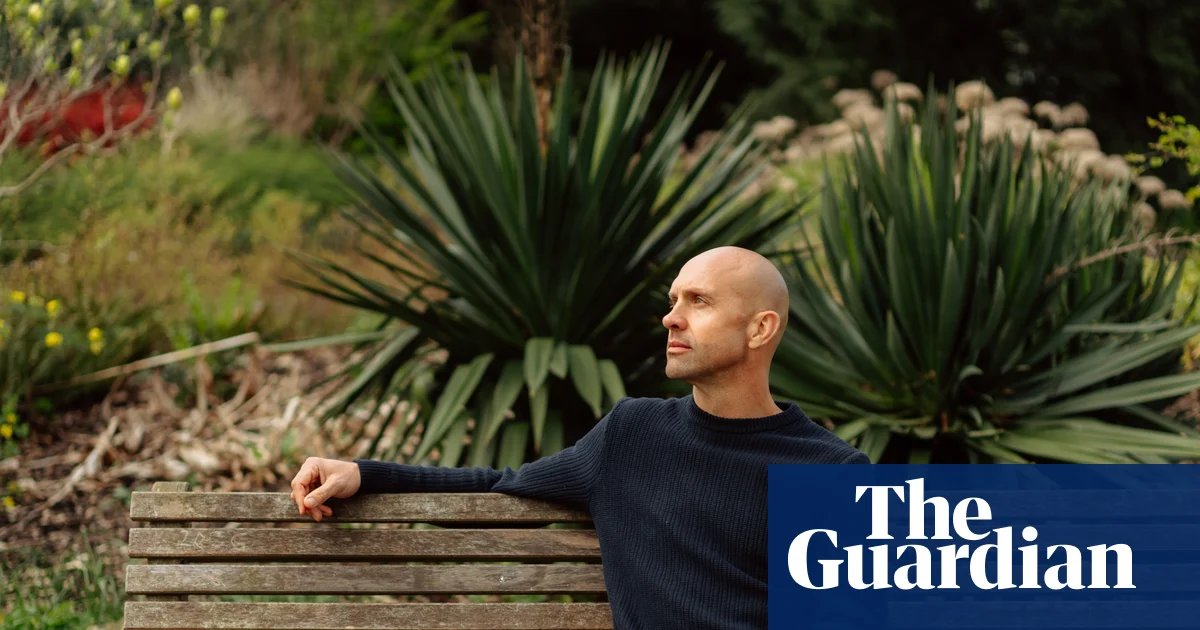
At the peak of his adventuring career, Luke Tyburski was a man of extremes. The former pro-footballer, then in his early 30s, had dedicated himself to intense endurance challenges, of the sort that make a marathon look like a fun run. Beginning with the Marathon de Sables (a notorious multistage ultramarathon in the Sahara desert), he then ran the world’s highest ultramarathon at Mount Everest base camp, battled dehydration during a 100km run on a tropical island, and took on the vividly named Double Brutal Extreme Triathlon in north Wales. The endgame in all of this was a self-designed challenge, which saw him swimming from Africa to Europe, cycling through Spain and running to Monaco – 2,000km in total, in just 12 days.
Tyburski was a professional adventurer, financing his pursuits via magazine articles and speaking gigs, and even making a documentary about his quest. His whole raison d’etre was to push past his limitations, showing what a person is capable of when their mindset is strong enough. Yet, privately, he was dealing with depression, related to a loss of identity after the end of his footballing career, which took in Australia, the US and Belgium before he tried out for clubs in the UK. “Training and racing creates an escape, and the highs are extremely high,” says Tyburski. “But when I returned home from an adventure, the lows were extremely low, because I hadn’t addressed what I was running away from.”
He began to spend even more time training. If he was planning on doing a four-hour bike ride on a Saturday morning with friends, and a two-hour run on the Sunday morning – normal enough for a triathlete – he might fit in a secret training session on the Saturday afternoon. He developed crippling insomnia, which he used as a pretext to run what he called “midnight marathons”, and would binge eat between training sessions to prolong the high.
It is possible to take on big endurance challenges without spinning out of control. Indeed, performing at your best requires a balanced approach to rest and fuelling. But in Tyburski’s case, they enabled a self-destructive tendency. All the hallmarks of an addiction were taking root: the secrecy, the persistence through negative consequences, the need for more, the sense of having something to escape. “But nobody suspected anything, because my weight didn’t change, my performance didn’t change, my demeanour didn’t change. I was a very good actor,” he says.
Exercise addiction isn’t officially recognised as a psychiatric disorder. In common with most behavioural addictions, it doesn’t feature in either of the key psychiatric manuals, the DSM-5 or the ICD-10. As a result, there are no standardised criteria for diagnosing it. You’ll often hear people describing themselves as “exercise addicts” – an affliction on a par with “chocoholic” – when rhapsodising about how much they love the gym.
That said, for a subset of regular exercisers, there is clearly something more damaging going on. Studies have suggested that around 0.3-0.5% of the general population may be dependent on exercise, rising to 3-9% of regular exercisers and athletes. Many researchers believe the framework of addiction is fit for purpose here. There is even a growing body of evidence to suggest that behavioural addictions function like substance addictions neurologically, through dysregulating the motivational pathways in the brain. Indeed, the phenomenon of cross-addiction – when a person replaces one damaging substance or behaviour with another – is well documented when it comes to exercise.
“The brain doesn’t necessarily care so much where it gets the spike of dopamine or serotonin from,” says Kanny Sanchez, an addictions therapist supporting patients within the Priory’s Flourish addiction treatment programme. “In all cases, there is the same need for an external source to come inside and regulate the internal turmoil.”
Exercise addictions, he says, generally take the form of an obsession. Rather than being just another part of your day, exercise becomes the centrepiece, often to the detriment of everything else. You may keep training through injuries, and even experience a form of withdrawal when unable to work out. “Exercise in itself is a really good way of handling stress,” says Sanchez. “But if it’s the only tool you have in your arsenal, that’s when it becomes an addiction.”
Micheál Costello, 30, is a PR account manager, writer and triathlete. He was diagnosed with depression and atypical anorexia at the peak of the pandemic. Before Covid, he had been working out a lot and practising intermittent fasting, a combination that provided a focal point for his anxieties but didn’t ring too many alarm bells. As the world went into lockdown, and Costello moved back in with his parents, his behaviours spiralled. “If exercise addiction could be formally diagnosed, I would have been diagnosed with it, is what my psychiatrist said at the time,” he says.
Atypical anorexia is a form of the condition where patients restrict their food intake but are not medically classed as underweight. In common with other eating disorders, it is often accompanied by excessive exercise. One study found that up to 48% of people with eating disorders show symptoms of exercise addiction. This may stem from body dissatisfaction, or compensatory behaviours around food, but there can be an emotional element too. “A lot of the clients I work with use exercise to get rid of unwanted and uncomfortable feelings,” says Stacey Fensome, a sports and exercise psychologist who works with the eating disorder treatment clinic Orri. “Exercise can be a tool to override the nervous system and generate a kind of numbness, as well as produce a release of endorphins.”
In Costello’s case, underfuelling and overtraining went hand in hand. He bought an exercise bike for the house and spent most of the day on it. “I would wake up, go for a walk, have something small to eat, get on the bike for two hours, do half an hour of bodyweight exercises, and an hour and a half of constant skipping,” he recounts. “That would bring me to evening time. I’d go for a 20-minute walk with my mum, and then I’d get back on the bike for up to three hours. It was a relentless existence, but I was also terrified to step out of it.”
It was only after some suicidal thoughts that he admitted to himself he needed help. While that help was not easy to come by – his GP dismissed his concerns as those of a “fine, healthy young lad” – he eventually received some talking therapy and a course of antidepressants. Further down the line, he discovered triathlon, a sport he credits as resetting his relationship with exercise.
“I wanted to do something with all the fitness I had built while I was in the midst of the eating disorder, and to shift my perspective,” he recalls. “I completed my first Ironman in 2023 and was hooked. I’m now training for my fourth one, and have qualified for the Irish triathlon team. I can’t abuse my body in the way that I used to if I want to be able to do those races.”
When you’re talking about these kinds of extremes – Tyburski’s midnight marathons, or Costello’s stints on the exercise bike – it’s obvious that there is something awry. But for many endurance athletes and gymgoers, it can be difficult to know where discipline shades into compulsion, and compulsion into full-blown addiction. For instance, the Exercise Dependence Scale, one of the main screening tools used by clinicians, asks participants how much they agree with the statement: “I continually increase my exercise intensity to achieve the desired effects/benefits.” This reads a lot like the principle of progressive overload – a key prong of any respectable training programme.
Similarly, some compulsive behaviours around exercise look innocuous enough from the outside. Fensome says they can include struggling to rest and have days off; prioritising exercise over other activities; being unable to sit still; choosing to walk everywhere; even using a standing desk. As red flags go, these are subtle ones. “Wanting to take care of our health is wonderful, but what is the intention behind it?” she says. “Is it because being still causes a lot of distress and fear, or is it because we actually want to be physically active?”
A further complication is that exercise is socially validated, in a way that, say, a gambling addiction is not. Your “no rest days” approach may win you plaudits on social media; your body type may fulfil a societal ideal. Very few of the people around you, except those closest, are likely to express concerns. “I worked with one client who was doing extra training sessions and showing up early, and they were put on a pedestal for that,” says Fensome. “But what was actually happening was they couldn’t stop, and if they stopped there was a loss of control over who they were.”
Margo Steines, an Arizona-based author, has dealt with a litany of addictions and eating disorders in her life, but in some ways found recovery from exercise addiction to be the hardest. At the peak of her addiction, during grad school, she was spending seven to nine hours a day in various gyms. “I had a secret trainer who I would see before CrossFit, and then I’d go to CrossFit, and then I’d run, and then go to hot yoga and then martial arts,” she says. “I was neglecting everything else and getting the cascade of athletic injuries. But people would stop me in the store and ask what I did for my workouts. It’s easy to hide dysfunction because you’re not visibly underweight – you’re jacked and juicy and look great.”
As she frames it, there were several layers to her addiction. Most obvious was the cultural layer, about wanting a very specific, idealised body type. There was a personal layer, about the fallout from a traumatic relationship. “Exercise allowed me to not feel how messed up I was from it,” she notes. Then there was the positive reinforcement from those around her, including doctors and therapists, who tended to toe the line that “movement is good”.
Only her partner, a strength and conditioning coach, recognised her issues for what they were. “I got very lucky, because he was my coach at the time,” she says. “He could see the red flags, but also knew how to approach me delicately, like a bunny in the woods.”
Exercise addiction can be just as damaging as other types of addiction; if you are underfuelling at the same time, you may develop overtraining syndrome, a condition characterised by a host of unpleasant mental and physical symptoms. “You can suffer with chronic injuries. You’re probably looking at hormonal disruption, burnout, low energy and low mood. There might be an element of withdrawing socially, like the social battery doesn’t even exist,” says Aaron McCulloch, co-owner and director at Your Personal Training.
Sanchez says there can be psychological, social and even spiritual ramifications too. “The mental toll that it takes, it’s just like a prison in your head,” he says. “The person will have a very external locus of identity, meaning their self-worth will be entirely dictated by how much they’re exercising. Missing the workout causes so much guilt and shame.”
Since the birth of her daughter in 2020, Steines has been living with myalgic encephalomyelitis, formerly known as chronic fatigue syndrome, a condition that leaves her bedbound during flareups and naturally tempers her drive to over-exercise. While she can’t say for sure what caused it, she does believe it’s related to her exercise addiction. “I go in and out between being relatively sedentary and then working out like an average person,” she says. “On the outside, it looks like I’ve recovered. While I would say I’m two-thirds recovered on the mental side, I didn’t do the work to recover. It’s more like the exercise addiction got taken away from me.”
Tyburski, meanwhile, is “unofficially retired” from adventuring after the buildup of injuries and consequent surgeries. “In 2026, I’m paying for the detrimental behaviours of 2013 and 2014,” he says. “It’s taken me a while to accept, but I now have gratitude for the smaller things in life, to be able just to be active and healthy. Will you see me swimming between continents again? No, but when my body is ready to do it, I would love to go into the ocean for half an hour.” These days, he works as a keynote speaker and leadership coach, and says he’s in a good place.
Recovery from exercise addiction can be complex, not least because eliminating exercise altogether – as you would for drug and alcohol addictions – isn’t usually a desirable end goal. Yet however fraught a person’s relationship with movement, there are options available: entering a rehab facility, working with an understanding therapist or even leaning on peer support. Ideally, these could make it easier to spot the signs before the problem has spiralled out of control.
Costello likes to use the analogy of physical injury. “If you were experiencing a niggle in your ankle and you were concerned that it was tipping into something more damaging, you’d talk about it,” he says. “You’d mention it to a friend, and if it got worse you’d see a physio. I feel like we need to do the same with psychological niggles, to just be like, ‘Do you feel you’re getting a bit too anxious if you miss a session?’ You’d be surprised how helpful just talking out loud can be.”