









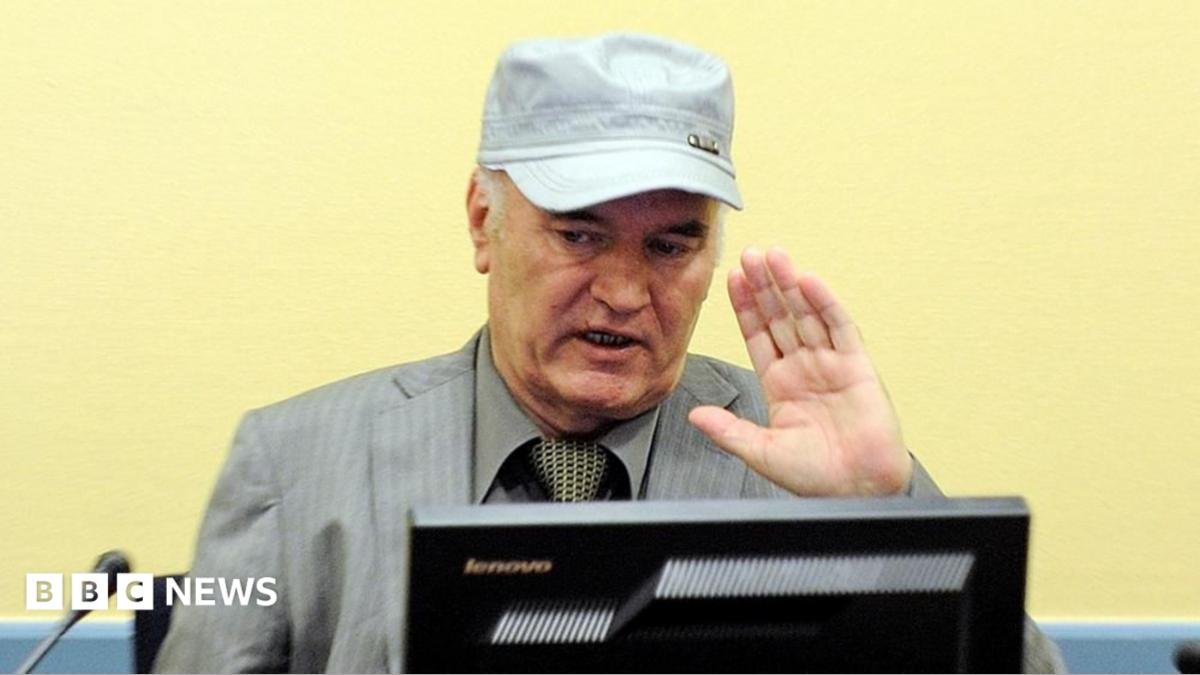
Ratko Mladić: A Polarizing Legacy Ends Behind Bars
The death of Ratko Mladić, the former Bosnian Serb military commander, has once again underscored the deep, unresolved fissures left by the conflicts of the 1990s. Mladić, who died while serving a life sentence at the United Nations detention facility in The Hague, remains a figure of intense international condemnation and localized, defiant reverence.
His passing brings a definitive end to a life marked by some of the most heinous crimes committed on European soil since World War II. Mladić had been held at the UN facility since his arrest in 2011, persistently refusing to recognize the legitimacy of the court that ultimately sentenced him for his role in the Bosnian War.
A Legacy of Atrocity
As the commander of the Bosnian Serb forces, Mladić oversaw a brutal campaign that fundamentally reshaped the Balkans. His military tenure was characterized by a systematic policy of “ethnic cleansing,” a four-year siege of Sarajevo that claimed the lives of more than 10,000 civilians, and the 1995 Srebrenica massacre. During the latter, his forces executed 8,000 Bosniak men and boys—a tragedy the UN court later categorized as genocide.
In May of this year, a UN judge rejected a final bid for Mladić’s release on humanitarian grounds. While the court acknowledged that the 81-year-old’s medical condition was “dire,” it ruled that he was receiving “comprehensive and compassionate treatment” within the prison system, opting to keep him incarcerated until his death.
Conflicting Responses: Memory vs. Denial
For victims of his campaign, Mladić’s death offers little solace. Hasan Hasanović, a survivor of the Srebrenica massacre who lost his father and twin brother in the slaughter, stated that the news fails to provide closure.
“His death is just a biological necessity, and it doesn’t bring to an end the political project and military project that created that legacy of genocide,” said Hasanović, who now works at the Srebrenica Memorial Center. “We now live with the consequences of a divided country and genocide denial.”
In stark contrast, the atmosphere in Belgrade, Serbia, remains sharply divided. For some residents, Mladić continues to be viewed as a national hero rather than a war criminal.
“I genuinely believe he protected the Serbian people, because after all, that was his duty,” one resident, identified as Milan, told Reuters. Another local, Vasilije, went further, expressing anger at the court’s proceedings: “It’s a massive shame, it really is. Personally, I think it’s a total injustice that he was even thrown in The Hague.”
As the dust settles on the life of one of the 20th century’s most controversial figures, his death highlights that while the legal process has concluded, the battle over the historical narrative of the Bosnian War—and the scars it left on the region—remains far from healed.