









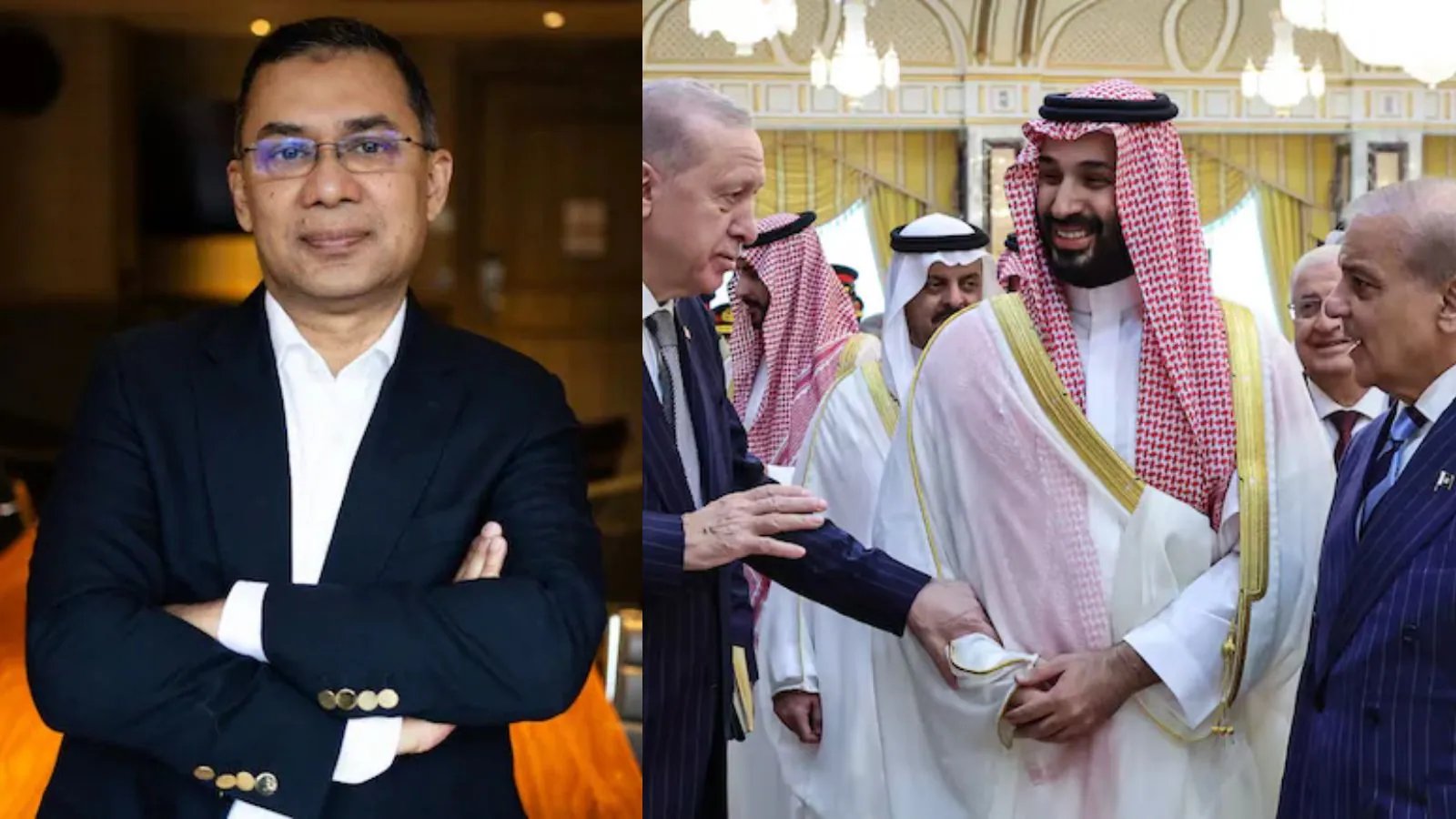
Bangladesh Weighs Joining ‘Mecca Pact,’ Sparking Regional Security Concerns
JEDDAH – Bangladesh is reportedly considering an invitation to join the recently formed Mecca Pact, a move that has sparked intense debate domestically and raised significant red flags for New Delhi regarding regional security.
The potential alignment was brought to the forefront during the 23rd OIC Extraordinary Council of Foreign Ministers held in Jeddah, where Bangladesh’s Minister of State for Foreign Affairs, Humayun Kabir, held high-level discussions with his Saudi counterpart, Prince Faisal bin Farhan Al Saud.
A New Strategic Shift?
The Mecca Joint Defence Agreement, signed on August 7, 2026, by Saudi Arabia, Turkey, and Pakistan, establishes a collective-defense framework wherein an armed attack against any one member is treated as an attack against all. If Bangladesh opts into this coalition, it would signify a major shift in the nation’s foreign policy.
Critics and geopolitical analysts have pointed out that such a move would contradict the administration’s stated policy of “Not Dilli, Not Pindi, Bangladesh before everything.” Many observers argue that joining a pact that includes Pakistan represents a significant tilt toward “Pindi,” potentially undermining the current government’s stance on maintaining a balanced regional posture.
Official Stance and Diplomatic Outreach
While the Bangladesh Foreign Ministry has remained focused on the diplomatic successes of the Jeddah meetings—highlighting “positive momentum” in bilateral ties with Riyadh and Ankara—sources close to the developments confirmed to Reuters that an invitation to join the pact has indeed been extended to Dhaka.
During his meeting with the Saudi Foreign Minister, Kabir delivered a letter from Prime Minister Tarique Rahman to the Saudi Crown Prince, emphasizing the elevation of their bilateral partnership. Similarly, in discussions with Turkey’s Deputy Foreign Minister, Musa Kulaklıkaya, the two sides reaffirmed their commitment to strengthening economic and defense cooperation.
Domestic Reactions
The potential for a strategic pivot has elicited a strong response from the political opposition. Dr. Shafiqur Rahman, leader of the Jamaat-E-Islami Bangladesh, addressed the reports on social media, framing the decision as one of national sovereignty.
“Joining the Makkah Pact is an entirely sovereign and internal matter for Bangladesh,” he wrote on X. “If Bangladesh takes any decision considering the needs and interests of the country and its people, there is no reason for anyone else to feel disturbed or distressed by it.”
Regional Security Implications
For India, the prospect of its neighbor entering a military alliance with Pakistan—a nation it accuses of fostering terrorism—is deeply troubling. New Delhi has long expressed anxiety over Pakistan’s efforts to increase its influence in Bangladesh, fearing it could be used as a platform to foment instability within Indian borders.
Analysts believe that because the pact serves as a platform for Pakistan, Bangladesh’s participation would be viewed in New Delhi as a hostile development. With Turkey also maintaining an openly critical stance toward India on various geopolitical fronts, the formation of the Mecca Pact appears to be evolving into a significant point of friction in South Asian power dynamics.
As Dhaka weighs its options, the decision will likely test the government’s ability to balance its Islamic-world alliances against the complex security realities of its immediate neighborhood.