






Kangana Ranaut Embraces Tradition for Raksha Bandhan After Criticizing Industry’s “Modern” Festive Campaigns
Bollywood actor and politician Kangana Ranaut recently offered fans a glimpse into her personal Raksha Bandhan celebrations, showcasing a traditional approach that stands in stark contrast to the modern-day advertisements currently making waves on social media.
A Traditional Celebration
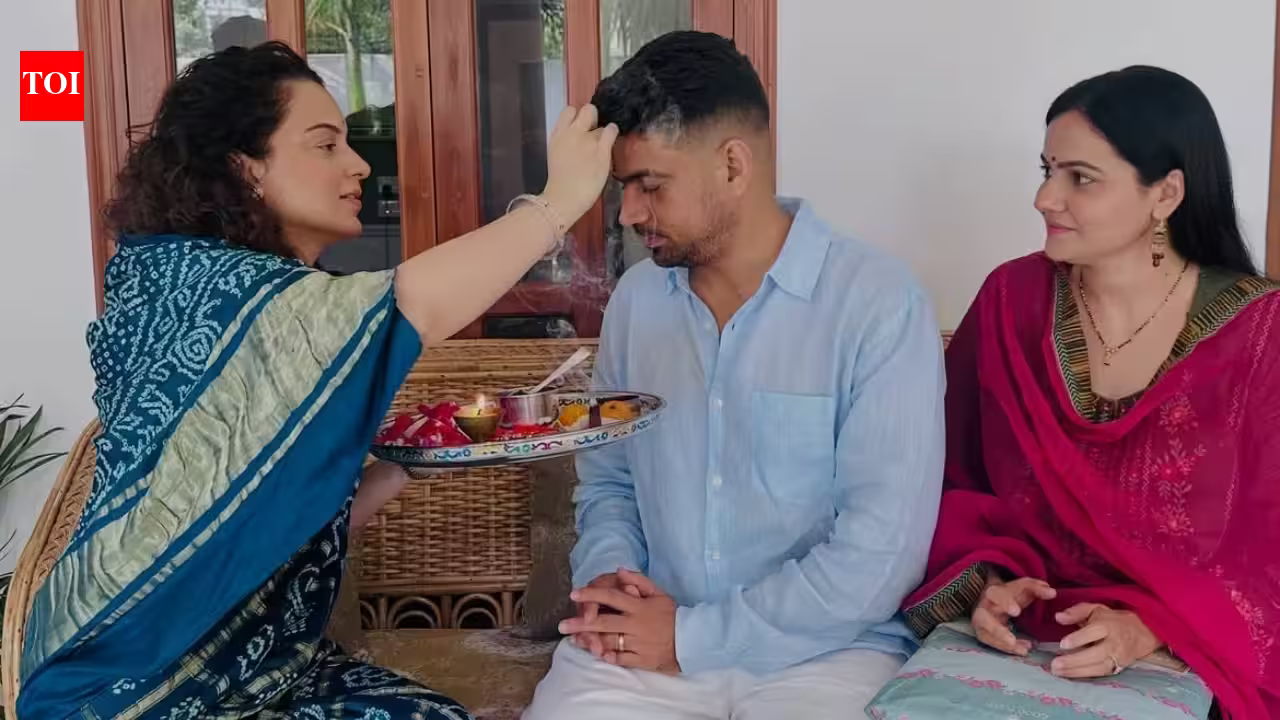
Sharing a series of photos on Instagram, Kangana provided an intimate look at her festivities with her brother, Akshat Ranaut. Dressed in an elegant blue saree, the actress was seen performing the quintessential rituals of the festival. The images captured her conducting an aarti for Akshat and his wife, followed by the emotional moment of tying the rakhi on her brother’s wrist.
The actress also highlighted the puja thali, which was adorned with authentic elements essential to the ceremony, including laddoos, halwa, dhoop, diya, kumkum, and rice. Alongside the images, she penned a heartfelt note in Hindi, expressing her prayers for her brother’s prosperity and emphasizing the significance of his role in upholding their family’s honor and protecting his loved ones.
The Debate Over Cultural Authenticity
Kangana’s celebration served as an intentional display of cultural adherence, occurring shortly after she publicly criticized a recent Raksha Bandhan advertisement featuring fellow actor Kriti Sanon.
The campaign in question had drawn ire from some corners of social media for featuring Kriti in a bralette-style top during a festival traditionally associated with modesty and heritage. While some dismissed the criticism as focusing too heavily on the choice of clothing, Kangana argued that the outfit was merely a symptom of a larger, systemic issue within contemporary advertising.
“Festivals Are Not Just Aesthetics”
According to the actress, the core of the problem lies in the disconnect between modern commercial depictions of Hindu festivals and their actual cultural significance.
“The bralette was a very small part of the bigger issue,” Kangana explained. She argued that the advertisement failed to capture the essence of the occasion, noting the absence of parents, the family home, and the vital rituals that define the day.
“For Hindus, the real question was—where are the parents? Where is the home? There was no halwa, puri, God, tilak, akshat, incense or lamp—nothing,” she remarked. “A festival is not just about aesthetics. A festival is an aesthetic expression of a culture and civilization.”
By sharing these photos, Kangana appears to be championing a return to the traditional values she feels are being eroded by modern marketing, positioning her personal celebrations as a testament to the cultural legacy she believes should be preserved.