






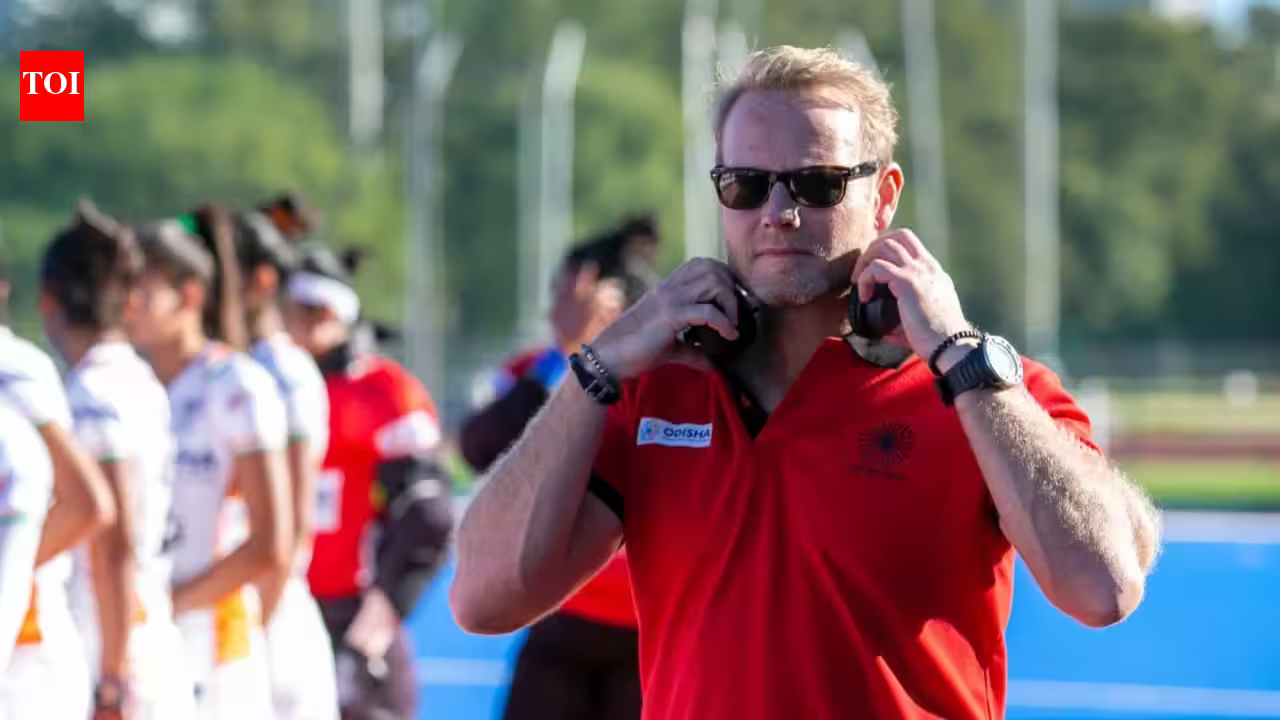
“People Don’t Always Know the Real Story”: Sjoerd Marijne Defends Pre-World Cup Leave
NEW DELHI – Indian women’s hockey team chief coach Sjoerd Marijne has broken his silence regarding the controversy surrounding his short leave of absence immediately preceding the FIH World Cup. Addressing critics who questioned his commitment during the final stages of the team’s preparation, the Dutchman asserted that he remained fully integrated with the squad’s progress despite his brief physical absence.
The decision to take time off drew pointed criticism from several corners, including legendary Indian goalkeeper PR Sreejesh. The veteran shot-stopper had questioned whether a team could maintain its competitive edge when its primary tactical leader was away during the most critical phase of training.
Maintaining Constant Connection
Reflecting on the campaign, which saw India secure a commendable fifth-place finish despite battling a series of injuries, Marijne insisted that his methodology remained intact.
“I have seen every training, match, done meetings and had personal contact with the players, so it was not that I didn’t know what was going on,” Marijne told PTI. “People don’t always know the real story, and that’s fine as long as we know what we have done and we covered everything. Besides this, the staff was there and helped them prepare for the World Cup.”
Raising the Bar for the Future
Marijne, who returned to the helm for his second stint with the side in January, views the recent fifth-place finish not as a ceiling, but as a foundation. He emphasized that the team’s growth must be an ongoing, daily pursuit.
“It has been a journey with many ups, and this is what we have to continue, but that’s only possible when we stay hungry and eager to get the best out of ourselves and not take things easy,” he remarked. “Keep raising the bar and expect more and more from the team.”
He noted that his current tenure has been bolstered by the squad’s increased maturity. Unlike his first spell, the current group is composed of seasoned players who have battled high-ranked teams and have the experience of competing at the sport’s biggest stages. “These girls also knew me, how I coach and prepare the team. They shared this with the younger girls, which made it easier to have a quick start,” he added.
Fostering a Collective Identity
Upon his return, Marijne’s primary objective was to overhaul the team’s culture. He identified the transition from an individual-centric mindset to a collective “we” approach as the turning point for the squad.
“The main challenge was to make a team again and change the mindset to ‘we’ instead of ‘I’ and bring back discipline,” he said, noting that his own experience in the interim—guiding other coaches—has helped him mature in his leadership style.
As the team looks toward the future, Marijne remains optimistic about the growing footprint of women’s hockey in India. “If I see the reactions, people are positive and follow the team,” he concluded. “I hope we inspire young kids to also start playing hockey.”