






The Disappearing Maidan: A Quiet Tragedy Playing Out Across India’s Cities
The maidan is perhaps one of the most democratic institutions ever conceived. Unburdened by membership fees, elite club rules, or social hierarchies, the maidan functions on a simple, universal logic: if you have a bat, you play. If you don’t, you stand at the boundary, inevitably drawn into the game by the sheer magnetism of the sport.
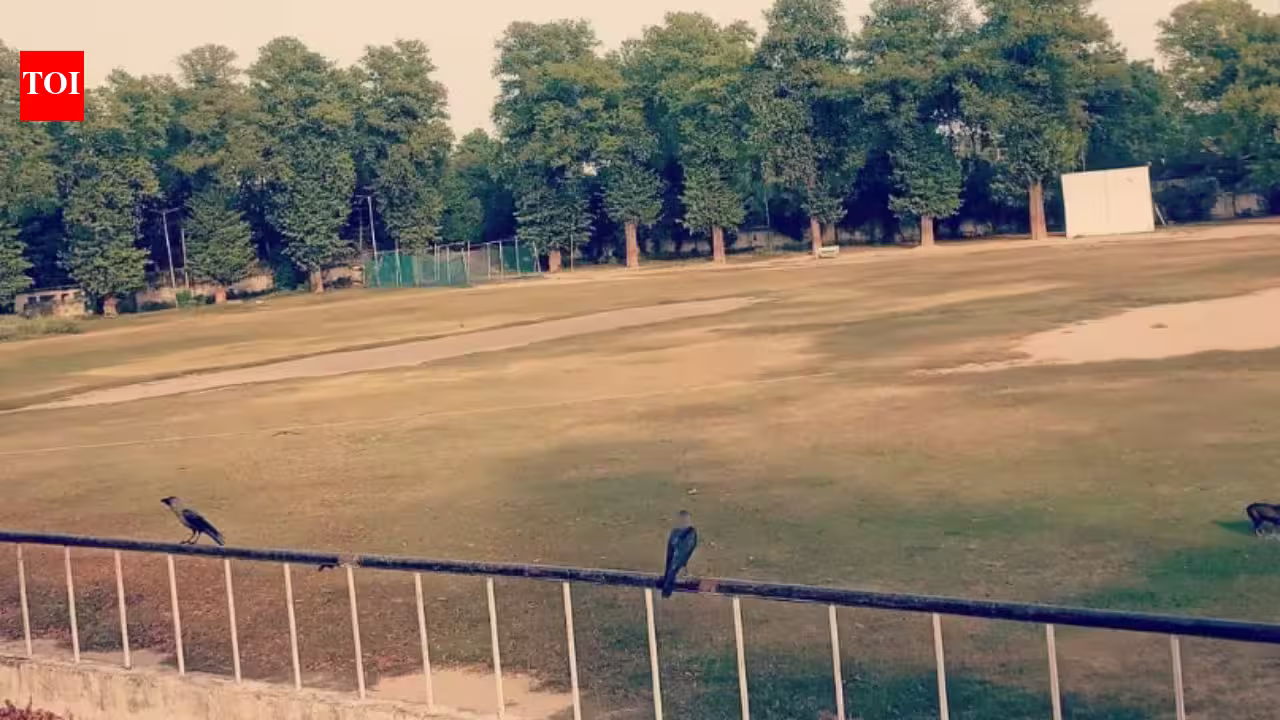
However, a quiet tragedy is unfolding across India. The public commons—the open patches of grass that belong to everyone and, therefore, to no one—are rapidly vanishing. These historic playgrounds are being systematically replaced by parking lots, convention centres, marriage halls, and gated, fee-based sports complexes.
The Republic of the Maidan: A Case Study in Kanpur
Two decades ago, the Arya Nagar neighbourhood in Kanpur was a vibrant hub of physical activity. The Brijendra Swaroop Park area boasted five sprawling maidans, each nearly the size of two football pitches. They were the heartbeat of the local community, hosting cricket matches, kite flying, and casual gatherings.
Today, that landscape has been fundamentally altered. The iconic Palika Stadium, once a bastion of accessible sport, has been bifurcated. One half now hosts an air-conditioned indoor sports complex with membership fees reaching as high as Rs 75,000 annually. The other half, managed under a public-private partnership, is no longer free; booking the ground for a match now costs between Rs 12,000 and Rs 85,000.
The transformation of the surrounding grounds is even more stark. What were once open fields have been repurposed into “Mangal Bhavan” wedding venues and exhibition grounds, rendering them entirely unsuitable for the sporting activities they were originally meant to foster.
A National Crisis of Access
This erasure of play spaces is not unique to Uttar Pradesh. From the encroached Ram Leela grounds in Unnao to the intense legal battles in Mumbai, the pattern is consistent. In Mumbai, the local municipal corporation recently attempted to convert the Neville D’Souza Football Ground into a convention centre. The move was only halted by the Bombay High Court, which pointedly asked: “You tell us where the people will be playing football?”
As urban density increases, these spaces are being treated as “empty” land ripe for monetization, rather than essential infrastructure for public health and community cohesion.
Building a Sporting Nation
The Indian government has signaled an ambitious commitment to sports, with the 2026–27 Union Budget allocating significant funds to the Khelo India scheme. Modern stadiums and professional academies are undeniably vital for churning out international athletes and winning medals.
However, a nation cannot rely solely on elite infrastructure to build a sporting culture. True athletic grassroots thrive in the informal, open-access environments of the maidan. When sport becomes an activity gated by financial barriers, the barrier to entry for the common child—the one who lacks a membership fee—becomes insurmountable.
During the ‘Khelo India Dialogue,’ Prime Minister Narendra Modi famously urged the youth to choose “playgrounds over Playstations.” As the country marks National Sports Day, the reality remains that if we want children to trade their screens for sports, we must first ensure that the playgrounds exist to welcome them. Without the preservation of these democratic spaces, the ambition of becoming a truly sporting nation may remain confined to the elite, leaving the rest of the country on the sidelines.