








Renfrewshire Set for Major EV Infrastructure Expansion as Regional Project Moves Forward
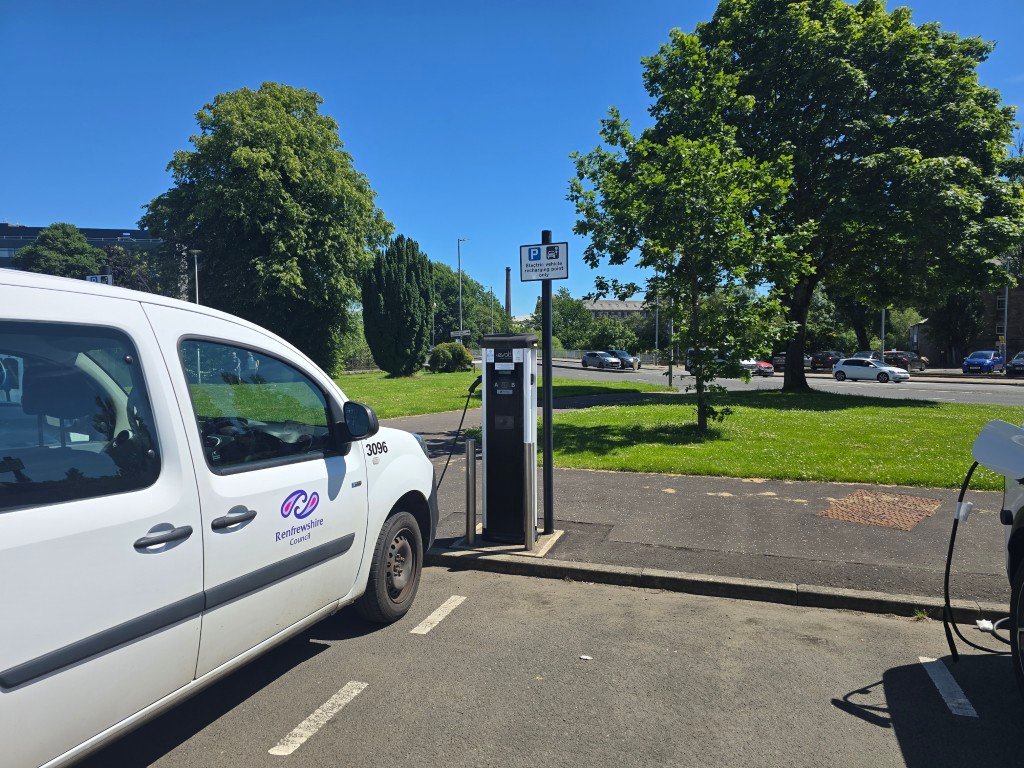
Renfrewshire is poised for a significant transformation in its transport infrastructure, with plans approved to introduce 436 new public electric vehicle (EV) charging points across the region.
The initiative, which recently cleared a critical hurdle following a vote by Renfrewshire Council’s Infrastructure, Land and Environment Policy Board on Wednesday, August 26, is part of a broader, ambitious effort to overhaul the region’s sustainable travel capacity.
A Regional Strategy
This expansion is a key component of a larger Glasgow City Region project, which encompasses eight separate council areas. The regional strategy aims to secure between £45 million and £50 million in private investment. Under a proposed 20-year contract—valued at approximately £780 million—the wider region is expected to see the installation of at least 3,034 new charge points.
For Renfrewshire specifically, the indicative plans are comprehensive. The proposed rollout includes:
- 181 charge points across 56 council-owned car parks.
- 255 on-street charge points located at 179 distinct sites.
These additions would substantially bolster the existing network, which currently consists of 75 council-owned units valued at roughly £272,667.
Private Investment and Operational Control
The project shifts the operational model significantly. Under the new arrangement, a private charge point operator will assume ownership of existing council equipment, taking full responsibility for its ongoing maintenance and operation. Importantly, the council will retain ownership of the land and parking spaces themselves.
Gordon McNeil, the Director of Environment, Housing and Infrastructure, has been granted delegated authority to finalise the transfer once a successful bidder is appointed.
Addressing Accessibility and Costs
During the board meeting, concerns were raised regarding the equitable distribution of these new assets. Councillor Gillian Graham questioned how the council intends to ensure that rural communities are not overlooked in the rollout and whether the cost of charging would be subject to price controls.
Mr. McNeil addressed these concerns, emphasizing that geographic inclusivity is a priority. “We have been quite clear that we cannot have communities being left out of this, and we want to see a fair distribution across the entire region,” he stated, adding that the goal is to see a robust network developed specifically across Renfrewshire. Furthermore, the council has confirmed that tariffs will be strictly monitored as part of the overarching regional contract to ensure fair pricing for residents.
Managing the Transition
With the current operating arrangements for existing charge points slated to end in December 2026, time is of the essence. A report presented to the board warned that any delays in appointing a new operator could lead to a temporary disruption in service. To mitigate this risk, the council is exploring contingencies, including the appointment of a temporary operator or accepting a brief service gap while the new infrastructure is integrated.
As the region pushes toward its green energy goals, these electric vehicle charge points represent a vital step in making sustainable transportation accessible to all, ensuring that Renfrewshire remains at the forefront of the transition to electric mobility.