








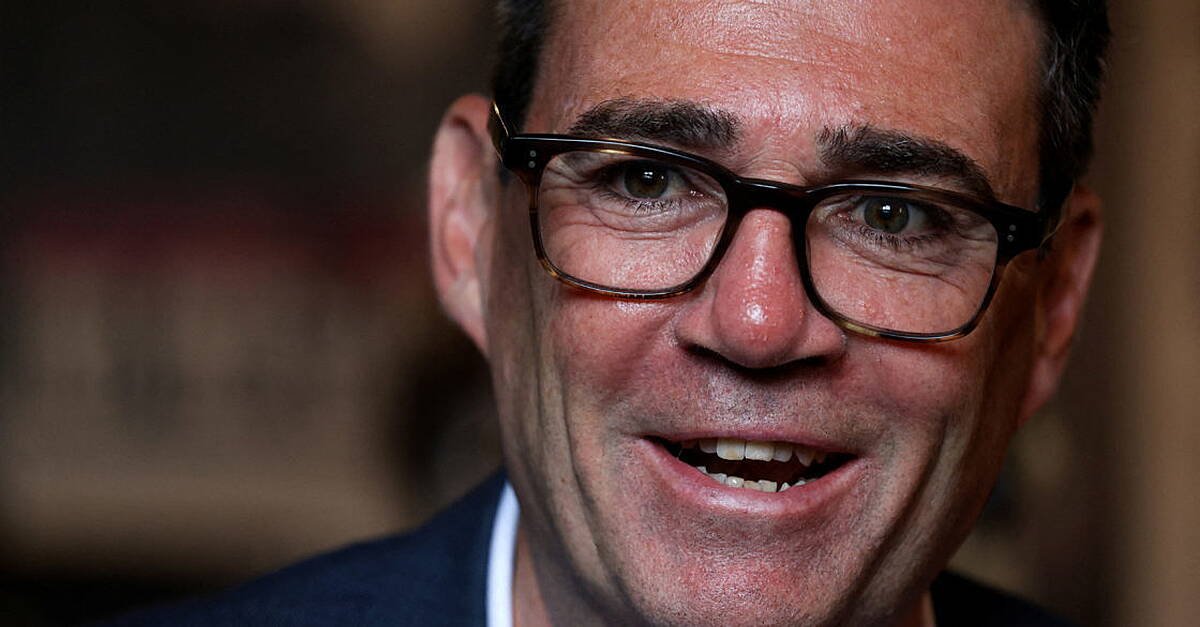
Prime Minister Burnham’s ‘Border Poll’ Comments Spark Political Firestorm
British Prime Minister Andy Burnham has triggered a significant political controversy after declaring that a border poll is “off the table,” a remark that has drawn sharp rebukes from nationalist leaders and forced a rapid clarification from his own government.
During his inaugural visit to Northern Ireland as Prime Minister, Burnham signaled a pivot toward a more collaborative relationship with local leadership but was firm regarding the potential for a referendum on Irish unity. “I will take a collaborative approach,” Burnham told reporters, “but some issues will be off the table, and that is one issue that will be off the table.”
A Clarification or a Backtrack?
The comments were met with immediate backlash, with critics questioning whether the Prime Minister was attempting to unilaterally suppress a democratic mechanism central to the peace process.
In a bid to dampen the controversy, Northern Ireland Secretary Chris Bryant took to the airwaves to insist that Burnham’s words were a matter of immediate political agenda rather than a policy shift. Speaking to UTV, Bryant clarified that the Prime Minister was merely addressing the immediate timeframe.
“He was asked specifically about whether he was going to be discussing a border poll, holding a border poll now, and he was saying that we’re taking that off the table today,” Bryant stated. He further emphasized that the British government remains “full square” behind every provision of the Good Friday Agreement, which includes the legal pathway for a border poll.
Constitutional Constraints
Legal experts and political commentators are quick to note that, regardless of his personal stance, the Prime Minister cannot simply “remove” the possibility of a border poll. Under the 1998 Good Friday Agreement, the Northern Ireland Secretary is legally mandated to call a referendum if it appears likely that a majority of the electorate would vote for Irish unification.
While current polling suggests that a pro-unity majority is not yet manifest, and significant work remains regarding the complexities of healthcare, governance, and national identity, the authority to trigger a poll rests on objective evidence rather than executive whim.
The Political Fallout
The reaction from Sinn Féin was swift and uncompromising. Party leader Mary Lou McDonald revealed that she held a “very direct exchange” with the Prime Minister, warning him against “burying his head in the sand” regarding the shifting political landscape in Ireland.
“We have made very clear that the process of political change is under way in Ireland now, that the direction of travel is unmissable,” McDonald said, urging the British government to engage in “responsible, managed preparation” to avoid the instability that characterized the Brexit process.
Other political figures have also weighed in. Fianna Fáil Minister of State Niamh Smyth expressed her “categorical and fundamental” disagreement with the Prime Minister’s sentiment, advocating instead for the “Shared Island” approach. She argued that organic, cross-border collaboration on infrastructure and education is the correct path forward to build consensus.
A Long-Term Question
The controversy comes as public discourse on the future of the island intensifies. Former British Prime Minister Gordon Brown—a key architect of the 1998 peace deal—recently made headlines by suggesting that a united Ireland is, at some point, an inevitability.
As the border poll debate continues to simmer, the incident serves as a stark reminder of the sensitivity surrounding constitutional issues in Northern Ireland. While the British government insists it remains committed to the Good Friday Agreement, the friction over Burnham’s phrasing highlights the deep-seated tensions that remain as both sides navigate a changing political reality.