








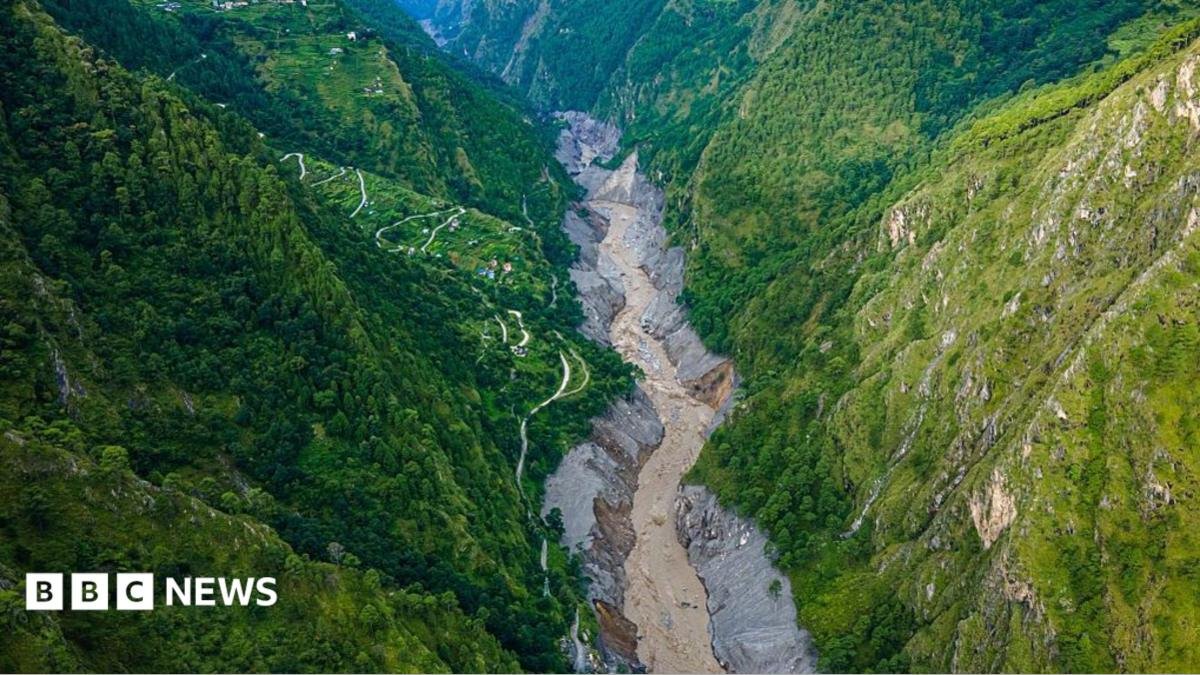
Himalayan Hazard: Why Recent Disasters Signal a New Era of Geological Peril
The catastrophic flooding recently witnessed in Nepal is not an isolated incident, but a stark warning that the Himalayan region has entered a volatile new phase of high-energy, debris-laden disasters.
While anxiety often focuses on the transboundary politics of the Kosi River, experts warn that the true threat lies in the rapidly destabilizing landscape of the Himalayas. According to Rajiv Sinha, a leading expert in the field, the recent Nepal event was not a standard hydrological flood, but a manifestation of a much broader, more dangerous hazard system.
Beyond the Water: The Rise of “Slurry” Floods
“The fundamental point is that these are not normal hydrological floods,” says Sinha. A conventional flood is primarily composed of water, but the disasters currently plaguing the Himalayas are something far more destructive.
When intense rainfall, melting ice, or sudden glacial discharges combine with massive quantities of rock and sediment, they form a high-energy, thick slurry. This mixture possesses a destructive power far exceeding that of liquid water, capable of pulverizing infrastructure and burying entire settlements.
Sinha notes that the Nepal event was “perhaps five to 10 times larger” than similar disasters observed in recent years, including the 2021 Chamoli tragedy in northern India, which claimed 200 lives, and the 2025 Dharali disaster in Uttarakhand, which left parts of a village submerged under meters of sediment.
A Confluence of Climate and Geology
The increasing frequency of these events is intrinsically linked to a rapidly warming climate. The Himalayan region is heating up faster than the global average, creating a dangerous feedback loop:
- Intensified Rainfall: A warmer atmosphere holds more moisture, causing the monsoon to deliver heavier bursts of rain in shorter periods.
- High-Mountain Instability: As permafrost degrades, the mountains lose their structural integrity, leading to an increase in glacial lake outbursts and rock-ice avalanches.
- Sediment Loading: Each extreme event triggers massive landslides, which fill riverbeds with silt and debris, significantly reducing the capacity of river channels across both India and Nepal.
A Growing Threat to India
These disasters are not just local concerns; they are indicators of a profound transformation in the Himalayan ecosystem. As these high-mountain hazards grow more frequent, they become increasingly difficult to predict.
For India, the risks are substantial. The country’s geography makes it highly vulnerable to the downstream effects of this shifting landscape. As riverbeds rise due to sediment accumulation, the risk of devastating flooding spreads far beyond the immediate mountainous zones.
Experts emphasize that the patterns observed in Nepal and Uttarakhand are part of a singular, interconnected regional crisis. As the climate continues to push the limits of these fragile high-altitude environments, the international community is beginning to recognize that these Himalayan hazards are no longer outliers—they are the new, dangerous reality of life in the shadow of the world’s highest peaks.