








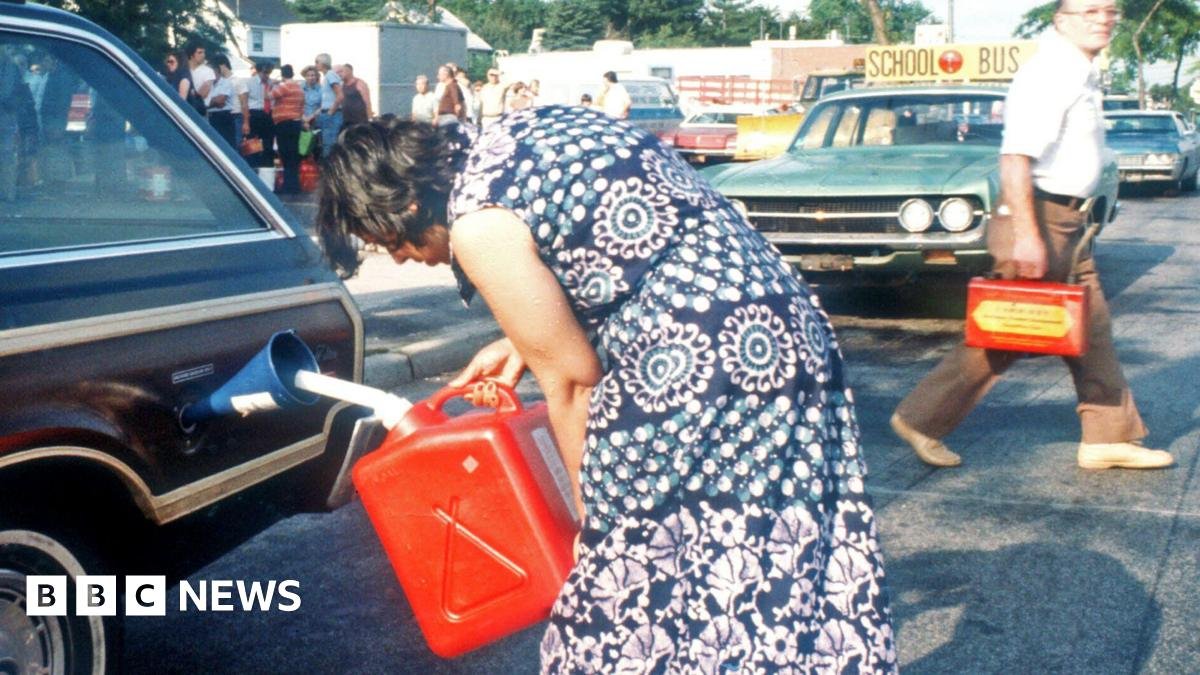
Nakhle, who is also the secretary general of the Arab Energy Club, said the oil market is more diverse than in the 1970s, while the overall amount being used has also dropped significantly.
She believes that while current prices are high, today’s crisis is not as severe.
“While the volumetric disruptions we are seeing are significant – arguably among the largest in recent history – the market is far more resilient than in the 1970s,” she said.
“It is more diversified, less oil-intensive, and better equipped with buffers and emergency response mechanisms.”
Heaney said there were some differences today that work in the world’s favour, including better understanding of our economies and more countries holding oil reserves.
“The best-case scenario is to end this conflict as quickly as possible and restore some semblance of stability.”
Alicia Garcia Herrero, chief economist for Asia Pacific at Natixis CIB, said while 1970s oil shocks sent prices sky high, they only cut global supply by 5-7%. In contrast, the current crisis affects 20% of the world’s supplies, “dwarfing the 1970s shock”, she said.
“Today’s Iran war crisis can end up being a bigger shock if the situation does not improve soon,” she said, adding it was also a crisis of gas supply and other refined products.
“The fallout of this is that we could experience sharper price spikes, broader inflation pain, and deeper recession risks, especially in import-heavy Asia,” she continued.
“Reserves and efficiency offer some buffer which the episodes in the 1970s lacked, but the raw scale of lost supply makes this nastier, with no fast fix in sight.”