









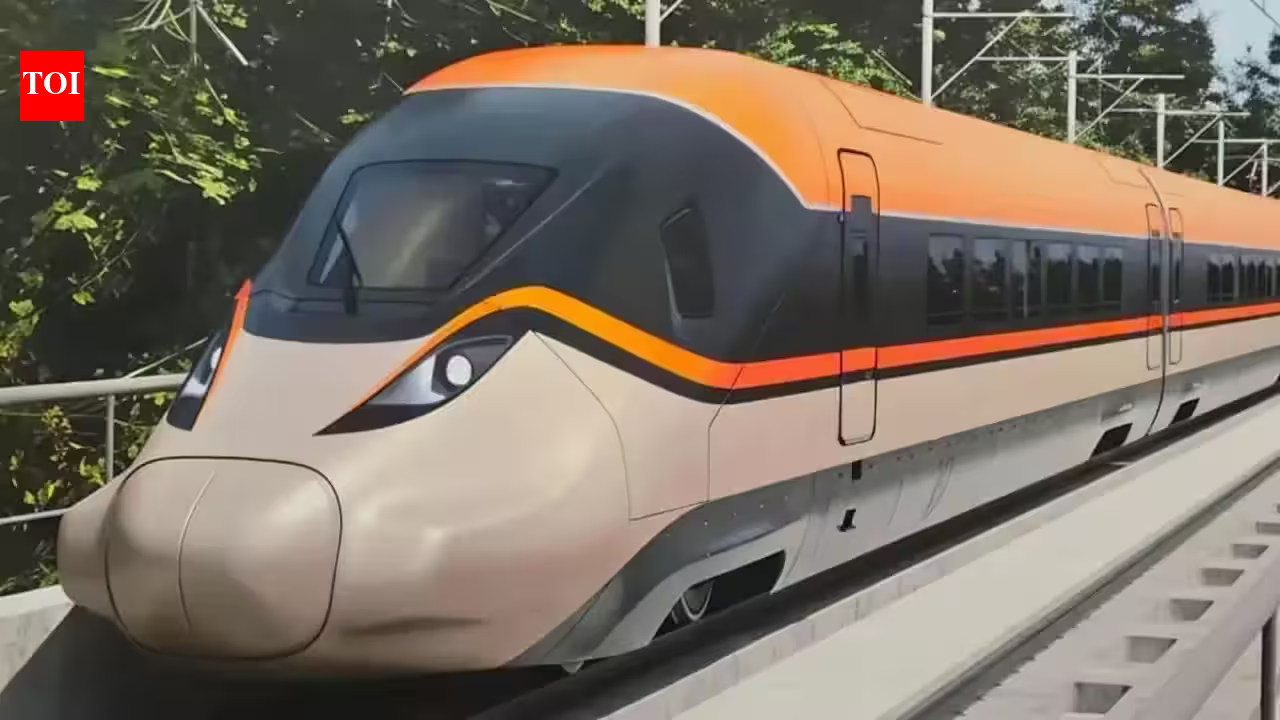
India’s Engineering Milestone: Domestic Bullet Train Prototype Set for 2027 Launch
As India’s ambitious infrastructure roadmap moves forward, the nation is preparing to transition from an importer of high-speed technology to a developer. Nearly a decade after the launch of the Mumbai-Ahmedabad high-speed rail corridor, Indian Railways is gearing up to unveil its own indigenously designed and manufactured bullet train by early 2027.
A Landmark ‘Make in India’ Initiative
In a significant boost to domestic manufacturing, the Integral Coach Factory (ICF) in Chennai has awarded BEML Limited a contract valued at Rs 866.87 crore. This project involves the design, manufacturing, and commissioning of two prototype high-speed trainsets, codenamed “B-28.”
These state-of-the-art trainsets are engineered for a service speed of 250 kmph and a maximum design speed of 280 kmph. To support this advanced production, BEML has inaugurated a dedicated “Aditya” High-Speed Rail Complex in Bengaluru, where the manufacturing process is already underway.
The project represents a crucial turning point for the nation, as it signifies the development of indigenous intellectual property in high-speed rail technology. While initial models will utilize high-grade stainless steel, Railway Minister Ashwini Vaishnaw has indicated that future iterations—aimed at achieving 350 kmph—may incorporate lightweight aluminium designs, a move that would represent another “first” for India’s industrial sector.
Beyond Speed: Passenger Comfort and Engineering
The B-28 prototypes will feature eight coaches each, outfitted with world-class amenities. Key features include fully air-conditioned chair-car seating, rotatable and reclining seats, advanced infotainment systems, and dedicated infrastructure for divyangjan (passengers with disabilities).
Engineering these trains presents a unique set of challenges compared to conventional rolling stock. Unlike European or Japanese models designed primarily for cold climates, Indian-made bullet trains must be ruggedized to withstand extreme heat and high dust levels. Furthermore, the train must be built with a high strength-to-weight ratio to ensure stability, aerodynamic efficiency, and safety at high velocities.
“Developing domestic bullet train manufacturing capabilities is not just about speed; it is an engineering leap,” industry experts noted. “It requires mastery over high-powered motors, sophisticated control software, and advanced crash-worthy designs.”
Expanding the Network
The testing phase for the first prototype is expected to begin by March 2027 under the Research Design and Standards Organisation (RDSO). Success in this venture is critical, as it aligns with the broader vision of expanding India’s high-speed rail footprint.
Following the progress on the Mumbai-Ahmedabad corridor, the government has announced plans for seven additional high-speed rail corridors, including:
- Delhi-Varanasi (3 hours 50 minutes)
- Hyderabad-Bengaluru (2 hours)
- Mumbai-Pune (48 minutes)
- Chennai-Bengaluru (1 hour 13 minutes)
- Pune-Hyderabad (1 hour 55 minutes)
- Hyderabad-Chennai (2 hours 55 minutes)
- Varanasi-Siliguri via Patna (2 hours 55 minutes)
By fostering a local manufacturing ecosystem, India aims to fulfill the rolling stock requirements of these future corridors cost-effectively, cementing its position as an emerging leader in global rail technology.