








India Moves Toward Grid Stability: CEA Proposes Mandatory Energy Storage for Renewable Projects
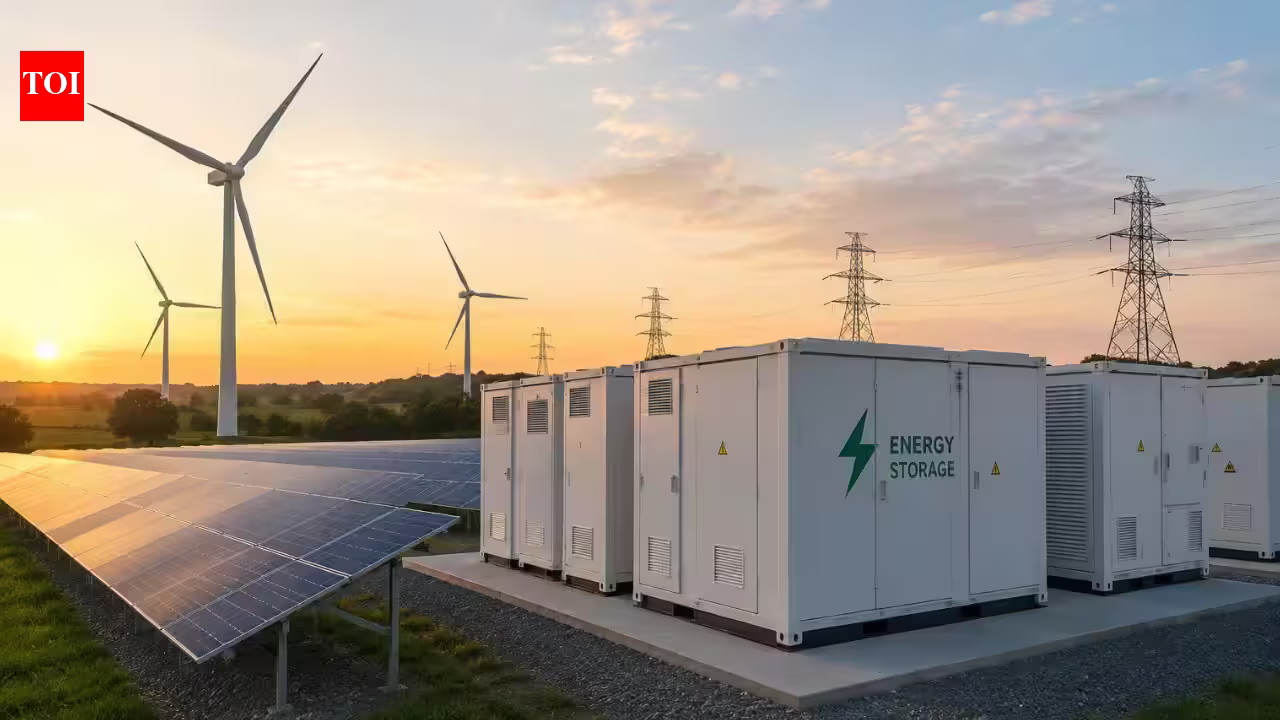
NEW DELHI — In a major policy shift aimed at stabilizing the nation’s power grid, the Central Electricity Authority (CEA) has unveiled draft regulations that would mandate energy storage systems for new solar and wind power projects starting in 2027.
The proposed amendments to the technical standards for construction of electric plants seek to address the growing challenge of grid volatility as India aggressively scales up its renewable energy capacity. As the share of intermittent sources like solar and wind increases, grid operators have faced significant difficulties in managing excess supply during peak generation hours.
A Phased Mandate for Storage
Under the draft, which is open for public consultation until October 4, developers of ground-mounted solar and onshore wind projects commissioned after July 1, 2027, will be required to install co-located battery energy storage systems (BESS).
The government has proposed a phased implementation strategy:
- From July 2027: New projects must include storage capacity equivalent to at least 10% of their total installed capacity, with a minimum duration of two hours. For example, a 100 MW solar park would be required to pair its generation with a 10 MW/20 MWh battery system.
- From July 2029 to June 2031: The requirement remains at 10% capacity, but the mandatory storage duration doubles to four hours, effectively requiring a 10 MW/40 MWh system for a 100 MW plant.
Addressing the Curtailment Crisis
The move is a direct response to the massive amount of clean energy currently going to waste. During the first quarter of the current financial year alone, more than 8,133 gigawatt-hours (GWh) of solar energy was curtailed. This represents enough power to supply 1.4 million homes for an entire year, wasted simply because the grid could not absorb the excess supply during daytime hours.
By mandating storage, the government aims to turn this “curtailed” energy into a reliable resource that can be deployed during non-solar hours, thereby balancing supply and demand more effectively.
“Large-scale deployment of battery energy storage systems and grid-forming inverters are crucial for integrating renewable energy into the grid,” a spokesperson for the Ministry of New and Renewable Energy noted.
Strengthening Grid Infrastructure
Beyond battery storage, the CEA is emphasizing the role of advanced inverter technology. The draft proposal requires that by July 2027, at least 15% of inverters at renewable plants must be equipped with “grid-forming” controls. All power conversion systems within BESS units will also be required to feature this capability.
Grid-forming technology is essential for the modern energy landscape; unlike traditional inverters, these devices act as a “virtual shock absorber,” helping to establish and maintain stable grid voltage and frequency even when solar or wind output fluctuates.
As India works toward its ambitious net-zero targets, this mandatory storage policy represents a pivotal step in transforming renewable energy from a volatile variable into a foundation of the national power architecture. Stakeholders now have until early October to provide feedback on the proposed regulations, marking the beginning of a significant transition for India’s energy sector.