







Tesla Elevates Vehicle Safety with New ‘Automatic Collision Evasion’ for Manual Driving
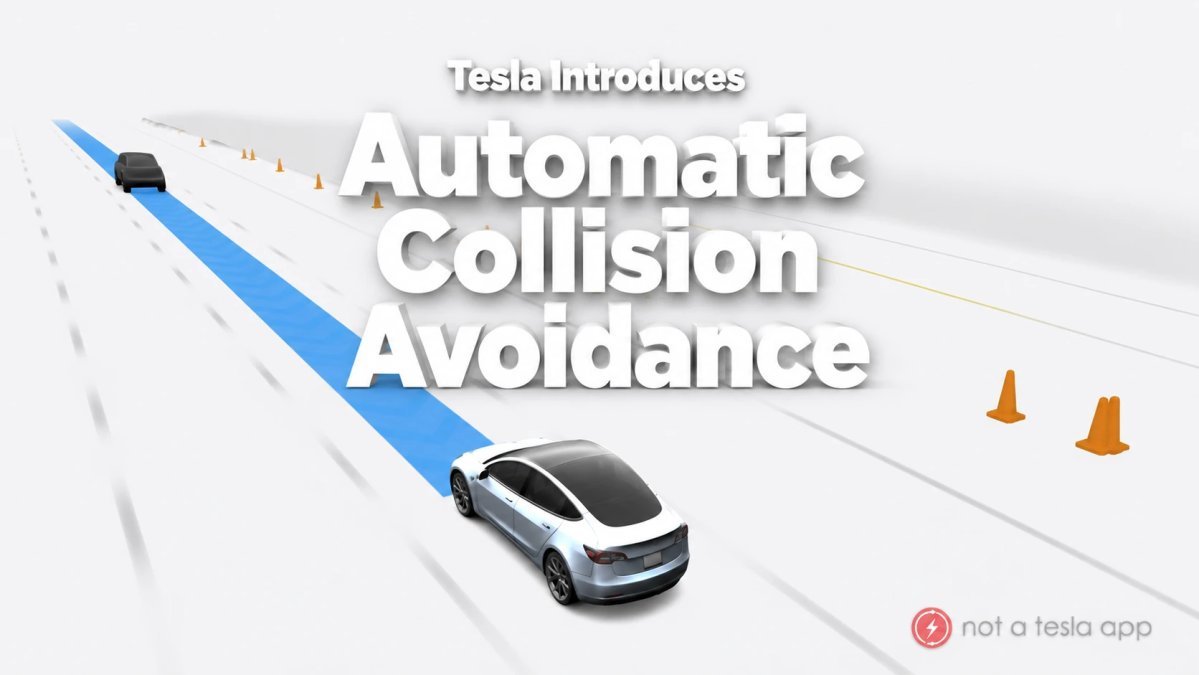
In a significant expansion of its active safety suite, Tesla has introduced a sophisticated new feature that allows its autonomous software to take control during emergency situations—even when the driver is operating the vehicle manually.
The new capability, dubbed Automatic Collision Evasion, leverages the company’s Full Self-Driving (Supervised) (FSD) neural networks to act as a high-tech safety net. While Tesla vehicles have long featured Automatic Emergency Braking (AEB) and blind-spot monitoring, this update marks a pivot toward using the FSD stack as a proactive, last-resort intervention tool during everyday manual driving.
Two Triggers for Autonomous Intervention
The system is designed to activate under two specific, high-stakes conditions, using advanced sensor data to determine if steering is a safer alternative to simple braking.
1. Imminent Frontal Collisions
If the vehicle detects an unavoidable collision that cannot be mitigated by braking alone, it will engage FSD to perform an evasive maneuver. This may involve steering around a hazard, changing lanes, or moving to the shoulder of the road.
For this to trigger, several strict safety parameters must be met:
- The car must be on a controlled-access highway traveling under 85 mph (137 km/h).
- No pedestrians or cyclists can be in the path.
- The steering system must be fully operational, and road conditions must be clear (non-slippery).
2. Driver Inattention
The system also serves as a safeguard when the vehicle determines the driver is distracted—such as looking away from the road or reaching into the back seat—or if FSD was disengaged accidentally. In these scenarios, if the vehicle is traveling between 22.5 mph and 85 mph, it will take control to guide the car to a safer state.
Safety Through “Muted” Controls
Tesla has implemented specific design choices to ensure that when the system intervenes, it does not conflict with a panicked driver. During an evasive maneuver, the accelerator pedal is effectively muted, and tapping the brake will not disable the FSD intervention. To regain full control, a driver must apply firm, deliberate steering force. Once the hazard has passed, the vehicle will sound an alert to notify the driver that they need to resume command.
Currently, this feature is available to owners who have purchased the FSD (Supervised) package and have it enabled in their vehicle settings. At present, it appears to be limited to the North American market.
A New Era of Proactive Safety
This update underscores Tesla’s ongoing confidence in its neural network’s ability to “see” and predict roadway hazards faster than a human can react. By pushing FSD-based safety features into manual driving modes, Tesla is evolving its autonomy stack from a convenience-based driver aid into an active safety system.
The move comes as the company continues to iterate on its software, with CEO Elon Musk recently signaling that further advancements—such as automated pothole avoidance—are on the horizon. While the current fleet operates on FSD v14, the imminent transition to the more advanced FSD v15, already in use by Tesla’s Robotaxi fleet, suggests that these proactive safety interventions will only become more refined in the months to come.
Tesla stresses, however, that Automatic Collision Evasion is not a substitute for attentive driving; it remains a last-resort safety measure designed to protect occupants when human reaction falls short.