







Andrew Symonds once produced one of the rarest scoring feats in the history of Test cricket, etching his name into the record books not through a clean boundary, but through a chaotic scramble that left the New Zealand fielding side in disarray. During Australia’s Test against the Black Caps at the Gabba in Brisbane during the 2008-09 season, the charismatic all-rounder turned a single delivery into an eight-run haul—a moment of madness that remains a staple of cricket lore.
The Anatomy of the Eight-Run Play
The incident occurred while Australia were positioned at 124 for four in the 46th over. With Ricky Ponting having elected to bat, the stage was set for a productive day, but the over proved far more eventful than anyone could have predicted. New Zealand fast bowler Iain O’Brien was the man in the middle of the drama, already frustrated after seeing Symonds dropped by Aaron Redmond off the previous delivery.
O’Brien, seeking immediate retribution, went short outside off-stump with his third delivery of the over. Symonds, never one to shy away from an aggressive approach, lashed out with a fierce pull shot. The expansive Gabba outfield—notorious for its pace and size—held the ball up just enough, but Symonds and his batting partner, Michael Clarke, were already in full flight.
The pair completed three runs with ease, but as the ball reached the deep, they sensed an opportunity to push for more. The situation devolved into chaos: New Zealand wicketkeeper Brendon McCullum scrambled to collect the return throw, turned, and fired it toward the stumps in a desperate bid to catch Symonds short of his ground.
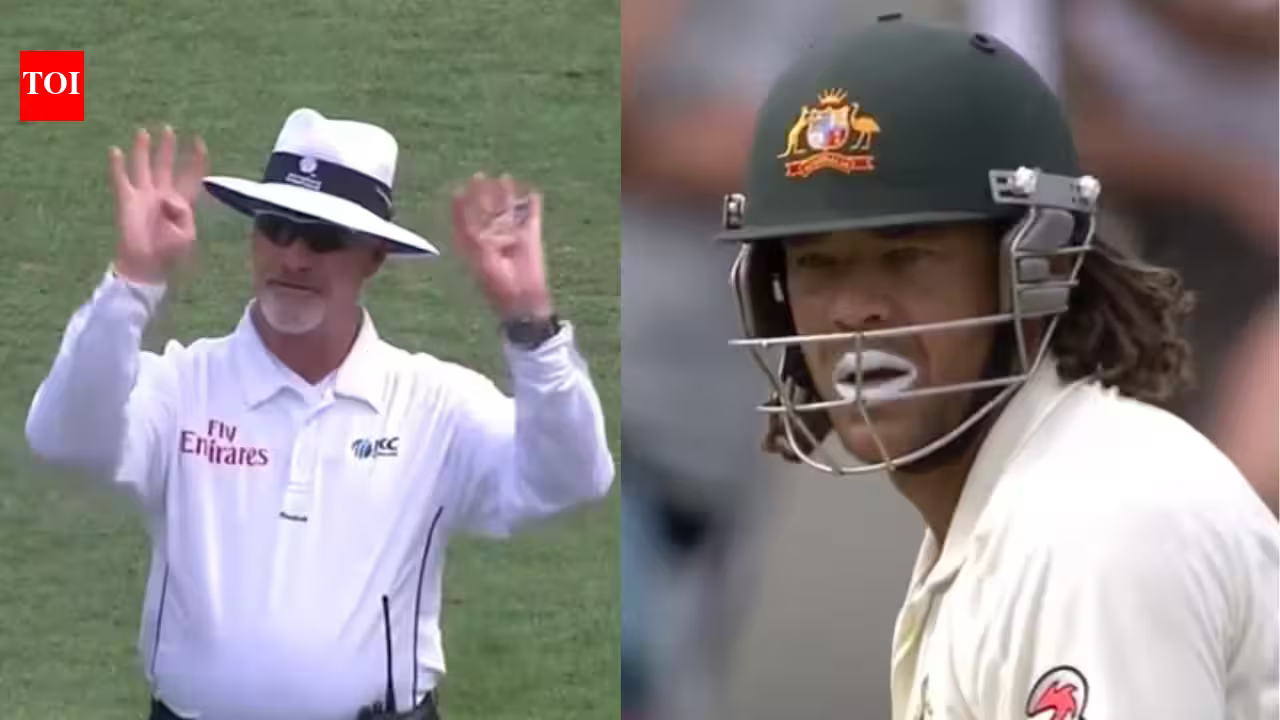
Symonds, however, had already reached safety. Compounding the error, the Black Caps had failed to station a backup fielder behind the stumps. The errant throw sailed past the wicket and all the way to the boundary rope. Umpire Rudi Koertzen, witnessing the unfolding bedlam, signaled eight runs to the score—four runs earned by the bat and four awarded for the overthrows.
A Rarified Statistical Club
While scoring eight runs off a single ball sounds like a fantasy for any batter, it has occurred only a handful of times in the history of the sport. At the time of Symonds’ heroics, it was only the fourth documented instance in Test cricket history.
The precedent dates back to the 1928-29 season, when England’s Patsy Hendren achieved the feat in Melbourne, running four and capitalizing on four overthrows. History repeated itself in the same city during the 1980-81 season, when New Zealand’s John Wright benefited from a similar lapse in the field off the bowling of Lenny Pascoe, as an errant throw from the legendary Rod Marsh allowed the runs to accumulate.
Perhaps the most technical instance occurred in 2004-05 in Port-of-Spain. Brian Lara glanced a delivery from Nicky Boje for three, but when the throw back from the field struck a fielder’s helmet left on the ground, the laws of the game dictated a five-run penalty. Under the regulations of the time, those runs were credited to the batter, marking an unconventional path to an eight-run delivery for the “Prince of Trinidad.”
Beyond the Eight: The Forgotten Era of Nines
While eight runs from one ball stands as a pinnacle of modern Test madness, the archives of first-class cricket reveal an era where batters pushed even further. There are 14 recorded instances of a batter scoring nine runs off a single delivery, though curiously, every single one of those events took place before 1949.
Most of these incidents relied heavily on overthrows, but there are legendary exceptions. In 1842, Frederick Ponsonby of the MCC managed to run nine against Cambridge University purely through sheer athleticism and ground size, without the aid of a single overthrow. Even more bizarre was the record set in 1900 by Samuel Wood of Derbyshire, who benefitted from a temporary “net system” implemented at Lord’s. During that experimental period, boundaries were removed and replaced by high nets, meaning the ball remained in play regardless of how far it was hit. With no boundary to kill the momentum of the ball, batters were forced to run until the ball was physically retrieved, leading to statistical anomalies that modern cricket will likely never see again.
Andrew Symonds’ performance at the Gabba serves as a brilliant bridge between the structured modern game and the unpredictable nature of cricket’s past. It remains a definitive example of how a single delivery can descend into pure theater, turning a standard pull shot into a legendary entry in the record books. While his dismissal just two balls later brought the drama to an end, the image of those eight runs remains etched in the memory of every fan who witnessed the mayhem.
Disclaimer: This content is auto-generated and paraphrased.
Source: Read Original News