








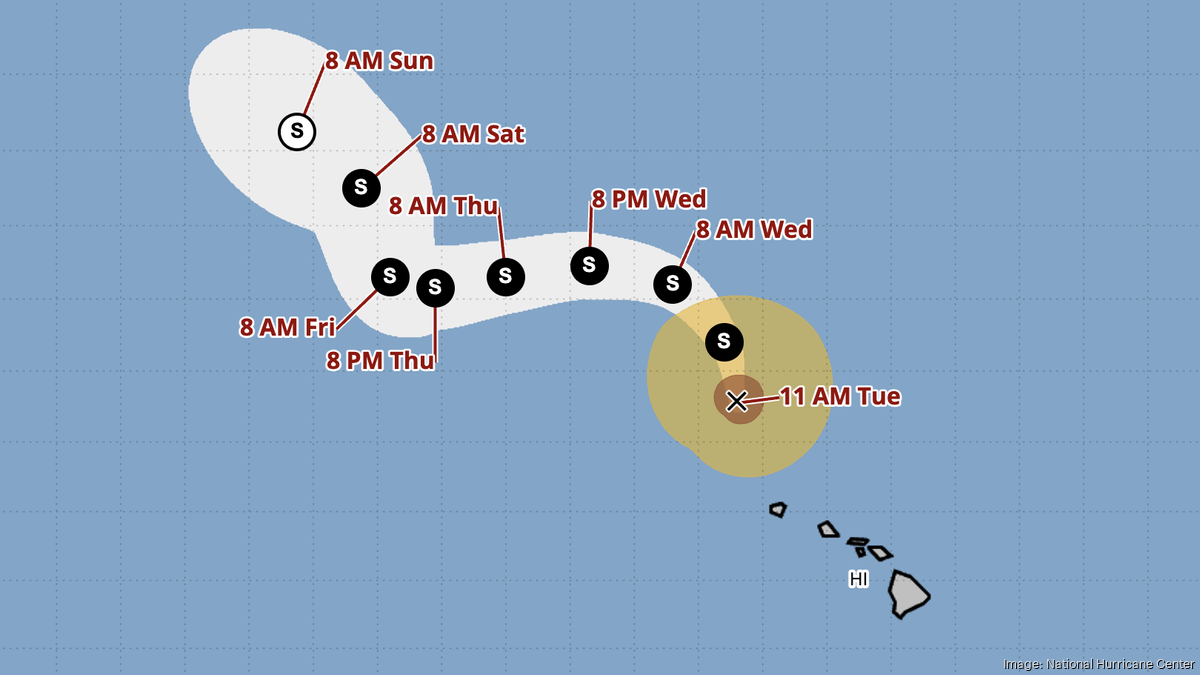
LIHUE, Hawaii — Hawaii’s financial infrastructure faced a significant stress test this week as Hurricane Lowell bore down on the islands, forcing a complete shutdown of all major bank branches on Kauai. The storm brought hurricane-force winds, torrential rainfall, and cascading power outages, highlighting both the vulnerability of physical banking and the accelerating necessity of robust, cloud-integrated digital financial systems.
The Digital Shift in the Wake of Disruption
As physical teller windows remained locked, residents were forced to rely entirely on digital banking platforms. This shift underscores a broader trend across the tech industry: the increasing dependency on AI-driven financial services to maintain operational continuity during climate-related disasters. Major financial institutions across the state utilized Google Cloud’s secure infrastructure to ensure that mobile apps and online portals remained functional despite the local internet instability caused by downed power lines.
Tech analysts note that when physical branches shutter, the reliance on high-availability cloud services becomes a life-or-death priority for consumers. Modern banking applications, many of which now integrate advanced AI fraud detection and real-time transaction monitoring, are designed to handle traffic spikes during regional emergencies. As the storm progressed, these systems were tasked with supporting customers who were suddenly unable to access cash, relying instead on peer-to-peer payment apps and digital wallet services that have become the new “brick-and-mortar” of the islands.
AI and Predictive Modeling in Storm Management
The response to Hurricane Lowell has also served as a case study for the integration of artificial intelligence in disaster preparedness. Tech firms and utility companies are increasingly utilizing Google’s geospatial analysis tools and AI-powered weather forecasting models to predict grid failures before they occur. By analyzing satellite imagery and historic storm data, AI can now estimate which regions are most likely to lose power, allowing banks and utility providers to pre-position resources and optimize server capacity for digital traffic.
This intersection of big data and meteorology is transforming how businesses operate in volatile climates. During the height of Tuesday’s storm, AI-driven load balancing ensured that bank websites remained responsive. As more banks adopt generative AI for customer service, automated chatbots were able to manage a surge in inquiries regarding account access, storm-related fee waivers, and local branch closure updates without exhausting human call center staff who were also sheltering in place.
The Future of Resilient Financial Tech
The closure of Kauai’s branches is a stark reminder that physical infrastructure remains hostage to the environment. However, the tech industry is positioning itself to bridge this gap. Companies are currently investing heavily in “offline-first” banking features, utilizing edge computing to allow for local transaction processing even when central connectivity is flickering.
Looking ahead, the evolution of Fintech in Hawaii will likely revolve around decentralization. As cloud service providers continue to expand their data center regions, the aim is to create a more resilient digital fabric that can withstand prolonged grid outages. Google and other major tech conglomerates are focusing on satellite-based internet connectivity and localized micro-grids to ensure that, even when Hurricane Lowell-level events force physical facilities to close, the flow of commerce remains uninterrupted.
For the residents of Kauai, the return to business as usual will be gradual. However, the reliance on digital ecosystems throughout this crisis serves as a blueprint for the future. As climate patterns become more unpredictable, the financial sector’s reliance on advanced tech stacks and predictive AI will transition from a convenient benefit to an essential component of economic survival. For now, bank customers are advised to monitor mobile alerts and utilize secure digital channels until power and safety inspections allow for a full reopening of the region’s physical financial infrastructure.
Disclaimer: This content is auto-generated for informational purposes only.
Source: Read Original News