







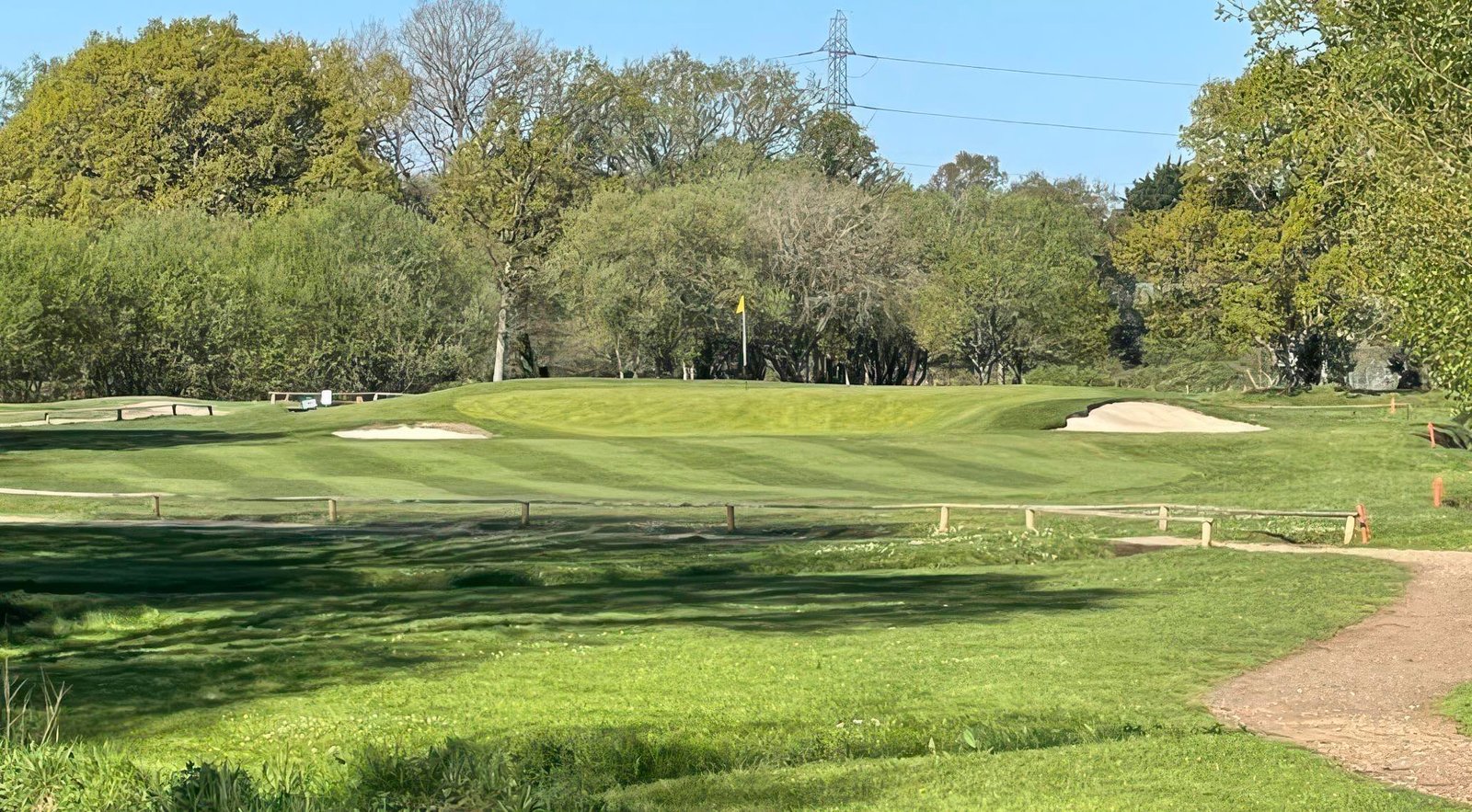
As the turf management industry undergoes a digital transformation, a Hampshire-based golf club has demonstrated how the fusion of traditional agronomy and precision technology can redefine operational excellence. By leveraging granular feed data, the club is mirroring the data-centric shifts seen across the tech sector, where predictive analytics and granular inputs drive superior outcomes.
## Precision Agronomy: The Data-Driven Turf Revolution
At the heart of the Hampshire club’s success is a commitment to precision. Just as software developers use granular data packets to optimize code performance, turf managers are now treating soil health with the same level of scientific rigor. By utilizing high-quality, granular nutrient feeds from a trusted supplier, the club’s groundskeeping team has been able to implement a “precision nutrition” model.
This approach mirrors the evolution of Google’s own search and recommendation algorithms. By processing hyper-local, granular information—rather than relying on broad-spectrum generalizations—the club has minimized waste and maximized turf resilience. This shift toward “micro-management” of soil chemistry reflects a broader industry trend: using granular input to achieve high-performance output, a principle that underpins everything from modern cloud computing to AI-driven resource allocation.
## AI and Machine Learning: Predicting the Playing Surface
While the physical application of nutrients remains a manual task, the planning behind it is increasingly assisted by artificial intelligence. Leading golf venues are beginning to integrate environmental sensors that feed data into cloud-based platforms, not unlike the way Google uses machine learning to optimize the energy efficiency of its global data centers.
By monitoring soil temperature, moisture levels, and UV exposure, these digital dashboards allow superintendents to predict nutrient depletion before it occurs. The granular feed strategy ensures that when the AI signals a need for intervention, the corrective action is surgical rather than superficial. This “smart golf” infrastructure is turning golf course management into a branch of systems engineering, where the goal is to maintain a perfect, consistent user experience—the “UI” of the outdoors—through continuous, automated monitoring and iterative improvement.
## Scaling Excellence Through Digital Standardization
The success seen at this Hampshire club is not an isolated incident; it serves as a blueprint for the future of land management. As digital tools become more accessible, the industry is moving away from the era of “guesswork” and toward a standard of “digital standardization.”
Google’s recent updates to its Workspace and AI tools have centered on the idea that when data is structured and granular, it is infinitely more actionable. The golf industry is adopting this philosophy by digitizing its maintenance records and supply chain logistics. By utilizing trusted, high-performance suppliers, clubs can ensure that the “data” they feed into their ecosystem—in this case, chemical nutrients—is standardized and reliable. This reliability allows for repeatable success, ensuring that the greens remain in peak condition regardless of seasonal volatility.
The intersection of agriculture and technology has never been more vibrant. As the Hampshire club continues to refine its processes, it underscores a critical lesson for all industries: whether you are optimizing a global search engine or the fairway of a championship course, the secret lies in the granularity of your inputs. By focusing on the smallest, most essential data points, organizations can achieve a level of consistency that was previously thought to be impossible. As these tech-integrated maintenance practices scale, the standard for professional golf course conditions will undoubtedly be reset, setting the stage for a new generation of data-empowered groundskeeping.
Disclaimer: This content is auto-generated for informational purposes only.
Source: Read Original News