








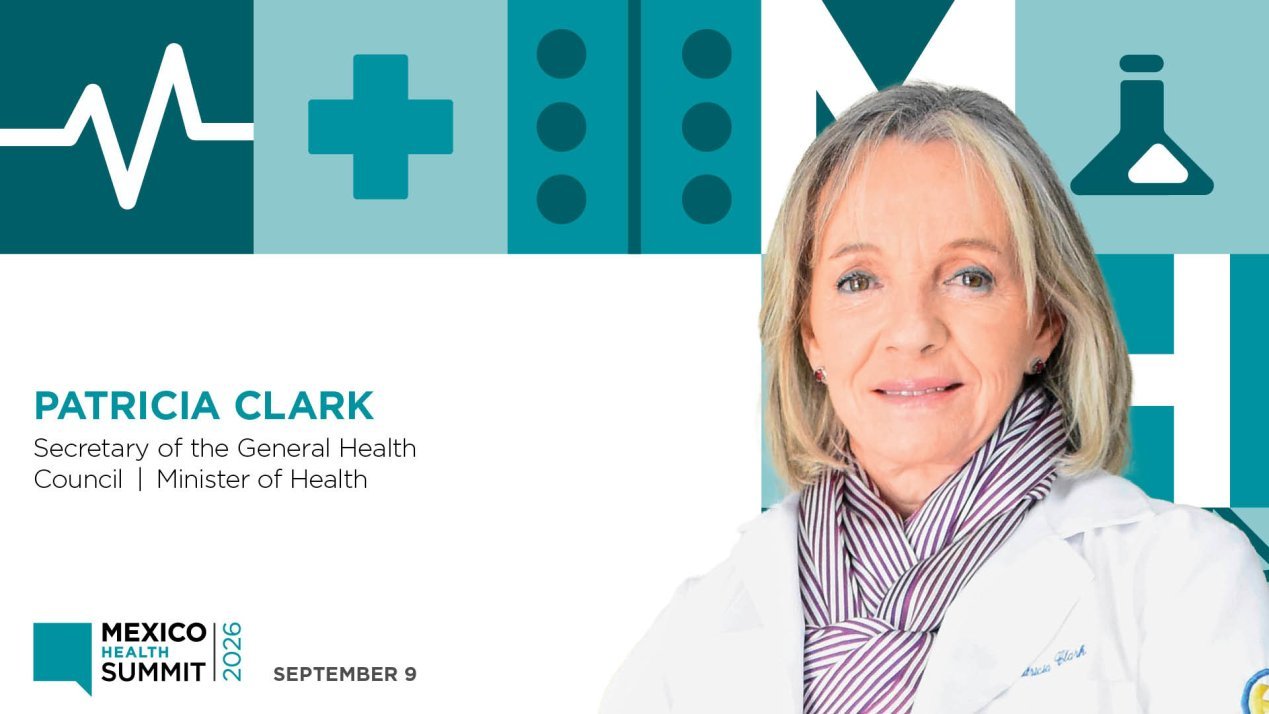
Mexico has unveiled an ambitious national healthcare overhaul under “Plan Mexico,” a strategic roadmap designed to transform the country’s medical sector into a cornerstone of its national economy by 2030. Announced at the Mexico Health Summit 2026 by Health Minister Patricia Clark, the initiative aims to attract US$12 billion in private sector investment for pharmaceuticals and medical devices, alongside a US$3 billion commitment to clinical research.
This systemic pivot seeks to unify a historically fragmented public health landscape, signaling a shift toward a universal service model that prioritizes efficiency, rapid data integration, and standardized care.
Bridging Institutional Gaps via Digital Integration
The backbone of Plan Mexico is the dissolution of traditional bureaucratic silos that have long separated entities like IMSS, ISSSTE, and IMSS-Bienestar. The government is moving toward a seamless, patient-centric model where access is determined by location rather than employment status.
To support this, the Ministry is investing heavily in the rollout of 12,750 new primary care clinics. The success of this expansion relies on a robust digital infrastructure. By integrating advanced health information systems, the government plans to enable real-time patient data sharing across institutions. This digital transformation is expected to mirror global trends in health-tech, where AI-driven analytics are used to optimize patient throughput, manage supply chain inventories for essential medications, and provide clinicians with decision-support tools.
Accelerating Innovation Through Streamlined Regulation
A major friction point for the pharmaceutical and biotech industries—regulatory delays—is being addressed through a comprehensive reform of COFEPRIS. The agency is adopting an “abbreviated reliance pathway,” designed to drastically shorten the timeline for clinical trial authorizations. Once a protocol is cleared by national bioethics committees, companies can expect full operational approval within 30 to 45 days.
This regulatory agility is designed to turn Mexico into a regional hub for clinical research. By simplifying the path to market, the government hopes to attract international biotech giants to establish domestic research centers. This move coincides with an industry-wide shift toward localized supply chains. As global manufacturers look to de-risk their operations, Mexico is positioning itself as a vital location for the production of Active Pharmaceutical Ingredients (APIs), ensuring that the country is not merely a consumer of foreign medicine but a critical player in the global pharmaceutical supply chain.
Standardizing Care with AI and Data-Driven Protocols
Central to this transformation is the deployment of National Medical Care Protocols (PRONAMs). Moving away from traditional, non-binding guidelines, these mandatory protocols establish rigid, evidence-based standards for the treatment of conditions that constitute 80% of Mexico’s disease burden, such as diabetes, obesity, and hypertension.
Technology plays a vital role in the implementation of these protocols. Clinicians are now supported by a suite of digital resources, including QR-coded visual infographics and AI-assisted diagnostic tools that streamline complex medical decision-making. The government is also leveraging cloud-based platforms for large-scale professional training, having already registered over 81,000 healthcare workers for specialized courses in diabetes management.
By integrating these technological safeguards, the government ensures that care is standardized regardless of the facility. This “Cardio-Renal-Metabolic” strategy—which treats linked chronic diseases as a single, manageable path—demonstrates how systematic data gathering and protocol adherence can reduce the long-term economic impact of prevalent diseases. As construction begins on new infrastructure in 2027, the marriage of policy, public investment, and digital optimization sets the stage for a modernized, more resilient Mexican healthcare system.
Disclaimer: This content is auto-generated for informational purposes only.
Source: Read Original News