French plans to support energy group EDF in the construction of six new nuclear reactors will come under EU scrutiny, Brussels announced Tuesday, with a probe to assess compliance with competition rules.
The investigation will look into concerns that state aid could reinforce EDF’s market power and see Paris shoulder too much of the multibillion-euro project’s investment risk, the EU said.
“The European Commission has opened an in-depth investigation to assess whether public support that France plans to grant for the construction and operation of six new nuclear reactors is in line with EU state aid rules,” Brussels said.
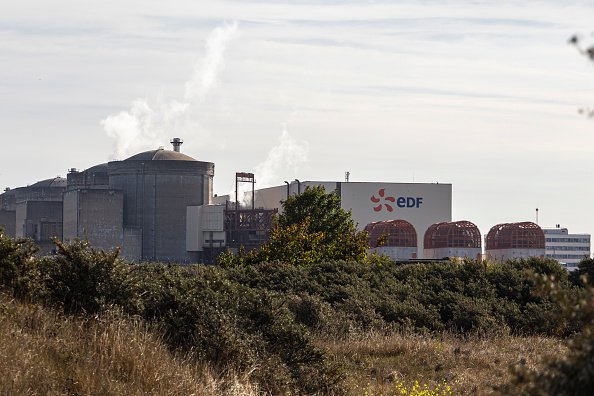
France plans to build the reactors – with a total capacity of 9,990 Megawatts – in pairs at three existing nuclear plants.
Construction costs for the units, which are planned for commissioning between 2038 and 2044, are estimated at about €73 billion, according to the Commission.
France ‘confident’ that EU probe won’t block nuclear plans
PARIS – France is “confident” that its plan to subsidise six new nuclear reactors will…
2 minutes

Paris would cover about 60% of that with a subsidised loan at a preferential rate and provide EDF with “stable revenue” via a 40-year contract, according to the Commission.
The French scheme also envisages a risk-sharing mechanism to shield the energy firm from unforeseen events such as natural disasters and changes in national law.
The probe would check whether the aid was “necessary and proportionate” as provided by EU rules, said the commission, the EU’s antitrust regulator. The opening of an investigation was a “common step” in such cases and did not prejudge its outcome, it added.
France said it would support the review, which it described as “standard” and expected it to move “swiftly”.
“France’s new nuclear energy sector will, in the coming years, be a major contributor to EU-generated electricity,” the French government said in a statement.
Commission chief Ursula von der Leyen recently pivoted the EU back towards nuclear describing Europe’s past turn away from atomic energy as a “strategic mistake”, as soaring oil prices rekindle concerns about the bloc’s energy vulnerability.
(rh)