








Strategic Capital Injection in Indian Aviation Infrastructure
The recent announcement by Adani Airport Holdings (AAHL) to secure Rs 9,825 crore—approximately $1 billion—in primary equity capital marks a significant milestone in the evolution of Indian aviation infrastructure. By securing investment from global financial institutions including Alpha Wave Global, Premji Invest, Temasek, and funds managed by BlackRock, AAHL has solidified its valuation at roughly $18 billion. This transaction represents one of the most substantial primary equity inflows into the domestic airport sector, underscoring strong international confidence in the long-term growth trajectory of the Indian aviation market.
The structure of the agreement, which involves a three-tranche issuance ending in July 2027, suggests a methodical approach to capital deployment. It aligns the influx of funds with the company’s multi-year development roadmap. This infusion of capital does not merely represent a change in shareholding; it acts as a liquidity catalyst for a subsidiary of Adani Enterprises (AEL) that is already responsible for managing over 23 percent of India’s total passenger traffic. As India continues its trajectory toward becoming the world’s third-largest aviation market, the need for robust, modern, and efficient airport infrastructure has become a national economic priority.
Modernization and Capacity Expansion Initiatives
The core of AAHL’s capital allocation strategy centers on the expansion and modernization of its existing portfolio, which includes major hubs such as Mumbai, Navi Mumbai, Ahmedabad, and Jaipur, among others. The Indian aviation sector has witnessed a surge in post-pandemic demand, often outpacing the growth of ground-level infrastructure. Consequently, the primary objective of this fundraising is to increase total annual passenger handling capacity to 200 million passengers.
This modernization effort is multifaceted. Beyond the fundamental necessity of increasing runway throughput and terminal space, the investment is aimed at integrating advanced technologies to streamline passenger processing. From automated baggage handling to biometric-enabled boarding systems, the objective is to reduce congestion and improve operational efficiency across the eight airports currently under the AAHL umbrella. By investing ahead of demand, the company intends to mitigate the risks of bottlenecks that frequently plague high-growth emerging market infrastructure.
The Rise of Integrated Airport City Ecosystems
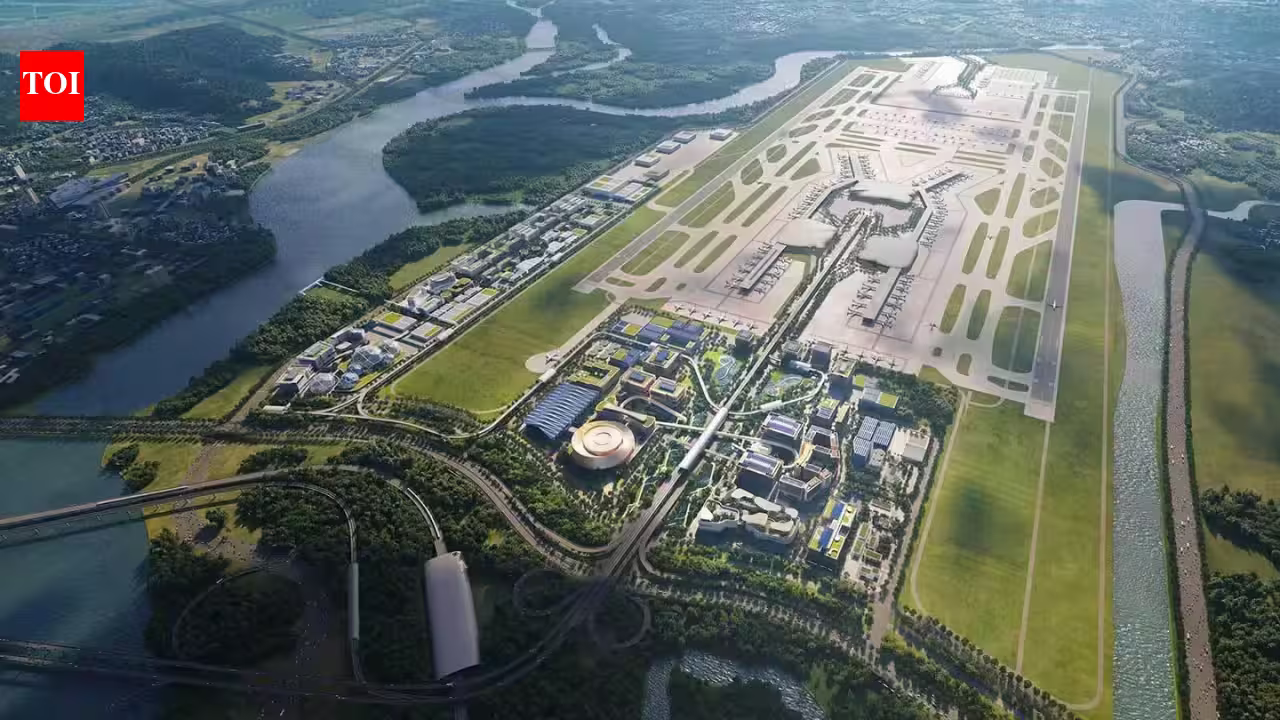
A standout feature of AAHL’s business model is its focus on developing integrated airport city ecosystems. The company has explicitly stated that a portion of the raised capital will support the development of roughly 22 million square feet of mixed-use infrastructure in the first phase. This represents a strategic shift from treating airports as mere transport transit points to viewing them as economic centers—often referred to as ‘aerotropolises.’
In the Indian context, this model is highly lucrative. By developing hotels, commercial office spaces, retail zones, and logistics parks in the vicinity of airports, AAHL is effectively diversifying its revenue streams. Traditional airport business models have historically been overly dependent on aeronautical charges, which are often subject to strict regulatory caps. By expanding into non-aeronautical revenue segments, AAHL aims to insulate itself from the inherent volatility of airline traffic and passenger fees. The creation of these integrated ecosystems serves a dual purpose: it enhances the convenience of international and domestic business travelers while providing the company with sustained, long-term commercial yields from real estate utilization.
Scaling Non-Aeronautical and Ground Handling Services
Beyond real estate, the company is prioritizing the scale-up of its non-aeronautical businesses, specifically its ground-handling operations. As the volume of air cargo and passenger throughput grows, the efficiency of ground support services becomes a critical determinant of an airport’s operational quality. Ground handling, which encompasses baggage processing, ramp services, and aircraft maintenance support, represents a vital service layer that connects airlines to their end customers.
By consolidating and professionalizing these services across its portfolio, AAHL is aiming for a uniform service standard. This is particularly relevant as India increases its focus on becoming a global logistics hub. Efficient ground operations reduce turnaround times for airlines, thereby increasing the utility of the airport for major carriers. This operational excellence is expected to drive higher revenue per passenger, as the company leverages its scale to negotiate better commercial partnerships and optimize service delivery costs.
Market Sentiment and the Indian Economic Landscape
The successful raise of $1 billion in the current global economic environment speaks volumes about the investor perception of the Indian infrastructure story. Global funds such as Temasek and BlackRock are known for their rigorous due diligence and focus on long-term value creation. Their participation in this funding round signals a broader consensus that Indian infrastructure—specifically in the aviation space—is a high-growth sector with significant headroom for expansion.
Furthermore, this transaction follows AEL’s successful Rs 15,000 crore Qualified Institutional Placement (QIP) conducted in 2026, indicating a well-defined corporate strategy to manage capital expenditure through both internal and external funding mechanisms. This financial discipline is essential for the airport sector, which is capital-intensive and requires long gestation periods to realize returns. By securing institutional backing, AAHL gains the stability needed to undertake massive projects, such as the Navi Mumbai International Airport, which is vital for relieving the pressure on existing metropolitan hubs.
In summary, the capital infusion into AAHL serves as a strategic reinforcement of India’s aviation growth story. By balancing capacity expansion with commercial real estate development and improved operational services, the organization is positioning itself to be a primary beneficiary of India’s increasing connectivity. The focus on integrated ecosystems and non-aeronautical revenue suggests a future where airports function as the commercial engines of the regions they serve, providing a stable foundation for the nation’s economic ambitions. For stakeholders and observers of the Indian business landscape, this development highlights the growing maturity of the domestic infrastructure market and the continued attraction of India as a destination for long-term global investment.
Disclaimer: This content is auto-generated for informational purposes only.
Source: Read Original News