







Government Proposes Legislative Council for Ladakh Amid Persistent Demands for Autonomy
New Delhi — The Indian government has unveiled a fresh proposal aimed at addressing the long-standing political grievances of Ladakh, suggesting the creation of an elected legislative body for the Union Territory. During a high-level meeting in the national capital on September 10, 2026, government representatives outlined a plan to introduce “Chapter K” under Article 371 of the Constitution to facilitate this new governance structure.
The proposed legislative council is intended to grant the people of Ladakh greater control over regional affairs. According to representatives from Ladakh’s civil society, this body would hold authority over critical subjects including environmental preservation, land rights, local culture, and language, falling under the categories typically reserved for Union Territories under Article 240.
Civil Society Expresses Skepticism
Despite the proposal, the atmosphere following the meeting remained tense. Members of the Leh Apex Body (LAB) and the Kargil Democratic Alliance (KDA)—the primary coalitions spearheading the movement for autonomy—expressed frustration with the lack of substantive progress.
Chering Dorje Lakruk, co-chairman of the LAB, characterized the meeting as a repetitive exercise that mirrored discussions held earlier this year in May. “The government is effectively buying time,” Lakruk remarked, noting that a formal draft of the proposal was notably absent from the deliberations. While officials have promised to provide a concrete draft by the second week of October, the failure to produce a document at this stage has led to widespread disappointment among Ladakh’s leadership.
A Long Road Since 2019
The demand for a legislative council is the latest chapter in a turbulent timeline that began in 2019. When the Indian government reorganized the state of Jammu and Kashmir, Ladakh was carved out as a separate Union Territory. This shift stripped the region of its former special status, which had previously offered constitutional protections regarding local land ownership, employment, and the preservation of its distinct demographic and cultural identity.
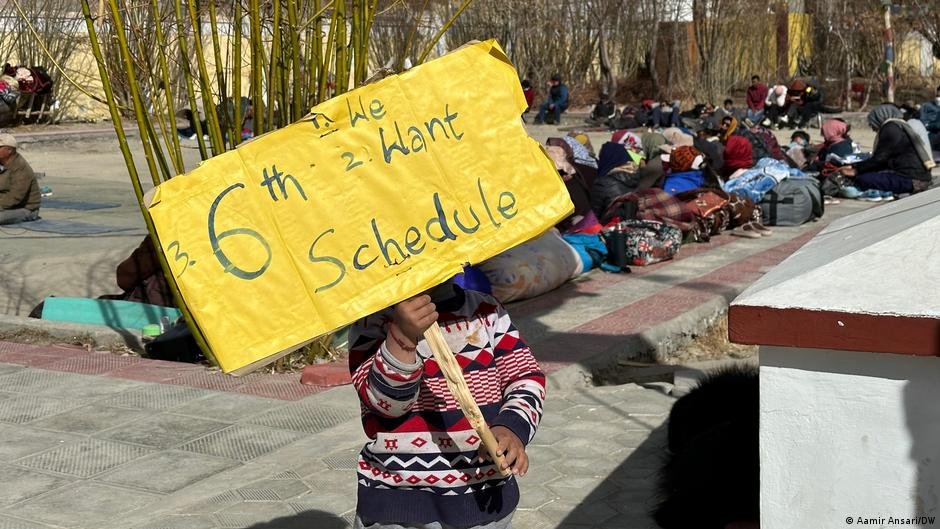
Since that transition, the region has been governed directly by the central administration in New Delhi. This centralized oversight has sparked significant unrest, leading the LAB and KDA to push for more robust protections. Specifically, these groups have been advocating for full statehood and the inclusion of Ladakh under the Sixth Schedule of the Indian Constitution.
Concerns Over Ecology and Identity
The call for Sixth Schedule status is rooted in a desire to shield the fragile Himalayan ecosystem and the interests of the local indigenous population from the potential encroachment of outside commercial interests and industrial conglomerates. As climate change continues to threaten the region’s stability, residents argue that local legislative control is not merely a political preference but a necessity for survival.
The meeting on September 10 occurred on the same day that organizers had planned a massive protest march, underscoring the urgency felt by the local populace. With another round of talks scheduled for October, all eyes are on whether the central government will move beyond promises and provide the tangible constitutional safeguards that the people of Ladakh have sought for the past seven years.
Disclaimer: This content is auto-generated for informational purposes only.
Source: Read Original News