









Resource Sovereignty: How BRICS is Redefining Global Economic Stability
As the global geopolitical landscape shifts under the weight of sanctions, trade barriers, and volatile supply chains, BRICS nations are aggressively pursuing a strategy of economic self-reliance. Leaders, including Prime Minister Narendra Modi and Russian President Vladimir Putin, have recently emphasized the urgent need for robust, alternative trade corridors and deeper integration to insulate their economies from external shocks.
By leveraging their control over essential commodities—ranging from energy and food to critical rare earth minerals—the expanded bloc is positioning itself as a resilient alternative to traditional, Western-dominated trade networks.
Commanding the Rare Earth Monopoly
The transition toward green energy and high-end manufacturing has turned rare earth minerals into the “new oil” of the 21st century. These components are vital for everything from electric vehicle batteries and wind turbines to advanced semiconductors and national defense infrastructure.
Data from the 2025 US Geological Survey highlights the staggering influence of the BRICS bloc, which collectively holds approximately 85 percent of the world’s rare earth reserves. China leads this dominance with nearly 49 percent of global reserves, followed by Brazil at 23.3 percent, India at 7.7 percent, and Russia at 4.2 percent. This consolidation of critical minerals grants the alliance immense leverage in the global tech race, effectively securing their industrial future against supply disruptions.
Energy Security and the Oil Buffer
Beyond high-tech minerals, the bloc remains a powerhouse in traditional energy markets. With the inclusion of major oil-producing nations like Saudi Arabia, Iran, and the UAE, the alliance now controls roughly 40.7 percent of the world’s proven oil reserves.
This energy dominance is particularly significant for nations that have historically been targets of US-led sanctions. By creating a collaborative energy ecosystem, BRICS members can sustain industrial operations and maintain economic momentum even when access to traditional Western financial and logistics systems is restricted.
Feeding the Future
Global food security has become a primary pillar of the bloc’s defensive strategy. In an era where regional conflicts frequently trigger massive price hikes and supply chain collapses, BRICS stands out as the world’s primary “food factory.” Producing over 57 percent of the global food supply, the alliance relies heavily on the massive agricultural outputs of India and China. This internal self-sufficiency serves as a vital firewall against global inflationary pressures, ensuring that domestic markets remain stable regardless of external market volatility.
Navigating New Trade Routes
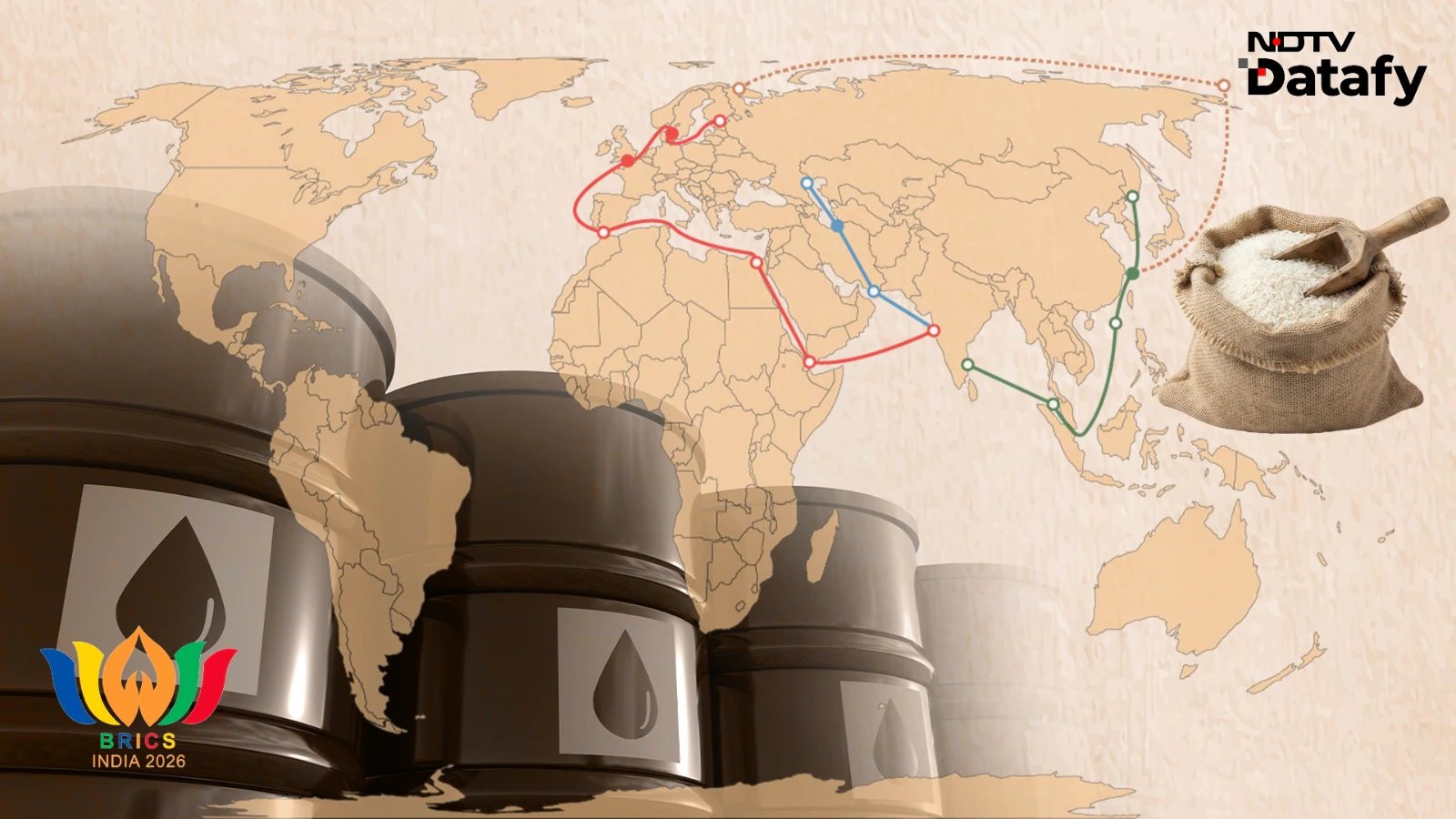
One of the most tactical responses to recent maritime tensions—such as the instability surrounding the Strait of Hormuz—is the development of alternative logistics networks. Disruptions at these strategic chokepoints have historically inflated the cost of energy and goods for nations like India.
To mitigate this, BRICS is actively investing in corridors like the International North-South Transport Corridor (INSTC) and investigating Russia’s Arctic and eastern maritime routes. These projects are designed to bypass vulnerable chokepoints, significantly reducing transit times and logistics costs.
While the bloc continues to rely on the West for high-end semiconductor technology, its growing control over the fundamental building blocks of the modern economy—food, fuel, and minerals—marks a fundamental shift in the global order. Through these strategic initiatives, BRICS is steadily building a defensive architecture capable of weathering the storms of 21st-century geopolitics.
Disclaimer: This content is auto-generated for informational purposes only.
Source: Read Original News