







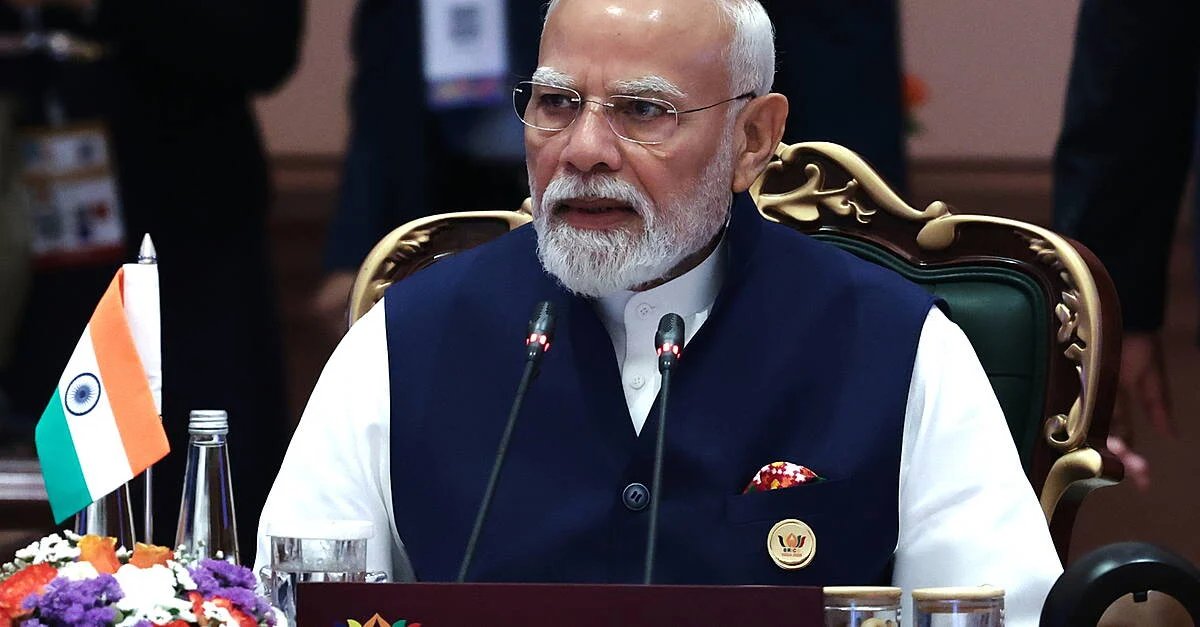
NEW DELHI — Indian Prime Minister Narendra Modi issued a stark warning today regarding the fragility of the international order, telling world leaders that the confluence of geopolitical volatility, crumbling supply chains, and the escalating climate crisis has created a “precarious moment” for global stability.
Speaking during a high-level summit aimed at fostering international dialogue, the Prime Minister emphasized that the consequences of these challenges are no longer confined to specific regions but are being felt by populations worldwide. He argued that the current global landscape is defined by deepening uncertainty, which threatens to derail economic progress and social cohesion across both developed and developing nations.
“The world is at a critical juncture,” Prime Minister Modi stated. “Geopolitical tensions, coupled with disruptions in our global supply networks, have created an environment where the most vulnerable are suffering the most. The climate crisis, meanwhile, continues to act as a threat multiplier, exacerbating existing inequalities and undermining the stability that all nations rely upon for prosperity.”
At the heart of the Prime Minister’s address was a passionate plea for a more unified approach to international policy, with a specific focus on the Global South. Modi contended that current multilateral frameworks are increasingly failing to reflect the realities of a modern, interconnected world, leaving nations in the developing sphere without adequate representation or support.
He underscored that without enhanced cooperation, the divide between the Global North and the Global South will only widen, potentially leading to further fragmentation of the international community.
“True global progress cannot be built on the back of exclusion,” Modi noted. “We must prioritize a collaborative framework that empowers the voices of the Global South. We need to move beyond mere rhetoric and toward actionable partnerships that ensure equitable access to technology, finance, and resources to combat the systemic shocks we are witnessing today.”
The Prime Minister’s comments come amid ongoing concerns regarding the stabilization of global trade routes and the slow pace of climate financing promised to developing countries. While he did not single out specific nations, his remarks underscored a growing frustration among developing economies that the global response to the dual challenges of the energy transition and economic resilience has been lopsided and insufficient.
Analysts suggest that India, currently holding significant influence on the world stage, is positioning itself as a bridge-builder, aiming to leverage its diplomatic weight to advocate for a more inclusive international order.
Modi concluded his address by calling for a “new era of cooperation” that puts human welfare at the center of global policy. He urged world leaders to commit to a more resilient, transparent, and collaborative approach to international relations, warning that failing to address these collective threats collectively would risk long-term global instability that no single nation can manage alone.
Disclaimer: This content is auto-generated for informational purposes only.
Source: Read Original News