






India’s Growing Appetite for Exotic Pets: The Tragic Case of Rescued Orangutans
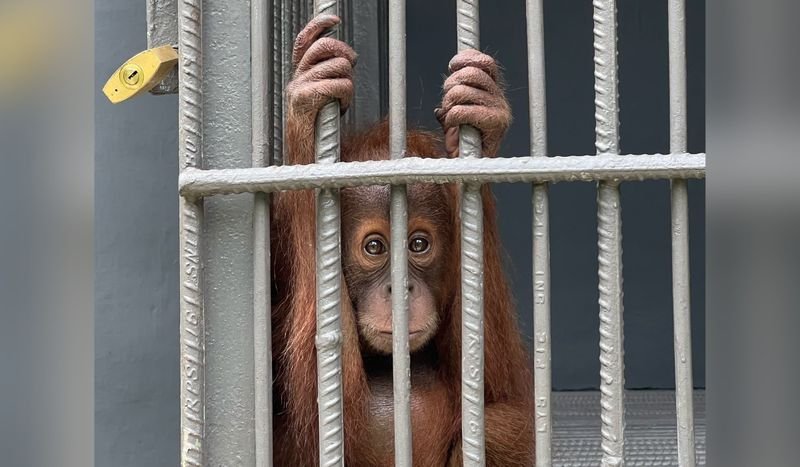
The discovery of five infant orangutans in the Ranakantha reserve forest of Odisha’s Balasore district on September 8 has sent shockwaves through India’s conservation community. These animals, mere infants aged six to eight months, were found abandoned in a landscape they are not native to. Native only to the rainforest canopies of Indonesia and Malaysia, these critically endangered primates should have been in the wild, nurtured by their mothers. Instead, they arrived in India as victims of a sophisticated and cruel global wildlife trafficking network.
The Human Cost of Wildlife Trafficking
Experts state that the presence of these infants in India is not merely a failure of border control, but a direct result of domestic demand. “There is no doubt that the orangutans were illegally trafficked into India,” says Jose Louies, CEO of the Wildlife Trust of India.
The process of sourcing these infants is inherently brutal. To capture a baby, poachers typically kill the protective mother. Because female orangutans reproduce only once every seven to nine years—the slowest rate of any land mammal—the loss of even a few individuals has devastating consequences for the species’ survival. Conservationist Uttara Mendiratta emphasizes that when we see these “cute” pets in private collections, we are actually witnessing the permanent loss of wild populations and the death of adult females.
A Growing Market for Exotic Wildlife
India is rapidly evolving from a transit point into a lucrative consumer market for illegal exotic species. Recent years have seen a surge in seizures, including various gibbon species and kangaroos found in forests or at airports. The desire to own rare animals has transformed into a status symbol, fueled in part by high-profile figures and influencers showcasing exotic creatures on social media.
This trend mirrors lifestyles observed in other parts of the world, where private collections of big cats and great apes are seen as markers of extreme wealth. Experts warn that as long as there is a domestic market for these “pets,” criminal syndicates will continue to find ways to bypass borders, regardless of how many checkpoints are established.
Regulatory Loopholes and the Need for Action
The legal landscape in India is currently ill-equipped to deal with the surge in exotic animal ownership. There is a glaring absence of legislation that explicitly bans the private possession of species for whom captivity is biologically unsuitable. Without strict enforcement and clear legal frameworks, India risks becoming a hub for “laundering” illegally acquired wildlife into private breeding facilities.
Furthermore, the authorities face a ethical dilemma regarding the rescued infants. While there is pressure to keep them at zoos like Nandankanan to boost tourism, conservationists argue this is fundamentally wrong. Experts from the Wildlife Trust of India and Indonesian conservation groups urge that these animals must be repatriated.
The Ethical Path Forward
Returning these orangutans to Indonesia is not just a moral obligation; it is a vital step for the species’ conservation. Indonesia has established successful, internationally recognized rehabilitation programs that have re-wilded hundreds of great apes. By returning these five infants, India has the opportunity to contribute to the creation of viable, self-sustaining wild populations.
The tragedy in Odisha serves as a stark reminder: the conservation crisis is not a distant, foreign problem. It is a challenge occurring within Indian borders, driven by domestic choices. Until the public shifts away from the desire to own exotic wildlife, the demand that fuels these horrific, cross-continental trafficking networks will persist. The five infant orangutans currently under medical care in Odisha deserve more than to be a tourist attraction—they deserve a chance to return to the wild.
Disclaimer: This content is auto-generated for informational purposes only.
Source: Read Original News