








Wimbledon is a tournament steeped in tradition, where the crisp white kits, the meticulously manicured grass, and the ubiquitous serving of strawberries and cream create a sensory experience unlike any other in global sport. Yet, long before the gates swing open to thousands of fans and the world’s elite tennis stars take to the pristine lawns, one of the All England Club’s most vital and seasoned employees is already well into his shift.
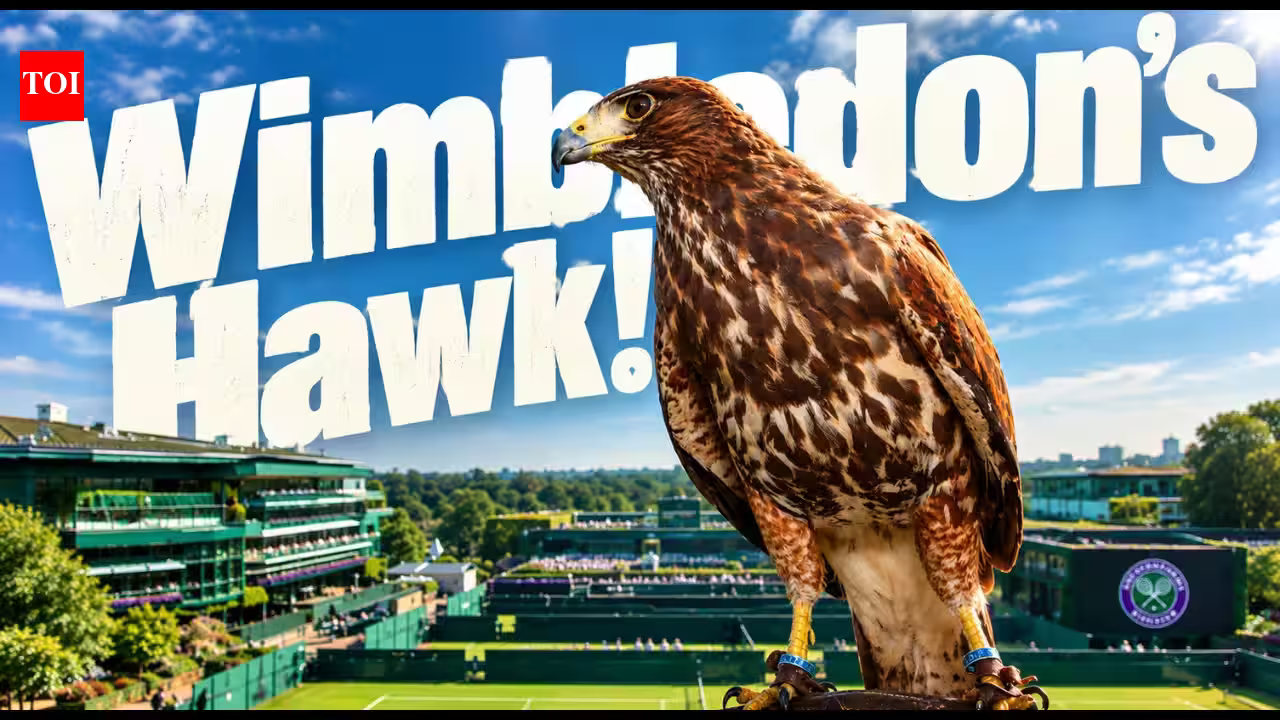
His name is Rufus, and for the past 18 years, he has been the silent guardian of the world’s most famous tennis courts. A Harris’s hawk with an unflinching gaze and a storied career, Rufus is tasked with a duty far removed from backhands and volleys: he is the club’s primary defense against the pigeons that threaten to disrupt the delicate ecosystem of the Championships.
Rufus starts work before the players arrive
The origin of this unique aerial security detail dates back to the 1999 final between legendary titans Pete Sampras and Andre Agassi. It was then that handler Donna Davis observed the disruptive presence of pigeons during the broadcast. Recognizing the potential for a feathered nuisance to mar the professionalism of the sport, she reached out to the All England Club. Following a successful demonstration by her previous hawk, Hamish, the foundation for a permanent avian partnership was laid.
Rufus, who arrived on the scene at just 18 weeks old in 2008, has been the face of that partnership ever since. His working day begins in the dead of night, often arriving at the grounds by 4:00 AM BST—a time when local pigeon populations are at their most active.
“Generally, we start off in Court Number One to make sure that any pigeons that may have gone under the roof and in any little nooks and crannies, he goes and flies up there to make sure nothing’s about,” Davis explained to the BBC. The process is one of elegant intimidation; Rufus patrols the rooftops, scouring the nooks and crannies for interlopers. If a bird is spotted, a brief, sharp chase ensues, ensuring the area remains clear for the day’s competition.
His commitment to the role is absolute, sometimes lasting up to 12 hours a day. He has become so accustomed to the grounds that he treats them as his personal domain. On humid or wet mornings, he has even been observed taking a splash in puddles left on the court roofs, unbothered by the gravity of his responsibilities.
A bird of celebrity status
Beyond his utility, Rufus has transcended his role as a pest-control agent to become a beloved fixture of the tournament. Spectators often recognize him during his patrols, leading to frequent stops by fans eager to catch a glimpse of the hawk in action. For Davis, the experience is profoundly rewarding. “Everybody wants to stop and see Rufus, and it’s so lovely,” she says. “I feel very privileged to be here and fly my beautiful bird, and he comes back.”
Rufus’s professional reach extends well beyond the tennis circuit. His reputation for efficiency has made him a highly sought-after worker, performing similar duties at prestigious venues such as Lord’s Cricket Ground and the historic grounds of Westminster Abbey. He remains one of the most well-traveled and recognizable workers in British sport.
The Wimbledon hawk even survived a kidnapping
The bond between the public and the bird was tested in 2012, in an incident that dominated the headlines. During the tournament, Rufus was stolen overnight from Davis’s van parked near the grounds. The disappearance sparked a frantic, high-profile search involving local authorities, the media, and a south London rescue center. The tension was palpable until his discovery, and his subsequent safe return made the front page of The Times—a testament to how deeply entrenched he had become in the tournament’s fabric.
Tradition over technology
In an era defined by rapid technological advancement, the role of a raptor might seem like a relic of the past. Discussions have occasionally surfaced regarding the implementation of AI-driven detection systems or drone-based deterrents to manage the pigeon population. In theory, such automated technology could offer a more clinical, 24/7 solution to keeping the courts pristine.
However, the All England Club remains staunchly committed to its feathered employee. There is a distinct, intangible quality to Rufus’s work that software cannot replicate. He is not merely a mechanism for clearing space; he is part of the living history and charm of Wimbledon. A drone might clear a court, but it cannot capture the imagination of the crowd or uphold the eccentric, storied traditions that make the Championships a global spectacle.
With Harris’s hawks capable of living well into their 30s, the prospect of many more summers remains on the horizon for the Wimbledon hawk. While the sport continues to modernize at a breakneck pace, there is a quiet, enduring comfort in knowing that as the sun rises over SW19, Rufus will be there, patrolling the skies and ensuring that the only drama on the grass comes from the players themselves.
Disclaimer: This content is auto-generated for informational purposes only.
Source: Read Original News