









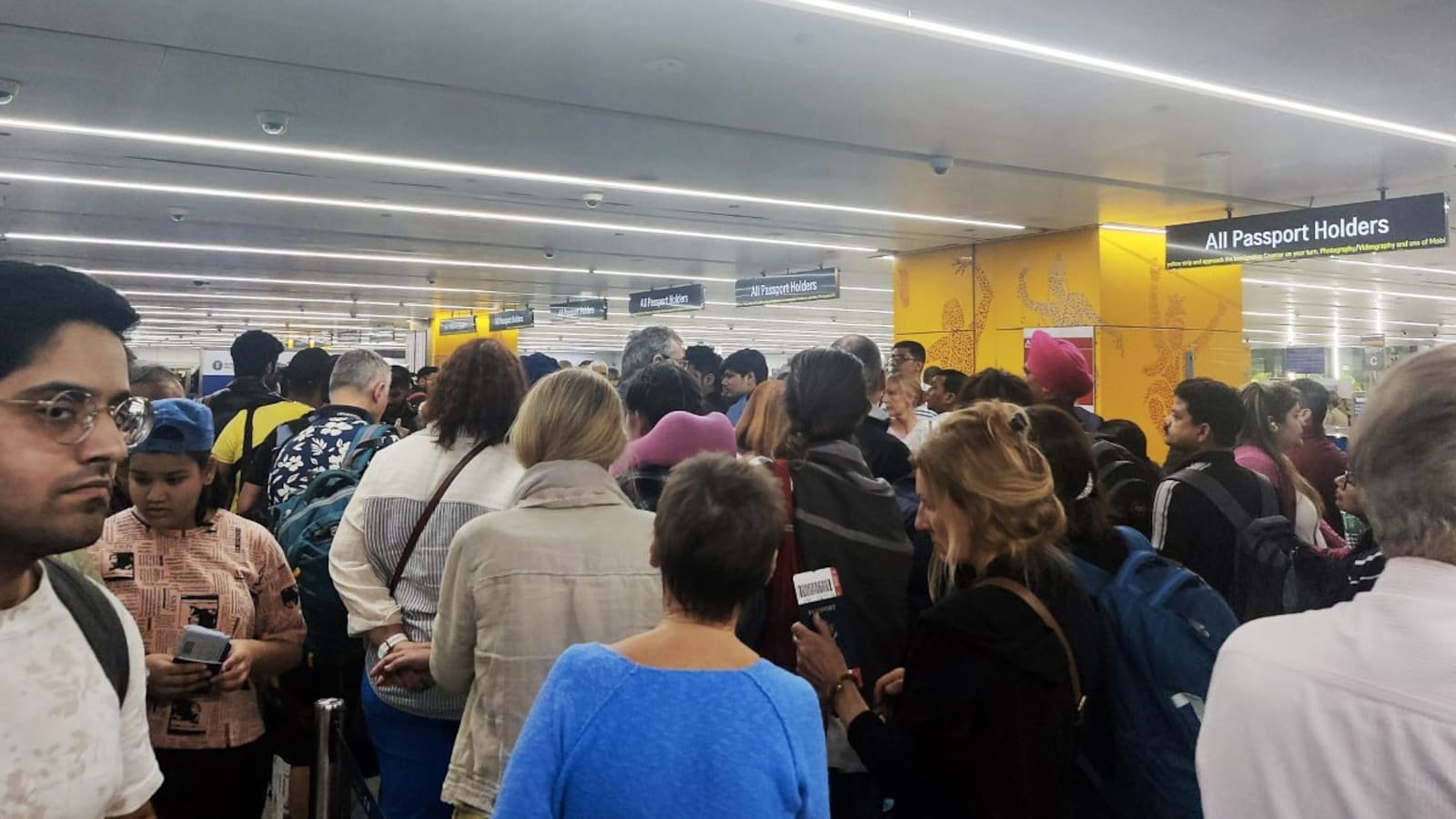
Security Breach at Delhi Airport: Italian Nationals Bypass Immigration on Air India Flight
In a major security lapse, three Italian nationals successfully flew from Delhi to Munich without clearing mandatory immigration formalities. The incident, which occurred in the early hours of September 4, has prompted the Ministry of Civil Aviation to issue a stern show-cause notice to Air India, demanding an explanation for the oversight within seven days.
The Sequence of Events
The passengers arrived in the national capital from Amritsar via Air India flight AI-1115 at approximately 12:50 am. Barely an hour later, at 1:45 am, they boarded a connecting Lufthansa flight (LH-763) bound for Munich. Despite their international destination, the group managed to navigate through the airport transit areas and reach the departure gate without ever encountering an immigration checkpoint.
The Ministry’s investigation revealed that the passengers were operating under a “hub-and-spoke” arrangement. During their initial check-in at Amritsar, they were issued both domestic and international boarding passes. This issuance is being cited as a primary procedural violation, as Air India’s Standard Operating Procedure (SOP) strictly mandates the use of only two types of boarding passes: “D” for domestic and “I” for international.
Multiple Violations Flagged
The Civil Aviation Ministry has highlighted five critical failures in the airline’s ground operations. Beyond the improper issuance of boarding passes, the ministry noted that domestic and international passengers were not segregated upon disembarking in Delhi.
Furthermore, regulations stipulate that only passengers holding “I-category” passes should have access to the International-to-International Transfer Desk. However, the three passengers, despite being categorized as domestic travelers, were able to enter this restricted zone. The ministry further criticized the failure of the airline’s designated nodal officers and monitoring teams, who were expected to oversee the transfer process round-the-clock to prevent such breaches.
Questions of Accountability
The show-cause notice seeks clarity on why the passengers were not diverted from the domestic arrival stream to the international departure process. The government is specifically demanding to know how the airline’s personnel and third-party handling staff allowed this to occur, and why the discrepancy was not flagged until a manual reconciliation process was conducted long after the flight had departed.
The Ministry of Civil Aviation is also investigating whether the necessary legal documentation—including the General Declaration, passenger manifest, and API-PNR data—was accurately submitted to immigration authorities. The core of the concern lies in the apparent failure of automated systems designed to verify passenger status, which allowed international travelers to effectively “disappear” from the immigration radar.
Potential Consequences
Air India has been given a week to respond to the allegations. The ministry has warned that failure to provide a satisfactory explanation will be treated as an admission of negligence, potentially leading to further administrative and regulatory action against the carrier.
This incident serves as a significant wake-up call for aviation security protocols in India. While the hub-and-spoke model is designed to facilitate seamless travel, the breach underscores the risks involved when manual reconciliation and standardized segregation protocols are neglected, leaving gaping holes in the country’s border security infrastructure.
Disclaimer: This content is auto-generated for informational purposes only.
Source: Read Original News