







From the earliest conversations, Buro Happold worked alongside the Club to make sustainability a defining principle, not a bolt-on. Our role was clear: shape the vision, develop the framework, and engineer the solutions that turned aspiration into reality.
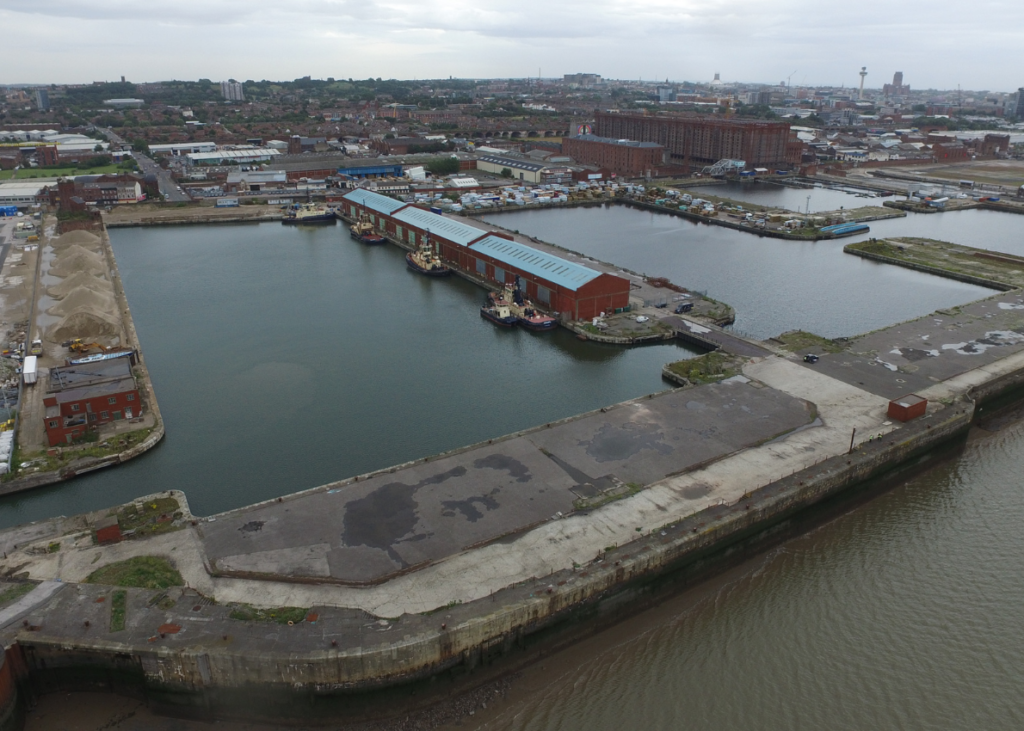
Bramley-Moore Dock is a site of contrasts: rich in heritage yet exposed to the elements, offering both challenges and opportunities. From the outset, we asked the critical question: how can this environment work for the project rather than against it? That thinking drove a strategy to harness natural assets, reduce energy demand, and future-proof operations; creating a stadium that is efficient, resilient, and deeply connected to its dockside setting.

Everton’s principles for development included a clear commitment to harness the environmental power of the site and minimise its carbon footprint throughout design, construction and operation. This ambition was about leadership, not just compliance. The Club wanted a stadium that would serve as a benchmark for sustainable sports infrastructure, reflecting its values and its responsibility to the community. From the outset, sustainability was embedded in the brief, guiding choices that balanced efficiency with an awareness of the environmental and social factors at play
To make this ambition real, Buro Happold worked with Everton to develop a Sustainability Performance Framework; a bespoke set of key performance indicators tailored to the Club’s aspirations and planning obligations. This framework guided decisions across design and construction, ensuring that sustainability was not an afterthought but a core design driver. It addressed resource efficiency, operational performance, and ecological impact, setting clear targets for energy, water, waste, embodied carbon and site resilience while safeguarding heritage, user experience and the local community.

Material efficiency – a collaborative effort
Embodied carbon, the emissions locked into materials and generated through construction, represents a major share of a stadium’s lifetime impact. This is driven, in large part, by the amount of material used in the design of the stadium’s structure. Tackling this challenge required collaboration from the earliest stages. Buro Happold led the embodied carbon assessment and strategy, while Laing O’Rourke brought its expertise in off-site manufacturing and low-carbon construction to deliver measurable reductions. Throughout the project, we carried out studies that helped highlight where embodied carbon had the greatest impact and provided useful insight that was taken into account during design development and construction planning.
The approach combined engineering innovation with advanced construction techniques. Structural design was optimised to reduce material wastage in construction, and low-carbon concrete mixes were specified throughout. Laing O’Rourke’s Design for Manufacture and Assembly (DfMA) methodology was pivotal: more than 6,000 components were manufactured off-site at specialist facilities, reducing waste, improving quality, and cutting emissions associated with on-site activity. Mechanical, electrical and plumbing systems were delivered as prefabricated modules, minimising material overruns and reducing embodied carbon further.
This was not a single intervention but a series of coordinated decisions, each informed by data and driven by collaboration. Together, these measures demonstrate how design and delivery teams can work as one to achieve meaningful carbon reductions on complex projects.
Harnessing the environment and driving operational efficiency
Beyond embodied carbon, we focused on operational performance, making the stadium efficient from day one. Photovoltaic panels were integrated across over 2,000 m² of roof area to generate clean electricity and cut operational carbon. To maximise this benefit, we engineered a battery storage system that works in tandem with the PV array. This combination allows the stadium to manage peak demand and maintain resilience, ensuring energy generated on-site is used intelligently. The batteries are also used as a life-safety backup power supply, instead of a more typical diesel generator system, thus reducing emissions generated on site and improving air quality in the surrounding area.
Operational efficiency was equally critical. We worked with the design team to integrate LED lighting with intelligent controls to reduce energy consumption, high-efficiency HVAC systems designed for matchday and non-matchday flexibility, and smart building management systems to monitor and optimise performance. Hot water systems were also designed to respond to peak usage and avoid the standing losses associated with large storage volumes. These measures ensure the stadium operates efficiently, reducing costs and environmental impact over its lifetime.
Rainwater harvesting was incorporated to create a water quality hierarchy and minimise the use of potable water for pitch irrigation. Sustainability is also about ecology. We worked with the Club and project stakeholders to protect the dockside environment as well as create new habitats for local wildlife. The measures implemented included the installation cormorant rafts, maintaining of the hydraulic link between Sandon Half-Tide and Nelson Docks and the planting of native and pollinator friendly plant species. These interventions ensure the stadium contributes positively to biodiversity, leaving a lasting environmental legacy for Liverpool’s waterfront.

Continuing objectives during construction
Our influence extended into delivery. Working with Laing O’Rourke, we helped shape strategies that achieved more than 99% diversion of construction and demolition waste from landfill. Concrete and brick from demolition were crushed on-site and reused as piling mats and backfill, reducing the need for virgin materials and avoiding thousands of truck movements. Even the dock infill was approached with environmental care: Existing dock deposits were left in place, capped with a separation geotextile and then covered with 480,000 m³ of sand that was dredged offshore and piped directly into the dock. This strategy is estimated to have avoided the need to dredge and dispose of 75,000 m3 of dock deposits (enough to fill 30 Olympic-sized swimming pools) and reduced the total volume of fill by approximately 25,000 m3, reducing both marine and terrestrial vehicular movements, avoiding transport emissions and congestion. Supplier engagement initiatives (such as reducing packaging and returning reusable items) were also part of the sustainability framework we developed and monitored.

The Hill Dickinson Stadium does more than occupy a historic dockside, it responds to it. Photovoltaics on the roof harness the power of the sun. Battery systems ensure that energy is stored and used intelligently. Rainwater harvesting conserves resources. Habitat creation and ecological design initiatives look to generate new marine and terrestrial biodiversity. Material strategies and off-site manufacturing reduce construction related carbon, while DfMA (design for Manufacture and Assembly) construction practices minimise waste.

This is not sustainability as a checklist; it is sustainability as a design philosophy. Every decision, from structural systems to energy infrastructure, was guided by a commitment to efficiency, resilience, and responsibility, principles Buro Happold helped define and deliver.
Looking ahead
As the Hill Dickinson Stadium opens its doors, it stands as a benchmark for sustainable sports infrastructure. It shows that environmental ambition can coexist with architectural ambition, and that innovation often begins with asking the right questions: How can the site work for us? How can technology serve both performance and planet? How can design choices today reduce impacts tomorrow?
The answers at the Hill Dickinson Stadium are clear. By harnessing its environment, Everton has created a stadium that is not only iconic but future-ready, a venue that respects heritage while embracing progress. And Buro Happold is proud to have been at the heart of making that happen.