









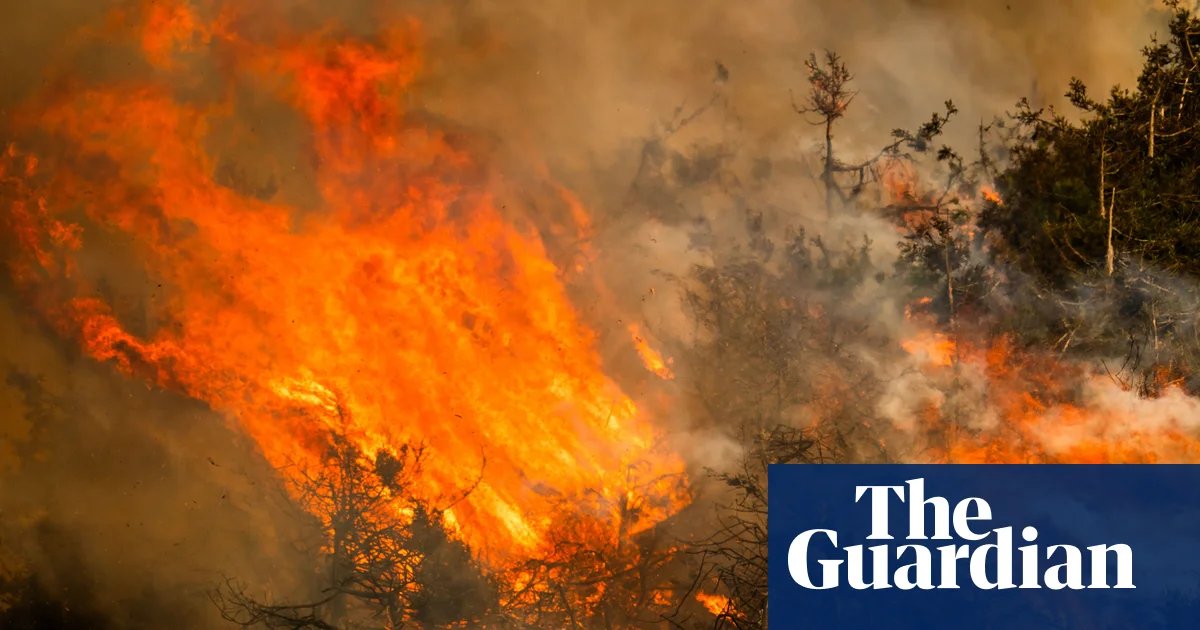
Federal firefighters are sounding the alarm as a record-shattering wildfire season pushes exhausted, understaffed crews to their physical and mental limits. Despite the increasing intensity of modern blazes, rank-and-file firefighters claim the federal government’s aggressive suppression mandates are prioritizing immediate containment over the safety of those on the front lines.
Reports from the field paint a grim picture of a system in crisis. Nine current firefighters, speaking on condition of anonymity, described a year of near-nonstop deployment that has led to widespread fatigue and a dangerous spike in preventable accidents. This, they argue, is the result of a “perfect firestorm” created by climate change and a federal push for “fast and full” suppression of all ignitions—even in high-risk terrain.
The toll of this directive is evident in the numbers. According to the Wildland Fire Lessons Learned Center, wildfire entrapments have reached a 20-year high, with 12 incidents recorded by mid-August alone. Tragically, there have been 14 on-duty fatalities this season, including the loss of three firefighters in Colorado’s Knowles fire—the deadliest entrapment incident in 13 years.
Dr. Timothy Ingalsbee, executive director of Firefighters United for Safety, Ethics and Ecology (Fusee), attributes the spike in injuries to crews being forced into high-risk, “aggressive direct attacks” where they are not strategically effective. “Climate change is half the explanation,” Ingalsbee noted, citing a dangerous cycle where pushed crews are forced to operate beyond their physical capacity.
The situation has caught the attention of federal lawmakers. A bipartisan group of five senators, including Michael Bennet and Alex Padilla, recently wrote to the Department of the Interior and the USDA, expressing “exceptional concern” over reports that teams are being forced to work unsafe hours with insufficient leadership. The senators highlighted a critical shortage of experienced personnel, such as taskforce leaders and division supervisors, noting that agencies are currently utilizing “temporary supervisory structures” to fill gaps.
This reality starkly contradicts the position of U.S. Forest Service Chief Tom Schultz, who testified to a congressional subcommittee in July that the agency’s workforce is “stronger than at any point in recent years” and “fully staffed.”
However, veteran advocates like retired fire chief Bobbie Scopa, a vice-president for Grassroots Wildland Firefighters, argue that the government’s refusal to acknowledge these staffing shortages is setting crews up for failure. “We have had shortages for 20 years—and it’s only gotten worse,” Scopa said. “It is not like we are trying to add bureaucracy; we are trying to keep people alive.”
As the U.S. continues to face fire seasons that are longer and more destructive—with over 8.4 million acres burned this year alone—the pressure on fire management to pivot from risky, mandatory suppression toward more sustainable, safety-conscious strategies is mounting. For the crews currently in the field, however, the immediate concern remains surviving an unrelenting season with resources stretched to the breaking point.
Disclaimer: This content is auto-generated for informational purposes only.
Source: Read Original News