






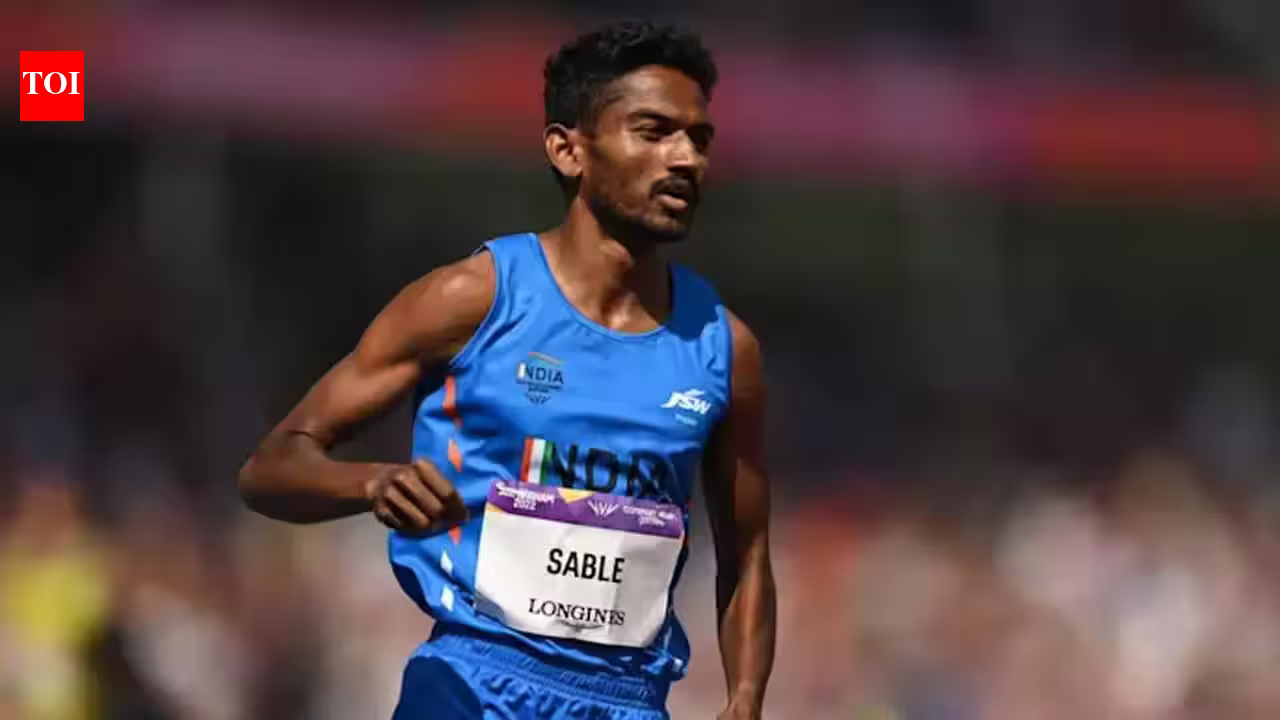
EXPECTATIONS surrounding Avinash Sable have always been gargantuan, but as the 31-year-old prepares for the Asian Games 2026, the narrative has shifted from one of pure dominance to a testament of human resilience. The defending champion in the 3000m steeplechase, and the man who currently holds both the Asian Games record (8:19.50) and the Indian national record (8:09.91), is preparing to step back onto the continental stage following a career-defining hurdle—not on the track, but in the hospital.
For the better part of the last year, the prospect of Sable mounting a title defense appeared grim. In July 2025, a horrific crash during the water jump at the Monaco Diamond League resulted in severe ACL and meniscus tears in his right knee. The injury was catastrophic, rendering even basic, day-to-day movement a grueling challenge and threatening to bring a premature end to one of India’s most storied track careers.
The Long Road to Recovery
The path from the operating table to the starting blocks has been paved with patience and, at times, grueling monotony. Coach Kalyan Chaudhuri, in an exclusive interview, laid bare the stark reality of the months that followed the accident.
“It’s not a small story,” Chaudhuri remarked. “After the ACL tear, even jogging was difficult. The last seven to eight months were very crucial. The actual preparation started only around three or four months ago because rebuilding strength for hurdling, water jumps and race-specific work was not easy.”
The recovery was far from linear. Just as Sable began to find his footing, a mid-season thigh strain suffered during a high-altitude training camp in Ooty this April threatened to derail his progress yet again. The setback forced another period of rehabilitation, with the window between May and mid-June becoming the decisive period for his Olympic-cycle comeback. According to Chaudhuri, the focus remained steadfast on localized strengthening, particularly around the knee, to compensate for the surgical intervention.
A Return to Form
Despite the severity of his injuries, the signs of a full return are becoming increasingly evident. Last week at the Indian Athletics Series Final in New Delhi, Sable secured the men’s 3000m steeplechase title with a comfortable 8:32.39. While the time is off his blistering national record pace, it served as a critical psychological and physical milestone—a proof of concept that he can clear the barriers and navigate the water jumps under pressure.
Chaudhuri noted that while subtle, subconscious markers of the injury persist—such as slight alterations in his mechanics during warm-ups—those ghosts vanish once the gun goes off. “Once he moves into race-specific sessions, he runs absolutely fine like before,” the coach added.
This recovery has been a collaborative triumph, involving a deep bench of recovery specialists, strength and conditioning experts, and the diligent staff at SAI Bengaluru. However, Chaudhuri is quick to credit the athlete’s own intellect. “He is one of the most intelligent athletes I have worked with. He knows the response of his body and understands what is required for recovery. Training such an intelligent athlete is really a blessing for a coach.”
Mental Fortitude in the Pack
Steeplechase is inherently dangerous. It is a sport of attrition where athletes jostle for position at high speeds, often approaching fixed hurdles and water pits in tight, physical packs. For an athlete returning from an ACL injury, the “fear factor” of a collision is often the final hurdle to clear.
Chaudhuri acknowledged that lingering doubts are common after such an injury, particularly in the high-stakes environment of an international final. Yet, Sable appears to have moved past the trepidation. “My feeling is that after such an injury there can be a little fear in crowded situations, but he tells me he is completely used to it now,” the coach explained. “He says he feels no difference.”
Eyes on the Prize
Sable’s ambitions for the 2026 Asian Games remain twofold. He enters the competition not only to defend his steeplechase crown but also to contend in the 5000m, an event where he secured a silver medal in Hangzhou. His recent trip to Belgium, where he clocked a competitive 13:45.52 in the 5000m, underscores his dual-threat capability.
As Sable prepares to head to Aichi-Nagoya, he does so with the dual identity of a seasoned mentor to the younger generation of Indian long-distance runners and a hungry competitor looking to reclaim his throne. Having spent a year navigating the darkness of rehabilitation, the defending champion is finally stepping back into the light. If his recent sessions are any indication, Sable is not just back; he is ready to remind the continent exactly why he remains the man to beat.
Disclaimer: This content is auto-generated for informational purposes only.
Source: Read Original News