






India, Vietnam Set Sights on $25 Billion Trade Target as Ties Deepen
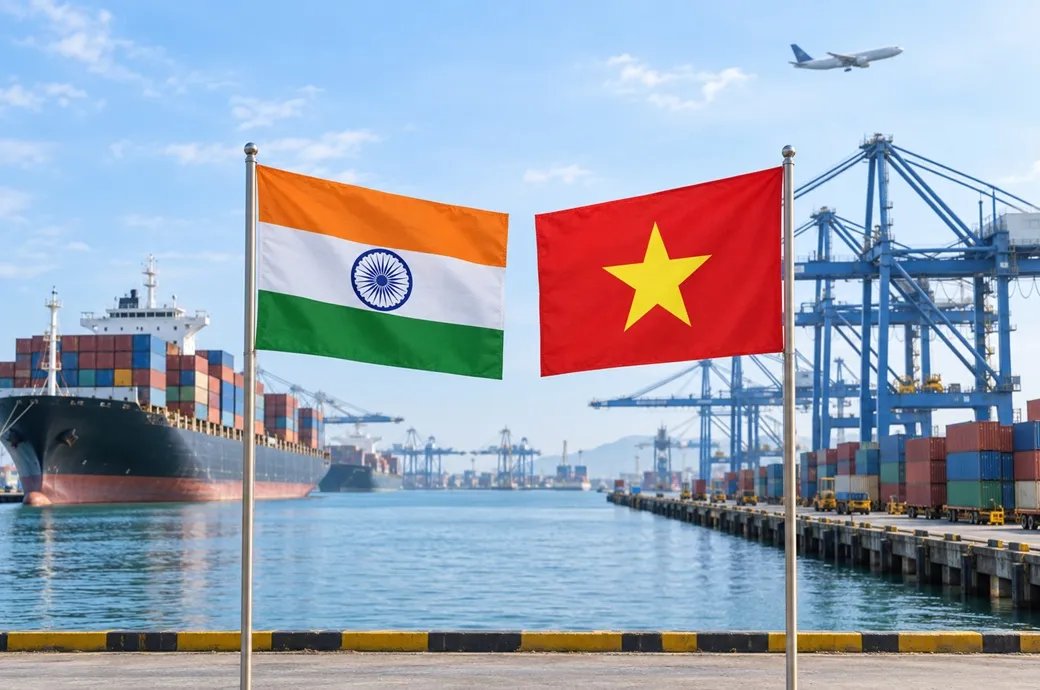
New Delhi – In a significant move to bolster economic and strategic ties, India and Vietnam have reaffirmed their commitment to achieving a $25 billion bilateral trade target. The decision was formalized during the 19th session of the Vietnam-India Joint Commission Meeting on Trade, Economic, Scientific and Technological Cooperation, co-chaired by External Affairs Minister S. Jaishankar and Vietnam’s Minister of Foreign Affairs Le Hoai Trung in New Delhi.
The high-level discussions served to review the progress made since the 18th session held in Hanoi last October, with both nations pledging to accelerate ongoing cooperation schemes and remove bureaucratic bottlenecks that have historically hindered trade expansion.
Smoothing the Path for Commerce
A central focus of the meeting was the streamlining of market-access procedures. Both delegations acknowledged that for the $25 billion goal to be realized, the existing trade framework must become more agile for businesses. Minister Jaishankar highlighted the need for Vietnam to facilitate greater access for Indian-origin products, specifically naming pharmaceuticals, meat, and fruits. Furthermore, he emphasized the critical importance of maintaining robust cooperation in the oil and gas sector, a traditional pillar of the bilateral partnership.
In response, Minister Trung welcomed the prospect of increased Indian capital flowing into Vietnam’s burgeoning infrastructure, energy, and pharmaceutical sectors. To ensure that technical trade hurdles are addressed systematically, both sides agreed to leverage the 2026 meeting of the Subcommittee on Bilateral Trade Cooperation as a platform for resolving specific regulatory bottlenecks.
Logistics and Digital Integration
Recognizing that physical connectivity is the backbone of trade, the ministers identified logistics as a top priority. Discussions centered on expanding direct air links and enhancing multi-modal connectivity—including road, rail, and seaport links—to better integrate with major Asia-Europe shipping routes.
Beyond physical infrastructure, the two nations are turning their attention to digital financial integration. The proposal for two-way QR-code retail payment connectivity was highlighted as a transformative measure that would simplify transactions for tourists and small businesses alike, effectively bridging the gap between the two retail ecosystems.
Strategic and Global Cooperation
The meeting also touched upon broader diplomatic and regional objectives. As the two nations approach the 55th anniversary of their diplomatic ties in 2027, they plan to mark the milestone with a “Friendship Year,” complete with cultural exchanges and high-level parliamentary and people-to-people engagements.
On the regional front, India reiterated its steadfast support for ASEAN centrality. Minister Jaishankar urged Vietnam to play a constructive role in accelerating the review of the ASEAN-India Trade in Goods Agreement, which is expected to further catalyze regional economic growth. Vietnam also showcased its alignment with India’s vision for the Indo-Pacific by sponsoring a pillar of the Indo-Pacific Oceans Initiative, signaling a deepening of the security and developmental partnership between the two nations.
As the meeting concluded, both sides agreed to convene subcommittees on science and technology in the near term. Minister Trung proposed a long-term cooperation strategy that bridges research institutes, universities, and private sector innovation ecosystems, focusing on emerging technologies. With these structured initiatives, New Delhi and Hanoi are signaling a transition from a traditional partnership to a modernized, tech-driven, and highly integrated economic alliance.
Disclaimer: This content is auto-generated for informational purposes only.
Source: Read Original News