







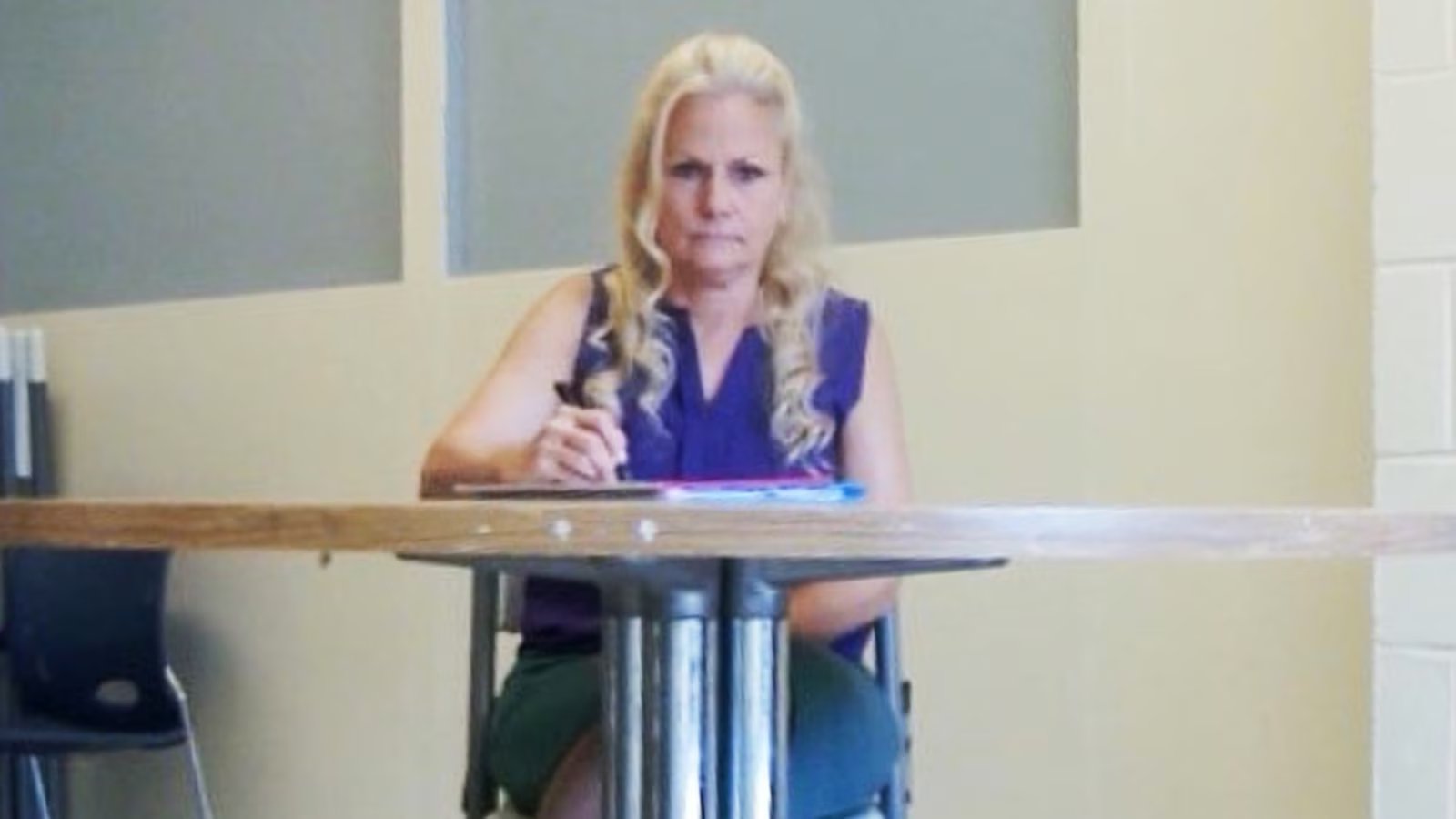
CONCORD, N.H. — A New Hampshire judge has officially dismissed the latest petition for a new trial from Pamela Smart, the woman serving a life sentence for orchestrating the 1990 murder of her husband. Merrimack County Superior Court Judge James Kennedy rejected the petition on Thursday, effectively shutting down another legal avenue for the 59-year-old inmate who has spent over three decades behind bars.
Smart, who was a 22-year-old high school media coordinator at the time of the killing, was convicted in 1991 for her role in the death of Gregory Smart. The case garnered national attention as one of the first high-profile trials to be broadcast live on television, cementing its place in American pop culture and later inspiring the book and film “To Die For.”
The conviction centered on Smart’s illicit affair with a 15-year-old student, William Flynn, whom prosecutors successfully argued she coerced into murdering her husband to avoid a divorce. While the shooter and three other teenage accomplices were eventually released after serving their respective sentences, Smart has remained in prison for life without the possibility of parole.
Smart’s most recent petition for habeas corpus relief, filed in January, centered on claims of constitutional violations. Her legal team argued that prosecutors had misled the jury by providing them with inaccurate transcripts of clandestine recordings. According to the defense, these transcripts included words—such as “killed,” “busted,” and “murder”—that were not actually audible on the original tapes. The defense pointed to a forensic study suggesting that providing written transcripts to juries alongside muffled audio can force listeners to “hear” words that are not present.
However, Judge Kennedy remained unconvinced. In his ruling, the judge stated that the defense’s arguments were either previously raised or should have been brought forward in earlier appeals. Furthermore, he dismissed the forensic study as having “dubious” legal relevance, noting that it had not been fully published or peer-reviewed and failed to clearly identify specific inaccuracies that would have swayed the original verdict. Kennedy also rejected claims that the intense media coverage of the 1991 trial or allegedly faulty jury instructions rendered the conviction illegitimate.
The court’s decision comes shortly after a significant turning point in the long-running saga. In 2024, for the first time since her conviction, Smart publicly accepted responsibility for her husband’s death. She admitted that she had spent years “deflecting blame,” describing her long-held denial as a “coping mechanism.”
Despite this admission, the legal machinery of the state remains unmoved. With this latest petition dismissed, Smart, who has now been incarcerated for the vast majority of her adult life, faces an increasingly narrow path to any potential change in her sentence. For now, the case—which began as a sensational tabloid spectacle in the early 1990s—remains legally closed.
Disclaimer: This content is auto-generated for informational purposes only.
Source: Read Original News