









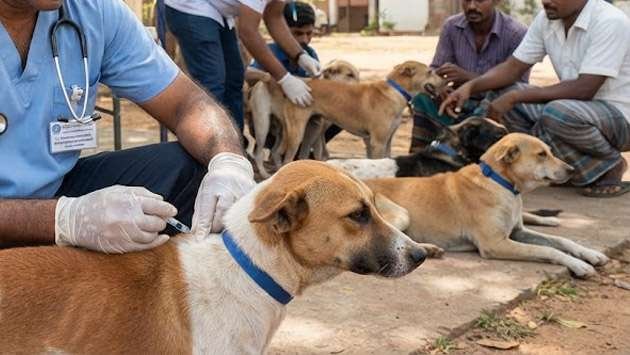
COLOMBO – In a renewed push to eradicate rabies, a leading veterinarian has warned that the global goal of eliminating the disease remains unreachable unless every single dog is included in vaccination efforts. Emphasizing the mantra, “No dogs left behind,” experts are calling for a shift in strategy that prioritizes reaching marginalized, stray, and community-owned dog populations.
Speaking on the urgency of the issue, veterinary health specialists pointed out that while national immunization programs often target household pets, the roaming dog population remains the primary reservoir for the virus. Rabies, which is almost 100% fatal once symptoms appear, continues to claim thousands of lives annually, disproportionately affecting children in rural and underserved communities.
“We have the tools and the technology to stop this disease, but we are falling short on the logistical side of implementation,” said one senior veterinarian involved in animal welfare initiatives. “For too long, we have focused only on dogs that are easy to catch or owned by households that can afford vaccination. The moment you leave a pocket of the dog population unvaccinated, you leave an open door for the virus to continue circulating.”
The call for universal coverage comes as many regions struggle with the complexities of managing stray animal populations. According to the expert, relying on culling—the practice of killing dogs to manage rabies—has been proven ineffective over the decades. Instead, a robust, systemic approach to mass canine vaccination is the only evidence-based method to break the transmission chain from animals to humans.
“The science is clear: when you hit a vaccination threshold of 70% in a dog population, you effectively stop the virus in its tracks,” the veterinarian explained. “But that threshold must be consistent. If we reach 70% but leave the remaining 30% entirely untouched in hotspots, the progress is fragile. We must move toward an inclusive strategy where street dogs, community dogs, and temple dogs are treated with the same urgency as house pets.”
The veterinarian further urged local governments to invest in more mobile veterinary units and community outreach programs that can traverse difficult terrain to reach isolated areas. The strategy involves not just the act of vaccination, but also education. By engaging community members, authorities can build trust, ensuring that residents are willing to bring their animals forward for treatment.
Health advocates note that rabies is one of the most neglected tropical diseases, despite being entirely preventable. With the World Health Organization (WHO) targeting the total elimination of dog-mediated human rabies by 2030, the “No dogs left behind” approach is being hailed as the vital missing link.
The message is clear: until the most vulnerable and hidden dogs are protected, the threat of rabies remains a lethal, looming shadow over public health. The path to a rabies-free future, experts insist, lies in collective, leave-no-one-behind action.
Disclaimer: This content is auto-generated for informational purposes only.
Source: Read Original News