




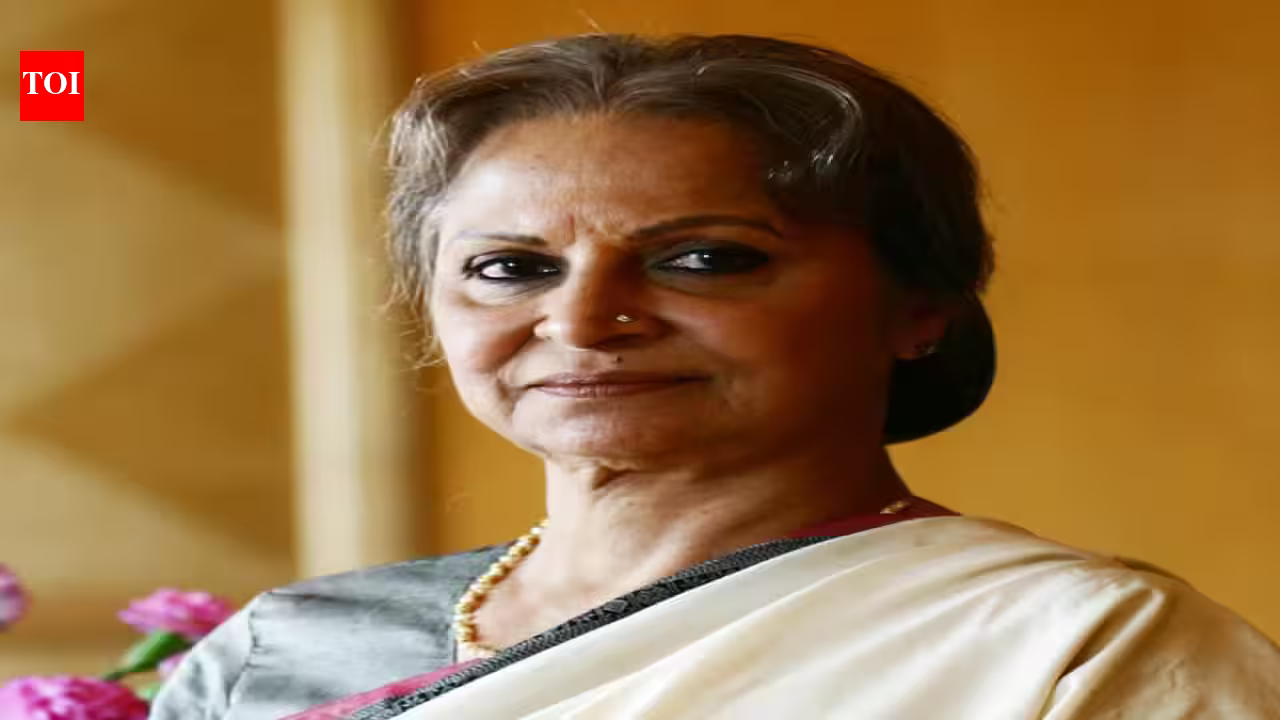

The silver screen rarely sees icons of the stature of Waheeda Rehman, but when she chooses to step back into the spotlight, the industry takes a collective breath. In a move that has sent ripples of excitement through the Indian film fraternity, the legendary actor is set to grace the screen once more, this time taking on the poignant role of Putlibai—the mother of Mahatma Gandhi—in an upcoming period drama helmed by the acclaimed Sudhir Mishra.
For those who have followed the trajectory of Hindi cinema, Waheeda Rehman isn’t just an actress; she is a living chronicle of the golden age. To see her cast in a project alongside powerhouse performer Manoj Bajpayee, who will be portraying the Mahatma himself, suggests a cinematic endeavor of profound gravity and artistic ambition.
A Reunion of Cinematic Generations
There is something inherently poetic about Sudhir Mishra, a director known for his gritty, cerebral approach to storytelling, collaborating with the grace and elegance of Waheeda Rehman. For Mishra, this isn’t just another casting coup; it is the fulfillment of a lifelong reverence.
Growing up in the shadow of India’s cinematic transformation, Mishra famously credits films like Pyaasa, Sahib Bibi Aur Ghulam, and Guide as the pillars of his own education in film. When he speaks of the upcoming project, his tone shifts from the pragmatic director to the awestruck student. “It feels incredibly special and surreal,” Mishra remarked in a recent interview. To direct a woman whose image is etched into the very foundation of Indian movie history is, for him, the pinnacle of his professional journey. It is a rare bridging of the “New Wave” sensibilities Mishra championed in the 80s and 90s with the classic, ethereal brilliance that defined the 50s and 60s.
The Weight of a Legendary Legacy
To understand why this comeback feels like a significant cultural event, one must revisit the sheer magnitude of Waheeda Rehman’s seven-decade-long career. She is not merely a performer; she is an institution. From the haunting, soulful vulnerability she displayed in Guru Dutt’s Kaagaz Ke Phool to the fiercely independent spirit of Rosie in Guide, Rehman redefined what a leading lady could be in Indian cinema.
Her accolades are numerous, but they barely scratch the surface of her impact. A National Film Award winner for Reshma Aur Shera and a recipient of the prestigious Dadasaheb Phalke Award, she has always been highly selective with her work. Her last onscreen outing, the 2021 film Skater Girl, was a quiet, heartwarming performance that reminded audiences of her enduring presence. Her return now, in a project of historical weight, signals a return to a caliber of drama that demands the kind of nuance only she can provide.
Unearthing a Hidden Chapter of History
Beyond the star power, the film itself promises to be a departure from the traditional biopics we have grown accustomed to. Rather than tracing the sweeping, well-trodden arc of Gandhi’s life from birth to assassination, Mishra is reportedly focusing on a specific, 21-day episode.
By zooming in on this concentrated window of time, the film intends to pivot away from the political icon and toward the human being. This is where the casting of Waheeda Rehman becomes essential. Putlibai, Gandhi’s mother, was a foundational influence on his moral compass and his understanding of non-violence. By casting an actor of Rehman’s depth, the filmmakers are clearly signaling that this project will explore the quiet, internal struggles and domestic relationships that forged a titan. With Saurabh Shukla also joining the cast in a significant capacity, the film is shaping up to be an intimate chamber piece set against the backdrop of a nation’s liberation.
Production Prowess and Artistic Vision
The project is backed by the formidable Anubhav Sinha, under his banner Benaras Mediaworks, alongside Narendra Hirawat. In an era where historical dramas often rely on grand sets and battle sequences, the collaboration between Mishra, Sinha, and these legendary actors suggests a project grounded in character and script.
Sinha has become a champion of socially conscious, high-stakes cinema, and coupling that with Mishra’s directorial eye creates an intriguing synthesis. They are not chasing the box-office trends of the day; they are pursuing a narrative that seeks to explore the human cost of greatness. The inclusion of NH Studioz as a presenter rounds out a team that appears to be prioritizing the integrity of the storytelling above all else.
Why This Matters for Modern Cinema
In a digital age where content is consumed rapidly and often forgotten just as fast, the return of Waheeda Rehman serves as a necessary anchor. Her involvement reminds us of the power of a performance that relies on a single glance or a subtle shift in expression—skills she perfected in an era before CGI and rapid-fire editing.
As Manoj Bajpayee steps into the shoes of the Mahatma, his performance will undoubtedly be supported by the grace and gravitas that Rehman brings to the screen. If Mishra succeeds in capturing the chemistry and the emotional honesty he is aiming for, this film could well define the next wave of prestige dramas coming out of India.
For the audience, the wait will be long, but the anticipation is palpable. We aren’t just waiting for a film; we are waiting to see a legend breathe life into history once more. In the hands of Sudhir Mishra and a cast of this caliber, the story of a young, forming Gandhi and his mother promises to be not just a look back into the archives of time, but a mirror to our own search for morality and strength.
Disclaimer: This content is auto-generated for informational purposes only.
Source: Read Original News