






India’s Power Sector Hits Historic Milestone: Clean Energy Surge Decouples Growth from Coal
In a landmark shift for one of the world’s most significant economies, India has achieved an unprecedented milestone in its energy transition. For the first time in over five decades, the nation’s electricity demand has climbed while coal-based power generation remained stagnant over a two-year period. According to a new analysis by the Centre for Research on Energy and Clean Air (CREA) for Carbon Brief, this structural change suggests that India is successfully decoupling its economic growth from carbon-intensive energy sources.
Clean Energy Meets Rising Demand
Between the first half of 2024 and the first half of 2026, India’s total electricity consumption rose by 7 percent, representing an increase of 63 terawatt-hours—a volume of energy equivalent to the total annual consumption of Switzerland. Remarkably, the entirety of this demand surge was satisfied by non-fossil fuel sources.
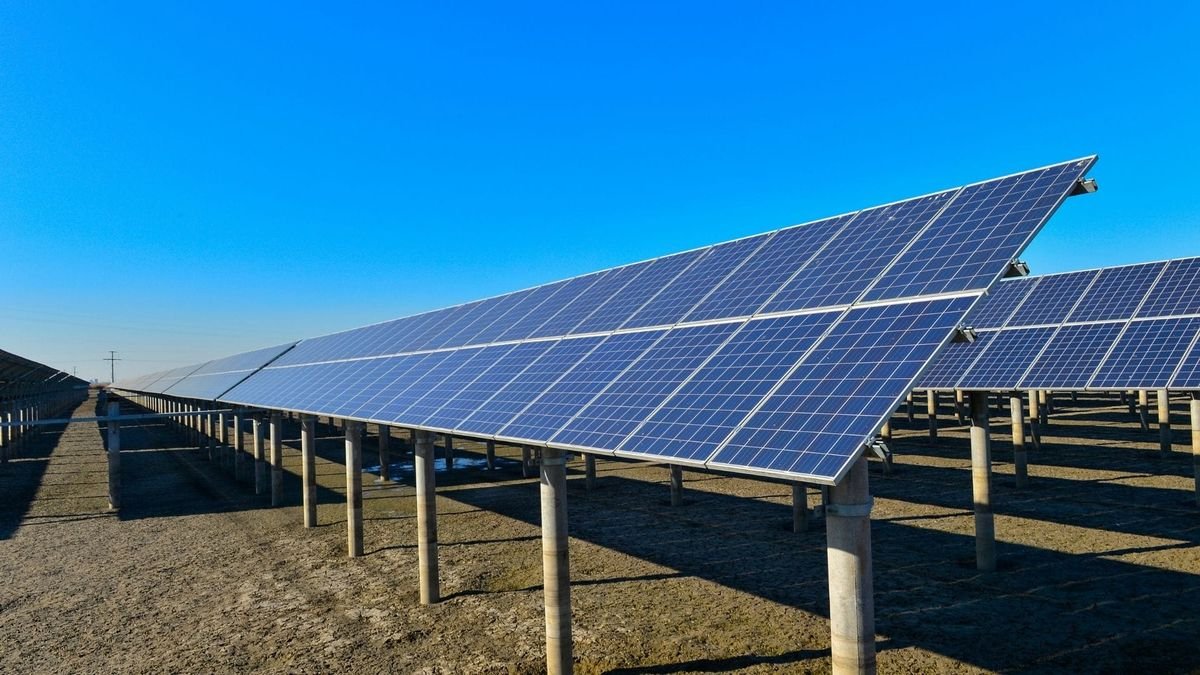
Solar power emerged as the undisputed leader of this transformation, contributing 44 terawatt-hours to the grid, followed by significant gains in wind, hydro, and nuclear energy. Collectively, these clean energy sources generated 70 terawatt-hours of new power, successfully outpacing the growth in national demand. This expansion was supported by the massive deployment of 77 gigawatts of new solar capacity and 11 gigawatts of wind, marking the largest increase in non-fossil power generation in the country’s history.
State-Level Leadership and Grid Efficiency
The transition is not uniform, with specific states leading the charge toward a decarbonized grid. Gujarat has emerged as the frontrunner, demonstrating both a sharp reduction in fossil fuel usage and the fastest growth in clean power generation. Rajasthan and Tamil Nadu have similarly pivoted toward renewables, while states like Karnataka and Andhra Pradesh have scaled their green capacity so effectively that they are now exporting surplus clean energy to other parts of the country.
This regional distribution has helped stabilize the national grid. Even in states where demand spiked—such as Maharashtra and Telangana—new renewable installations were sufficient to meet the rising requirements without necessitating a return to increased coal burning.
Energy Storage and Future-Proofing
To address the intermittency of solar and wind, India is aggressively scaling its energy storage infrastructure. The government has prioritized both pumped hydro and battery storage, with tenders for 272 gigawatt-hours of capacity already issued. By mid-2027, all new government-backed solar and wind projects will be required to incorporate at least two hours of battery storage. This focus on storage is critical for managing peak demand and ensuring that clean energy remains reliable long after the sun sets.
Broader Decarbonization Trends
The shift away from fossil fuels is extending beyond the electricity sector. Consumption of oil and gas has leveled off for the first time in 50 years, following steady historical growth. Additionally, the transportation sector is undergoing a rapid evolution; India hit its 20 percent ethanol-blending target for petrol five years ahead of schedule, and the adoption of electric vehicles is accelerating, particularly for two-wheelers, auto-rickshaws, and commercial fleets.
As the world’s third-largest carbon emitter, India’s progress carries global significance. By demonstrating that an industrializing nation can meet its growing appetite for electricity without expanding its reliance on coal, India is setting a new precedent for emerging economies globally. While the path to its 2070 net-zero target remains long, the data from the last two years indicates that India’s energy transition is gaining significant, irreversible momentum.
Disclaimer: This content is auto-generated for informational purposes only.
Source: Read Original News