






Capcom’s Expanding Presence on Switch 2 Hardware
The Tokyo Game Show 2026 provided a definitive look at the software landscape for the upcoming Switch 2 console, with Capcom emerging as a central pillar of support. The developer has committed to bringing high-fidelity experiences to the handheld ecosystem, bridging the gap between desktop-grade performance and portable utility. By focusing on both expanded sequels and critically acclaimed remakes, the studio is positioning the hardware as a viable platform for mature, demanding titles. The technical demonstrations at the show confirmed that the new hardware is capable of rendering dense, atmospheric environments without significant visual compromises, marking a technical step forward for Nintendo-based gaming.
Dragon’s Dogma 2: Dark Arisen
Scheduled for release on October 9, 2026, Dragon’s Dogma 2: Dark Arisen arrives as a comprehensive package, bundling the core game with its expansive new add-on. The title leverages the updated processing architecture of the Switch 2 to handle the complex physics and entity spawning necessary for its large-scale combat encounters. Recent hands-on demonstrations focused on the newly introduced Norgan region—an icy, desolate landscape that serves as the backdrop for high-level encounters. The Fallen Dragon boss fight stood out as a technical highlight, showcasing lighting effects and character model detail that maintain stability despite the intensity of the action. The title demonstrates how portable systems can now facilitate the deep, systemic gameplay loops associated with traditional open-world role-playing games.
Resident Evil Remakes: A Trio for Portable Platforms
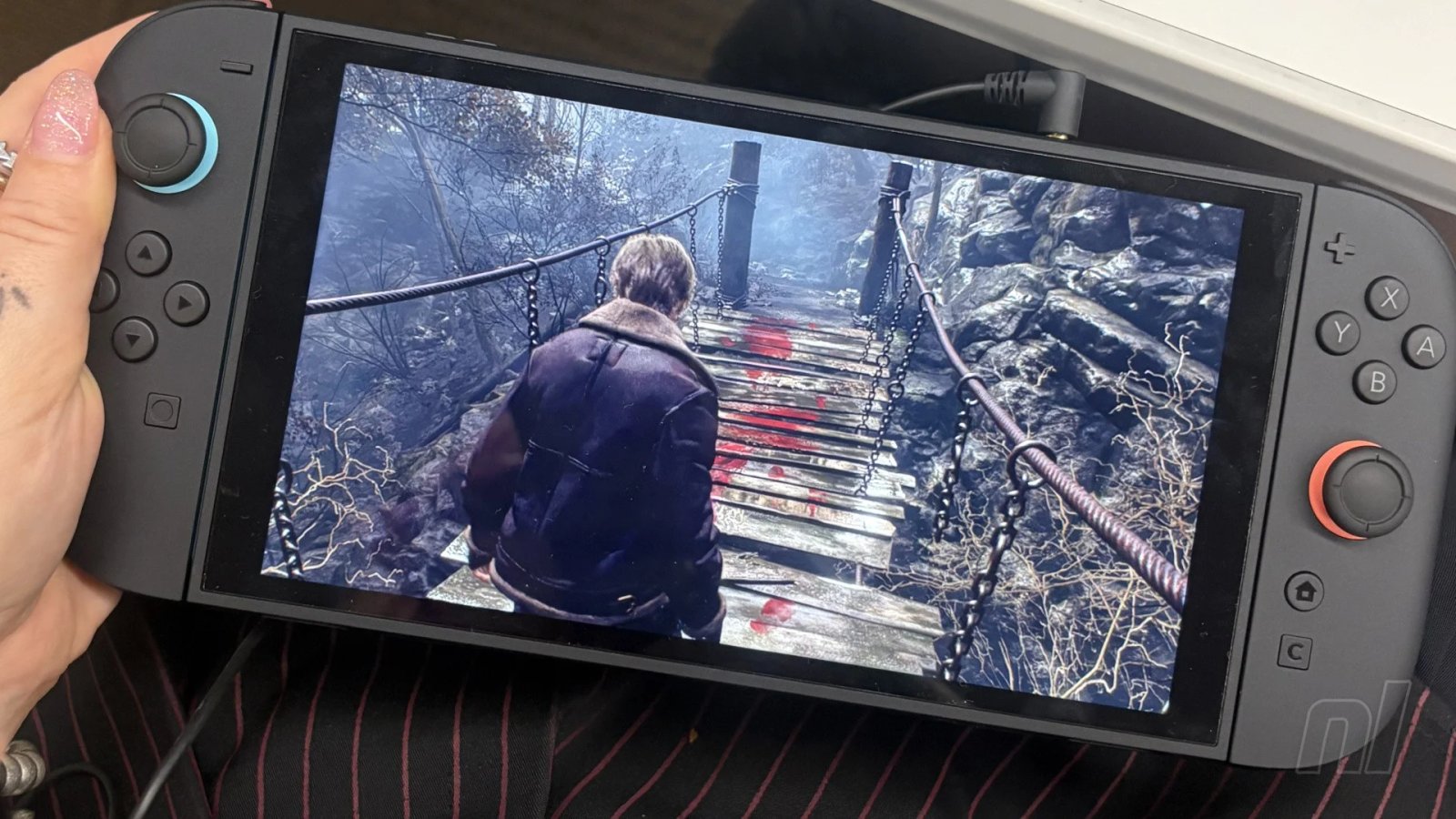
The Resident Evil series sees a significant arrival on October 16, 2026, with the debut of the Resident Evil 2, 3, and 4 remakes. The inclusion of these titles represents a major migration of modern survival-horror technology to mobile hardware. Each title retains its core graphical fidelity, including high-resolution textures and complex lighting models, which were previously exclusive to more powerful consoles. Resident Evil 4 Gold Edition, which includes the Separate Ways expansion, remains a central draw for this release. The performance remains consistent across both handheld and docked modes, ensuring that the responsiveness required for tactical combat is preserved. These ports confirm that the current generation of mobile silicon is now fully capable of hosting industry-standard third-party engine performance.
Mega Man: Dual Override and Gameplay Innovation
Looking ahead to 2027, Capcom is expanding its classic franchise library with Mega Man: Dual Override, a cross-generation release arriving on both the original Switch and its successor. This title serves as an interesting case study in hardware scaling, as it is designed to leverage advanced features on the new hardware while maintaining full compatibility with the original system. The game introduces a new chip-based customization system, allowing players to adjust their defensive and offensive parameters to suit their skill levels. With distinct playable characters such as Mega Man and Proto Man, the game provides a depth of playstyle variance that encourages repeated exploration of its stages. The announcement of specialized amiibo support further reinforces the company’s intent to integrate physical media with its digital releases on the platform.
The Impact of Hardware Evolution on Development
The collective announcements at TGS 2026 indicate a shift in how developers approach Nintendo hardware. With the transition to the Switch 2, the barrier to entry for AAA titles has been significantly lowered. The ability to run complex engines like those used in the Resident Evil remakes and Dragon’s Dogma 2 suggests that developers no longer need to produce heavily downgraded ports. Instead, the focus has shifted toward optimization and feature parity. This evolution allows for a more unified development pipeline, where high-tier assets can be deployed across various hardware profiles with minimal structural change. For the end user, this means that premium experiences are no longer tethered to a stationary desk, effectively validating the demand for high-performance handheld computing in the modern gaming market.
Disclaimer: This content is auto-generated for informational purposes only.
Source: Read Original News