







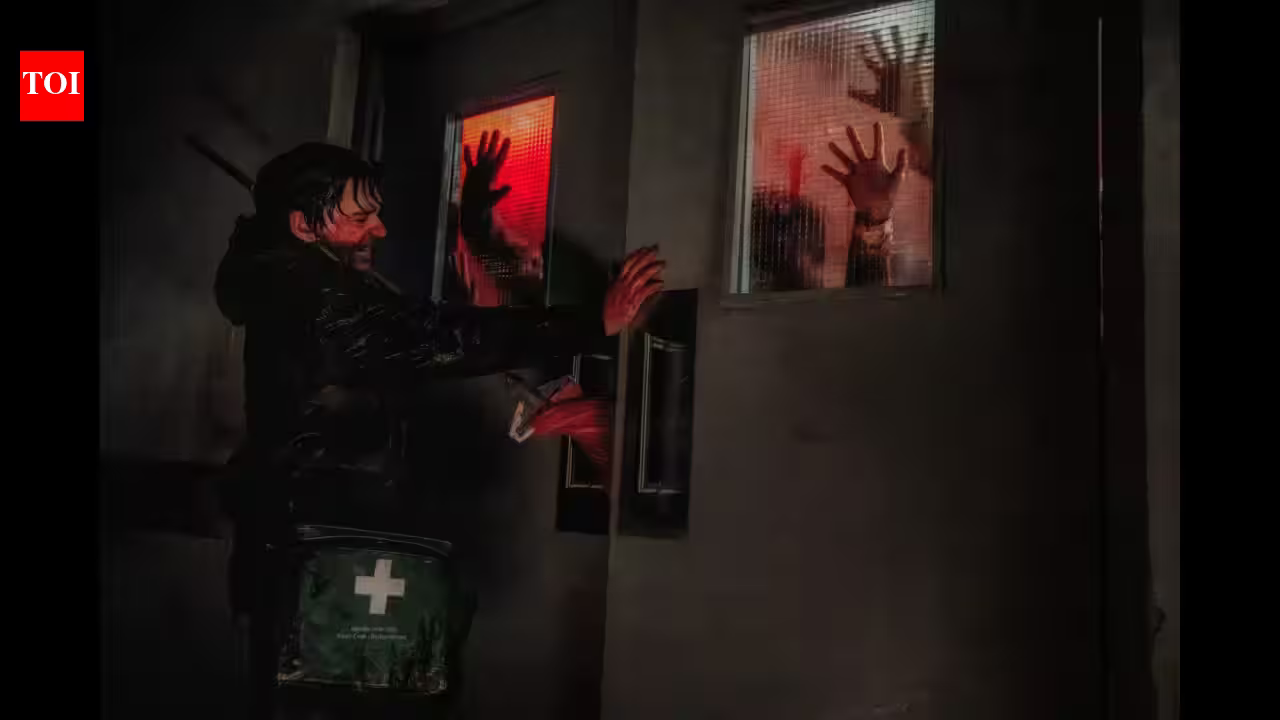
The North American box office just received a massive adrenaline shot, and it arrived courtesy of the undead. This weekend, the horror genre flexed its muscles with the debut of Zach Cregger’s Resident Evil, a film that didn’t just meet expectations—it shattered them. While the industry has been waiting for a breakout hit to anchor the season, Cregger has delivered a masterclass in how to modernize a legacy franchise, turning in a franchise-best opening of $60 million.
‘Resident Evil’ Defies the Odds with Franchise-Best Debut
It is rare to see an eighth installment in a long-running series suddenly find its footing with such aggressive momentum, but Resident Evil has managed to do just that. Garnering $60 million from 3,684 locations across the U.S. and Canada, the film is officially the highest-earning debut in the history of the video game-inspired franchise. To put that figure in perspective, it is effectively tied with 2010’s Resident Evil: Afterlife—the previous record-holder—without even accounting for the two decades of inflation that usually bloat such comparisons.
The success is being credited to the visionary direction of Zach Cregger. Known for his uncanny ability to weave genuine tension into high-concept horror with Barbarian and Weapons, Cregger has brought a fresh, visceral intensity to Raccoon City. Starring Austin Abrams as a beleaguered medical courier forced to navigate an infection-ridden nightmare, the film has struck a chord with critics and audiences alike. Boasting a staggering 95% rating on Rotten Tomatoes, the film has escaped the typical “critic-proof” trap of horror sequels, proving that high-quality storytelling is still the best marketing tool in Hollywood.
A Demographic Powerhouse
The audience data paints a clear picture: this was the movie that the key “under 35” demographic was waiting for. Exit polls from PostTrak indicate that 75% of the opening weekend crowd was under the age of 35, with a 66% male majority. A B+ CinemaScore suggests that while it may not have hit the elusive ‘A’ tier, it delivered exactly what fans of the franchise and Cregger’s previous work expected: a pulse-pounding, effective theatrical experience.
Cregger, in particular, is proving to be a box office anomaly. Where typical horror releases often suffer from a sharp, front-loaded drop after their first three days, his track record suggests longevity. Barbarian turned a lean sub-$5 million budget into a $46 million success, and Weapons proved his reach with a $270 million haul against a $38 million spend. As the horror genre continues to dominate the narrative this year—generating over $1.1 billion domestically so far—Cregger has solidified his status as the industry’s most bankable architect of fear.
The Sophomore Slump for ‘Practical Magic 2’
While the top of the charts celebrated a win, the middle of the pack tells a story of cooling interest. Practical Magic 2, which arrived with high hopes, experienced a significant 59% drop in its second weekend, pulling in $12.2 million. While the film has managed to scrape together a global total of $76.8 million, the sharp decline suggests that the initial curiosity factor has worn off. It’s a stark reminder that in a crowded marketplace, sustained interest is far harder to maintain than an initial opening weekend spike.
Staying Power: ‘Spider-Man’ and ‘The Odyssey’
While the headlines are dominated by new releases, the real legends of this season are the holdovers. Spider-Man: Brand New Day continues to defy the laws of gravity in its eighth week. By adding another $6.5 million to its domestic tally, it has pushed its North American total to a staggering $944.5 million. On the global stage, it is firmly planted in the stratosphere with $2.45 billion.
Similarly, The Odyssey continues to be a commercial juggernaut in its tenth week of release. With an additional $4.9 million this weekend, its global haul has climbed to an estimated $1.7 billion. These figures demonstrate that when a film captures the public consciousness, the “theatrical window” is far more flexible than the industry often assumes. Audiences aren’t just flocking to theaters for new content; they are still coming out in droves for the season’s established hits.
A Rare Moment in Niche Cinema
While the tentpoles dominated the multiplex, a singular event occurred at the IFC Center in New York. John Wilson, the auteur behind the cult favorite documentary style, debuted his latest project, The History of Concrete. Raking in $90,000 from a single screen, the film nearly touched the record set by the Academy Award-winning Parasite, which pulled $119,407 in its prime. It serves as a fascinating footnote to a weekend dominated by blockbuster horror: there is still an insatiable appetite for unique, independent, and experimental voices, provided they are given the right platform to shine.
As we look toward the mid-week numbers, the lesson of this weekend is clear. The domestic box office is not in a state of decay—it is in a state of selection. Audiences are showing up for the visceral, the established, and the exceptional. Whether it’s the record-breaking carnage of Resident Evil or the enduring reach of a hero like Spider-Man, the theater remains the premier destination for shared cultural moments. For now, the industry can breathe a sigh of relief: the summer (or autumn, depending on the cycle) has found its heartbeat again.
Disclaimer: This content is auto-generated for informational purposes only.
Source: Read Original News