




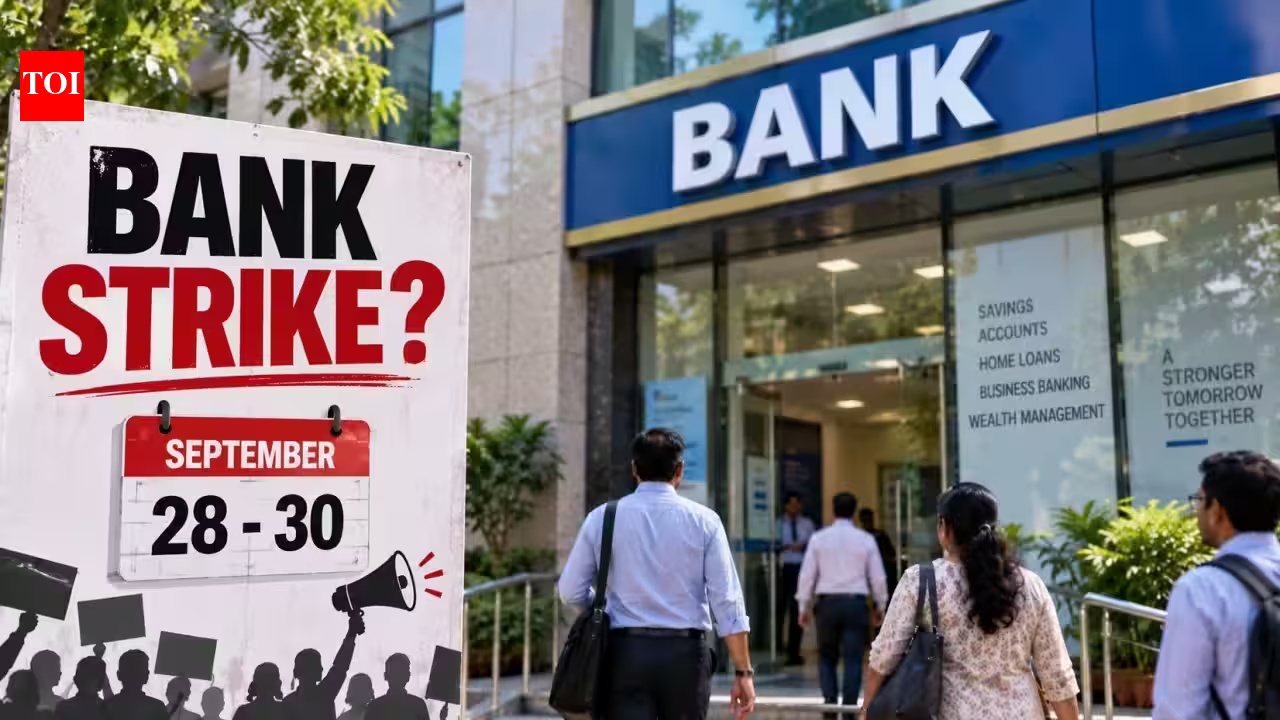




The Structural Conflict Behind the Proposed Bank Strike
The impending nationwide strike called by the United Forum of Bank Unions (UFBU) highlights a growing friction between the evolving requirements of modern banking and the traditional labor expectations within India’s public sector banking framework. Scheduled to run from September 28 to September 30, 2026, the strike arrives at a sensitive juncture for the financial sector. Because the protest coincides with a weekend—the second Saturday and Sunday of the month—it creates a potential five-day window of inactivity for physical bank branches.
At the heart of this disruption are long-standing grievances that reflect the broader struggle of employees adjusting to the competitive pressures of the digital age. The demand for a mandatory five-day work week is not merely an attempt to secure more leisure time; it is a push for structural parity with other sectors of the Indian economy. Bank unions argue that as banking operations shift toward high-speed digital processing, the human workforce requires a modernized schedule that matches global standards. However, the conflict is compounded by pension-related issues, specifically the clamor for improved pension updates and a formal transition path for employees currently under the National Pension System (NPS) to return to the Old Pension Scheme (OPS). This fiscal debate poses a significant challenge for the Department of Financial Services (DFS), which must balance the financial sustainability of public sector banks against the morale and stability of its massive workforce.
Economic Implications of Extended Operational Closures
A five-day operational shutdown of physical bank branches carries notable implications for the Indian economy. While digital transformation has significantly reduced the necessity of visiting a branch, the Indian banking ecosystem remains deeply rooted in physical interactions for certain customer segments, particularly in rural and semi-urban regions. Small and medium enterprises (SMEs) and agricultural traders often rely on branch-based credit processing, cheque clearing, and localized documentation that cannot be resolved through automated interfaces.
During the half-yearly closing period—a time when banks typically finalize ledger balances and perform rigorous audits—any disruption to personnel availability can complicate reporting. If the strike extends across five consecutive days, the clearing cycle for financial instruments may face delays, potentially causing temporary liquidity constraints for businesses that operate on tight daily cash flow cycles. The proactive engagement of the Finance Ministry, which has scheduled meetings with the heads of public sector banks and regional rural banks, underscores the sensitivity of this timeline. The government is focused on mitigating systemic bottlenecks to ensure that essential payment clearing houses and back-end settlement systems remain functional, even if the storefronts remain locked.
The Resilience of Digital Banking Infrastructure
The primary mitigation strategy for banks during such strikes is the diversion of customer traffic to digital channels. Over the past decade, Indian banks have invested heavily in Unified Payment Interface (UPI), mobile banking applications, and Automated Teller Machines (ATMs). These platforms now function as the primary shock absorbers for the banking system during labor unrest. Because UPI operates as a decentralized, real-time payment network, it remains unaffected by the operational status of individual physical branches.
For the modern consumer, the strike serves as a stress test for the reliability of digital banking. Banks like the State Bank of India (SBI) and Union Bank of India have emphasized the use of internet banking, YONO, and mobile platforms to maintain continuity. For retail customers, the impact is expected to be minimal, as daily transactions such as fund transfers, utility payments, and merchant transactions are largely digitized. However, the limitation arises in niche services—such as the issuance of demand drafts, physical locker access, and complex loan document processing. Customers requiring these specialized services are advised to finalize them well before the start of the weekend to avoid the interruption period.
Strategic Advisories and Risk Management for Customers
For the business customer and the retail account holder, the approaching strike serves as a lesson in liquidity planning and operational contingency. Financial institutions have been clear in their communication: plan ahead. SBI and other leading public sector banks are encouraging customers to anticipate cash requirements and complete time-sensitive documentation before the cycle begins. This is particularly critical for those who operate in cash-heavy sectors where ATM withdrawals remain the only viable method for fulfilling payroll or trade obligations.
From a business perspective, the strike is a reminder of the volatility inherent in institutional labor relations. While the banking sector is becoming increasingly automated, the human element remains a critical component of institutional trust and complex problem-solving. Businesses should adopt a strategy of decentralizing their banking tasks, ensuring that they are not reliant on a single branch or a specific teller for their core operations. By leveraging multiple channels, including business correspondent points and digital portals, firms can insulate themselves from the periodic disruptions that characterize labor negotiations in the public sector.
The Path Forward for Banking Relations
The recurrence of nationwide strikes over the last few years indicates that the dialogue between the UFBU and the Indian government has reached an impasse. The core issues—pensions and work-life balance—are not easily resolved through short-term interventions. As public sector banks move to modernize their operations, they are increasingly pressured to optimize staff costs and efficiency, while unions are equally determined to protect the welfare of their members.
The long-term solution likely lies in a comprehensive policy recalibration that addresses the modernization of the workforce alongside the modernization of services. As the banking sector moves toward a 24/7 digital environment, the traditional concept of the “banking hour” is becoming obsolete. A successful resolution will require a compromise that integrates a flexible work-week model into the existing operational framework, ensuring that the human workforce is adequately compensated and motivated without sacrificing the speed and accessibility that today’s digital consumers demand. Until such a balance is struck, both banks and customers must remain prepared for periodic transitions and the necessity of navigating a hybrid model that blends traditional branch reliance with robust digital redundancy. For now, the focus of the banking community remains on maintaining a functioning financial bridge through the upcoming September period, ensuring that the broader economy does not stall while these fundamental institutional changes are negotiated.
Disclaimer: This content is auto-generated for informational purposes only.
Source: Read Original News